Supreme Court backs FCC 7-2 in dispute over campaign ad rates for parties
On 14 October the Supreme Court ruled 7-2 that the 4th Circuit should not have ordered the FCC to rule within 48 hours on a rule extending lower campaign ad rates to parties. Outlets differ on whether to stress the separation-of-powers reasoning or the Republican advantage.
Updated (version 2). New coverage since the last version from Newsweek.
1 / 3
The story, neutrally told
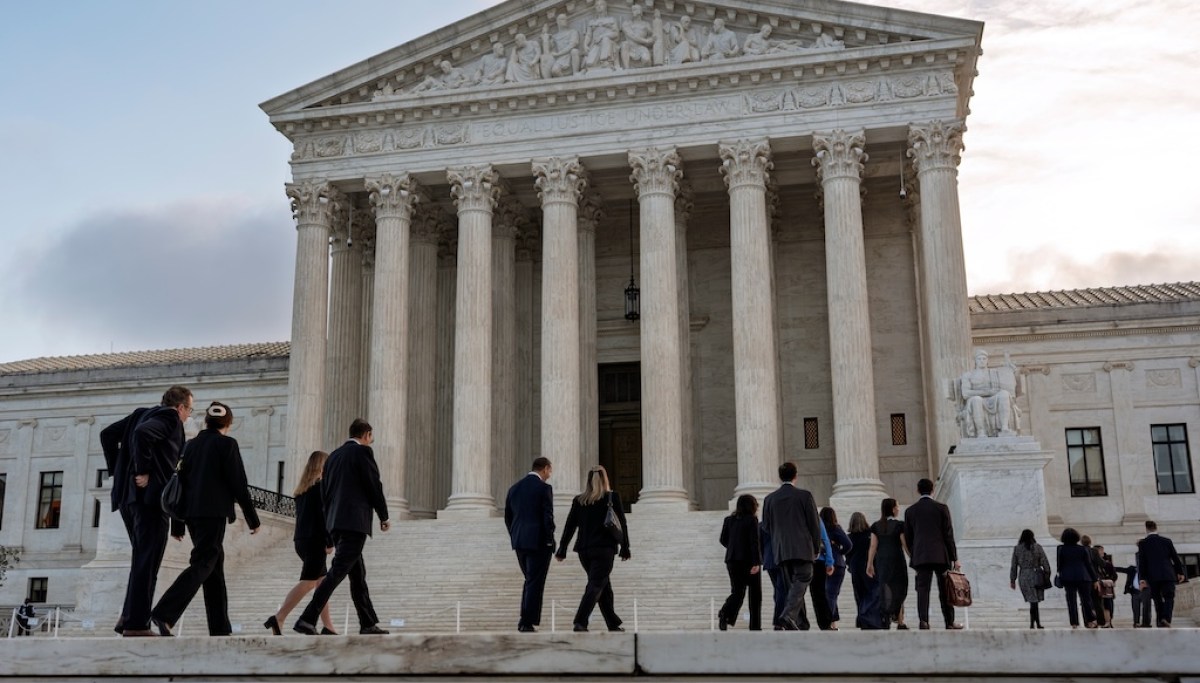
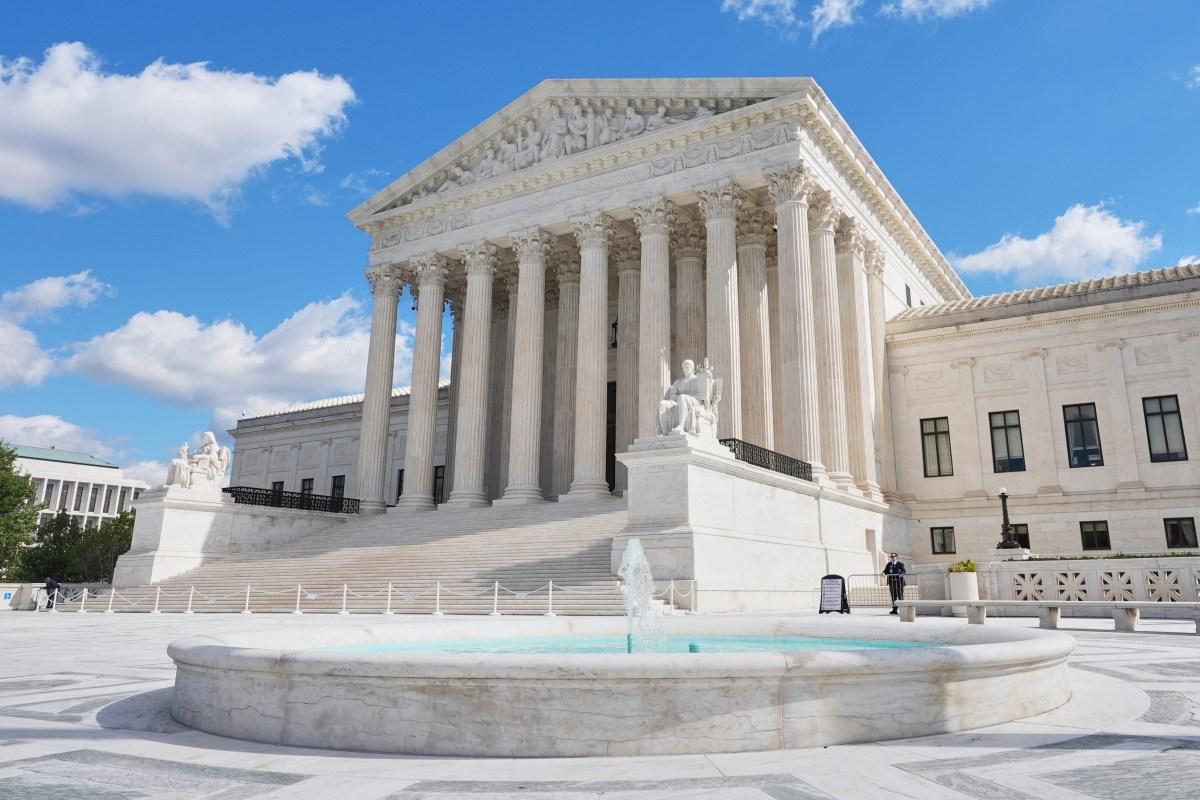
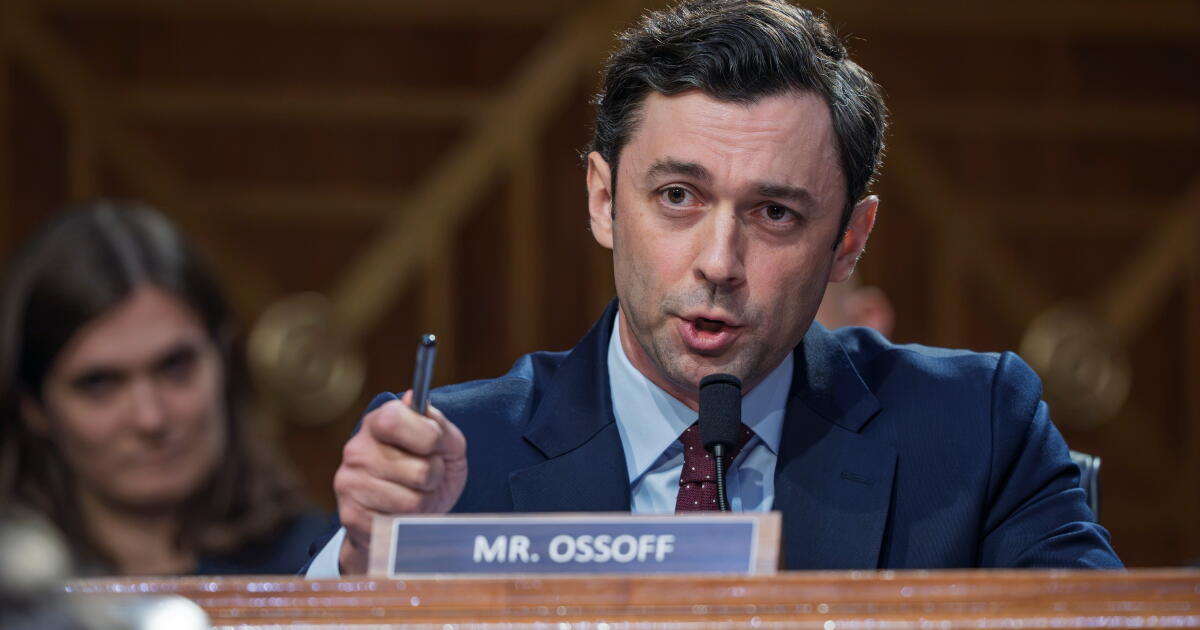
Mixed · 2The Supreme Court ruled 7-2 on Wednesday 14 October to halt a U.S. Court of Appeals for the 4th Circuit order that required the Federal Communications Commission to decide quickly on a revised rule about campaign advertising rates. Washington ExaminerR “The high court ruled 7-2 to halt a ruling by the U.S. Court of Appeals for the 4th Circuit” Read at Washington Examiner ↗ Los Angeles TimesLC “Over two dissents, the justices granted a fast-track appeal from the Trump administration and the National Republican Congressional Committee” Read at Los Angeles Times ↗ Mixed · 2The revised rule would let political parties and their joint fundraising committees get the lower rates that federal law gives to "legally qualified" candidates in the 60 days before an election; the LA Times says the FCC, under Republican control, announced the change on March 30. Los Angeles TimesLC “on March 30, the FCC, under Republican control, announced that broadcasters must extend the lower rates to political parties and their joint fundraising committees” Read at Los Angeles Times ↗ Washington ExaminerR “allowing political parties and joint fundraising committees to access the same, more favorable television advertisement rates” Read at Washington Examiner ↗ Left · 1Democratic Senate candidates Sherrod Brown, Jon Ossoff and Roy Cooper objected in April and sued in federal court when the FCC did not act; they argue the agency had no authority to extend the benefit beyond candidates. Los Angeles TimesLC “Democratic Senate candidates Sherrod Brown of Ohio, Jon Ossoff of Georgia and Roy Cooper from North Carolina objected to the FCC rule change in April”“They argued the FCC had no authority to change the law that gave only candidates, not fundraising committees, the benefit of the lower ad rates.” Read at Los Angeles Times ↗
Mixed · 2The 4th Circuit ruled for the Democrats in two 2-1 decisions; its second order required the FCC to decide by Oct. 9, and Chief Justice John Roberts paused that order last week at the request of Solicitor General D. John Sauer. Los Angeles TimesLC “The U.S. 4th Circuit Court of Appeals in Virginia ruled for the Democrats in a pair of 2-1 decisions.”“Chief Justice John G. Roberts put the 4th Circuit order on hold.” Read at Los Angeles Times ↗ Washington ExaminerR “Chief Justice John Roberts halted the lower court's order temporarily last week” Read at Washington Examiner ↗ Right · 1In an unsigned per curiam opinion, the majority said the Communications Act requires the FCC to act on every application but sets no timeframe, and that the 4th Circuit's "extraordinary" writ was inappropriate because it demanded a decision within 48 hours, five months after filing, while deliberations were ongoing. Washington ExaminerR “The Communications Act requires the Commission to act on every application it receives, but it does not obligate the Commission to act within a particular timeframe.”“just five months after it was filed and within just 48 hours” Read at Washington Examiner ↗ Mixed · 2The court said the judiciary may not "meddle" in a coordinate branch's workings, and that being forced to abandon its deliberation process is an injury to the FCC that cannot be remedied afterwards. Washington ExaminerR “Our system of separation of powers does not allow the Judiciary to meddle in ‘the workings of a coordinate branch of the Government’ in this manner.” Read at Washington Examiner ↗ Los Angeles TimesLC “Our system of separation of powers does not allow the judiciary to meddle in the workings of a coordinate branch of the government in this manner” Read at Los Angeles Times ↗
Mixed · 2Justices Sonia Sotomayor and Ketanji Brown Jackson dissented; the Washington Examiner says they did not explain why. Washington ExaminerR “Justices Sonia Sotomayor and Ketanji Brown Jackson dissented from the ruling but did not elaborate on their decision to dissent.” Read at Washington Examiner ↗ Los Angeles TimesLC “In dissent, Jackson and Justice Sonia Sotomayor voted to deny the administration's appeal.” Read at Los Angeles Times ↗ Centre · 1Newsweek reports the unsigned order came less than three weeks before the 3 November midterms, that the court said the FCC would suffer "irreparable harm" if the lower court's order stayed in effect, and that Sotomayor and Jackson would have denied the stay applications. NewsweekN “The unsigned order, issued Wednesday, comes less than three weeks before the November 3 midterm elections”“The court said the FCC would suffer “irreparable harm” if the lower court's order remained in effect.” Read at Newsweek ↗ Mixed · 2It was the second time in about a month the dispute reached the court: on Sept. 4 it ruled that the 4th Circuit had intervened too soon, because a party must wait for the FCC to resolve its application for review; the Examiner reports that vote as 8-1 and the LA Times says only Jackson dissented. Washington ExaminerR “the Supreme Court ruled 8-1 that the 4th Circuit had prematurely halted the rule” Read at Washington Examiner ↗ Los Angeles TimesLC “Only Justice Ketanji Brown Jackson dissented.” Read at Los Angeles Times ↗
Mixed · 2Each side stresses a different advantage: the Examiner says Democratic candidates lead in cash raised by individual candidates and Republicans at the party level, while the LA Times says the change was seen as benefiting Republicans, who raise more through party committees funded by wealthy donors. Washington ExaminerR “Republicans have pushed for the new rule due to their significant cash advantage at the party level.” Read at Washington Examiner ↗ Los Angeles TimesLC “Republicans have raised far more through party committees that are funded by wealthy donors.” Read at Los Angeles Times ↗ Left · 1Critics included the Campaign Legal Center, which said the change was "contrary to the text and purpose of the federal statute and would effectively grant super PACs an advertising discount," and FCC Commissioner Anna Gomez, the lone Democrat, who objected to rule changes made "in the dark." Los Angeles TimesLC “contrary to the text and purpose of the federal statute and would effectively grant super PACs an advertising discount.”“Anna Gomez, the lone Democrat on the FCC, issued a statement objecting to the change.” Read at Los Angeles Times ↗ Right · 1The Examiner places the case alongside another election fight on the emergency docket, over the Trump administration's mail ballot order, which the court allowed to remain blocked through the midterms. Washington ExaminerR “which the high court allowed to remain blocked through the midterm elections” Read at Washington Examiner ↗
Every sentence links to the reporting it rests on. The pill in front of each says where its sources sit: Left, Centre or Right when one side supplies at least half of them, Mixed when they are evenly split. The number is how many outlets it cites.
Left1 outlet
- Framing
- Leads on partisan effect: the court 'sided with Republicans' and the outcome gives GOP candidates an ad edge.
- Emphasis
- Criticism of the FCC rule from the Campaign Legal Center and Commissioner Gomez, the lack of explanation or hearing, and the 4th Circuit judge's rebuke of the FCC.
- Leaves out or plays down
- Does not dwell on the per curiam's statutory reasoning about the absence of a statutory deadline.
- For example
-
“The outcome has given Republican candidates an advertising edge in the final weeks of the campaign.” — Los Angeles Times
“The FCC notice did not explain the basis for this change, and it refused to hold a commission hearing to debate the issue.” — Los Angeles Times
Centre1 outlet
- Framing
- Breaking-news brief headlined as the court siding with Republicans 'again', stressing the FCC gets more time and the election timing.
- Emphasis
- The unsigned order, 'irreparable harm' finding, the 3 November midterms and what the dispute is about (lowest-unit rates for party and joint fundraising committees).
- Leaves out or plays down
- Gives no vote count, no detail of the court's separation-of-powers reasoning, and no criticism of the FCC rule.
- Charged language
- “Sides With Republicans Again”
- For example
-
“The Supreme Court has sided with Republicans for a second time in a dispute over discounted television and radio advertising rates” — Newsweek
Right1 outlet
- Framing
- Leads on a legal victory for the FCC and quotes the court's reasoning that the 4th Circuit's order was inappropriate.
- Emphasis
- Separation of powers, the 48-hour deadline and the court's per curiam text; notes both parties' cash advantages in neutral terms.
- Leaves out or plays down
- Omits criticism of the rule from the Campaign Legal Center and Commissioner Gomez, and that the rule was announced without explanation or a hearing.
- For example
-
“The Supreme Court handed the Federal Communications Commission a victory on Wednesday” — Washington Examiner
“Our system of separation of powers does not allow the Judiciary to meddle in ‘the workings of a coordinate branch of the Government’ in this manner.” — Washington Examiner
What every side reports
- The Supreme Court ruled 7-2 on 14 October in favour of the FCC, with Sotomayor and Jackson dissenting.
- The 4th Circuit had ordered the FCC to act quickly, and Chief Justice Roberts paused that order last week.
- The majority said courts should not meddle in the FCC's own procedures and schedule.
- The Supreme Court had earlier intervened in September against the 4th Circuit.
Where accounts differ
-
Vote in the September 4 Supreme Court order
- Left
- The LA Times says only Justice Jackson dissented, which is consistent with 8-1 but not stated as a count.
- Right
- The Washington Examiner says the court ruled 8-1.
-
Nature of the ruling
- Left
- Presented as siding with Republicans and giving them an advertising edge in the final weeks of the campaign.
- Right
- Presented as a legal rebuke of an 'inappropriate' lower-court order that overstepped separation of powers.
-
The Supreme Court halted the 4th Circuit order that set a deadline for the FCC, allowing the FCC to continue its review.
Supported- Supports 3
- Los Angeles Times, Newsweek, Washington Examiner
-
Justices Sotomayor and Jackson were the only dissenters from the ruling.
Supported- Supports 3
- Los Angeles Times, Newsweek, Washington Examiner
-
The ruling advantages Republicans in the midterm campaign.
Supported- Supports 2
- Los Angeles Times, Newsweek
- Reports 1
- Washington Examiner
Supreme Court of the United States organisation
The majority said the 4th Circuit wrongly forced the FCC to decide within 48 hours, intruding on a coordinate branch; Sotomayor and Jackson dissented.
“Our system of separation of powers does not allow the Judiciary to meddle” — Washington Examiner
“In a brief order, the court said the issue should be left to the Federal Communications Commission.” — Los Angeles Times
Federal Communications Commission organisation
The FCC, under Republican control, adopted the rule on March 30 and says it should set its own schedule; its lone Democrat, Anna Gomez, objected to the process.
“The American public should not have sweeping election-year rule changes forced on them in the dark” — Los Angeles Times
“The Commission may exercise its discretion to set its own procedures and schedule” — Washington Examiner
Republican Party party
Republicans, including the National Republican Congressional Committee, pushed the rule and joined the Trump administration's appeal, and benefit from their party-level fundraising.
“granted a fast-track appeal from the Trump administration and the National Republican Congressional Committee” — Los Angeles Times
Left1 article
-
Supreme Court sides with Republicans in dispute over cost of campaign ads
Critical Frames the ruling as a partisan win for Republicans, with critics of the rule given prominence.
Centre1 article
-
Supreme Court Sides With Republicans Again in New Political Ad Rates Order
Neutral Short breaking brief that frames the order as a second win for Republicans while explaining the dispute and noting the election timing.
Right1 article
-
Supreme Court reverses ‘inappropriate’ ruling in FCC fight over favorable campaign ad rate rules
Neutral Legal-victory framing for the FCC, built around quotes from the court's opinion.
- 14 Oct 22:13 First Washington ExaminerR Supreme Court reverses ‘inappropriate’ ruling in FCC fight over favorable campaign ad rate rules
- 14 Oct 22:16 +4m Los Angeles TimesLC Supreme Court sides with Republicans in dispute over cost of campaign ads
- 14 Oct 22:47 +35m NewsweekN Supreme Court Sides With Republicans Again in New Political Ad Rates Order
Times are when each article was published, or when we first saw it if the outlet gave no time.
Ask about this story
Loading…