Supreme Court declines to block ruling ending Biden-era rule on closing deportation cases
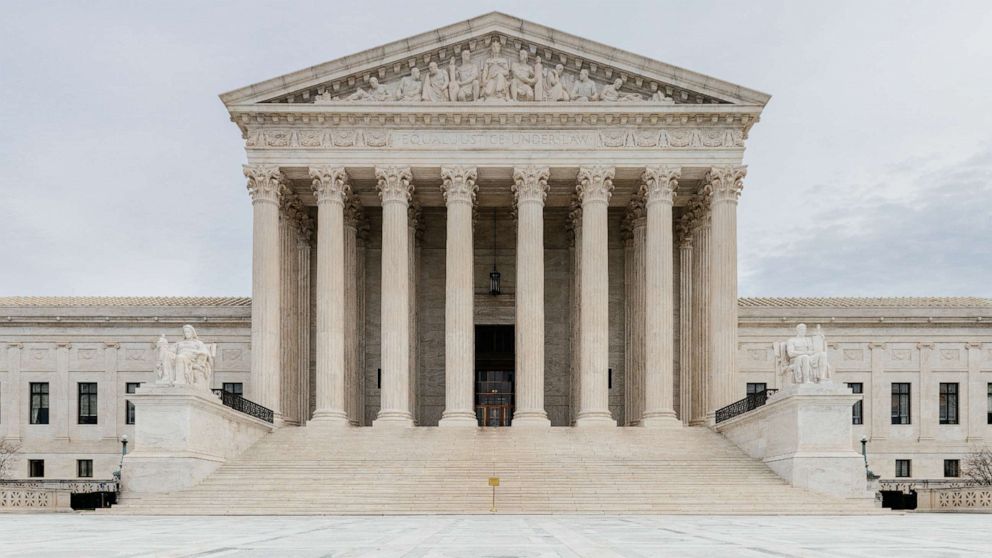
The Supreme Court turned away an emergency appeal from Democratic-led cities and an immigrant rights group, leaving in place a Texas federal court judgment that struck down a Biden-era rule on administratively closing deportation cases. The order gave no reasoning.


1 / 5
The story, neutrally told
Mixed · 2On Tuesday 27 October 2026 the Supreme Court declined to halt a lower court ruling that blocked a Biden-era rule letting immigration judges close deportation cases indefinitely. Washington ExaminerR “The Supreme Court declined on Tuesday to halt a lower court’s June ruling that blocked a Biden administration immigration rule allowing judges to close deportation proceedings inde” Read at Washington Examiner ↗ Raw StoryL “The justices turned the appeal away in an unsigned opinion without explaining their reasoning.” Read at Raw Story ↗ Mixed · 2The order gave no explanation, and the Washington Examiner reports it noted no dissent; it did not decide whether the policy itself is lawful and leaves the Texas judgment in place. Washington ExaminerR “The high court denied the emergency petition by a coalition of Democrat-run cities seeking to stop the lower court’s ruling with no elaboration and no noted dissent.” Read at Washington Examiner ↗ Raw StoryL “The order did not rule on whether the policy itself is lawful. It leaves the Texas injunction in place.” Read at Raw Story ↗ Mixed · 2"Administrative closure" lets judges set aside cases without dismissing them, which removes them from the docket without resolving whether the person is removable. Raw StoryL “The practice, called “administrative closure,” lets judges set aside cases without dismissing them.” Read at Raw Story ↗ Washington ExaminerR “removing those cases from the judges’ dockets without resolving whether people are removable from the United States” Read at Washington Examiner ↗
Left · 1Judges have used some form of it for decades; government data show about 360,000 migrants have had cases closed this way since 1990. The first Trump administration moved to ban it, and the Biden administration wrote it into regulation in 2024. Raw StoryL “Government data show about 360,000 migrants have had cases closed this way since 1990. The first Trump administration moved to ban the practice, and the Biden administration wrote it into regulation in 2024.” Read at Raw Story ↗ Mixed · 2Texas sued over the rule earlier this year. The Trump administration's Justice Department agreed with the state rather than defend the rule, and U.S. District Judge Reed O’Connor entered a final consent judgment tossing it. Washington ExaminerR “the Department of Justice agreed with the state that the Biden-era rule should be set aside. U.S. District Judge Reed O’Connor, a nominee of former President George W. Bush, entered a final consent judgment tossing the rule” Read at Washington Examiner ↗ Raw StoryL “After Trump returned to office, his administration dropped its defense of the Biden rule.” Read at Raw Story ↗ Left · 1Baltimore, Columbus, Ohio, and New Haven, Connecticut, joined an immigrant rights group in trying to intervene to defend the rule; lower courts refused, and they appealed to the Supreme Court. Raw StoryL “Baltimore, Columbus, Ohio, and New Haven, Connecticut, all cities with large immigrant populations, joined an immigrant rights group in trying to step in and defend the rule. Lower courts refused to let them intervene, and they appealed to the Supreme Court.” Read at Raw Story ↗
Right · 1The cities argued that the Justice Department's refusal to defend the rule circumvents the review process required to rescind federal rules and warned that such "collusive suits will surely proliferate." Solicitor General D. John Sauer replied that the cities lacked Article III standing. Washington ExaminerR ““given agency incentives, such collusive suits will surely proliferate further.””“objections about the merits of a consent judgment are no substitute for the threshold prerequisites of Article III standing.” Read at Washington Examiner ↗ Mixed · 2Immigration advocates say closure eases backlogged courts and spares migrants with strong claims to stay, such as crime victims; critics call it backdoor amnesty, and Texas and other opponents argued it let people avoid removal indefinitely. Because the cases were never dismissed, they could now be reopened. Raw StoryL “Immigration advocates say it eases the burden on backlogged immigration courts and spares migrants with strong claims to stay, such as crime victims or neglected children, from removal proceedings. Critics have called it backdoor amnesty.” Read at Raw Story ↗ Washington ExaminerR “gave illegal immigrants a way to avoid removal indefinitely” Read at Washington Examiner ↗ Right · 1The administration has two further major immigration cases on the court's merits docket in coming months: deportations to "third countries" and mandatory detention. Washington ExaminerR “The Supreme Court will look at the legality of the administration’s policy of deporting illegal immigrants to “third countries,”” Read at Washington Examiner ↗
Every sentence links to the reporting it rests on. The pill in front of each says where its sources sit: Left, Centre or Right when one side supplies at least half of them, Mixed when they are evenly split. The number is how many outlets it cites.
Left2 outlets
- Framing
- Presents the order as another big immigration win for the Trump administration, stressing that thousands of shelved cases could be reopened.
- Emphasis
- Human and court-backlog benefits of closure, the 360,000 cases since 1990, and the administration dropping its defence.
- Leaves out or plays down
- Does not mention the cities' collusive-suit argument or the Solicitor General's standing argument.
- Charged language
- “another big immigration win”“backdoor amnesty”
- For example
-
“The conservative-majority Supreme Court handed the Trump administration another big immigration win on Tuesday.” — Raw Story
Centre0 outlets
No centre outlet in our sources has covered this story yet.
Right3 outlets
- Framing
- Frames it as the court declining a last-ditch bid by Democrat-run cities to halt a DOJ-agreed ruling ending a Biden-era rule.
- Emphasis
- Legal arguments on standing and consent judgments, and upcoming immigration cases.
- Leaves out or plays down
- Does not give the 360,000 figure or the potential reopening of shelved cases; gives less on advocates' view of closure.
- Charged language
- “illegal immigrants”“Democrat-run cities”“last-ditch bid”
- For example
-
“The high court denied the emergency petition by a coalition of Democrat-run cities seeking to stop the lower court’s ruling with no elaboration and no noted dissent.” — Washington Examiner
What every side reports
- The Supreme Court turned away the appeal on Tuesday without explanation.
- Texas sued, the Justice Department sided with the state, and a Texas federal court struck down the Biden-era rule.
- Baltimore and other cities sought to intervene to defend the rule but were refused by lower courts.
Where accounts differ
-
Characterisation of administrative closure
- Left
- Advocates say it eases court backlogs and protects migrants with strong claims; critics call it backdoor amnesty.
- Right
- Texas and opponents say it gave illegal immigrants a way to avoid removal indefinitely.
-
Effect of the order
- Left
- Puts thousands of shelved cases back in play and is another big immigration win for the administration.
- Right
- Declines to halt a consent judgment; the Justice Department argued the cities lacked standing.
Supreme Court of the United States organisation
Denied the emergency application in an unsigned order with no explanation and no noted dissent, without ruling on the policy's legality.
“The Supreme Court ultimately denied the emergency application but did not explain why it rejected the last-ditch bid to halt the ruling.” — Washington Examiner
“The order did not rule on whether the policy itself is lawful.” — Raw Story
Left2 articles
-
Major Supreme Court move puts thousands of shelved deportation cases back in play
Critical Aggregates the Washington Post's report, framing the order as a conservative court's win for Trump with consequences for migrants.
-
Centre0 articles
No coverage yet.
Right3 articles
-
-
-
Supreme Court declines to halt DOJ deal ending Biden-era immigration rule
Neutral Procedural, legal-argument-focused account of the denial, with the cities' and DOJ's arguments.
- 27 Oct 16:59 First IJRRC Supreme Court Rejects Bid to Restore Deportation Pauses
- 27 Oct 17:12 +13m Raw StoryL Major Supreme Court move puts thousands of shelved deportation cases back in play
- 27 Oct 17:51 +52m Washington ExaminerR Supreme Court declines to halt DOJ deal ending Biden-era immigration rule
- 27 Oct 18:24 +1h 24m Just the NewsRC SCOTUS rejects bid to restore Biden-era powers of lower courts to stall deportations
- 27 Oct 18:51 +1h 52m ABC NewsLC SCOTUS won't restore policy that lets immigration judges close deportation cases
Times are when each article was published, or when we first saw it if the outlet gave no time.
Ask about this story
Loading…