Supreme Court to hear Alaska pilot's excessive-fines case; columnist cites other penalties
A syndicated opinion column by John Stossel says the US Supreme Court will hear an excessive-fines case from Alaska, and lists other large penalties in California. The coverage is one column, run by two right-leaning outlets.
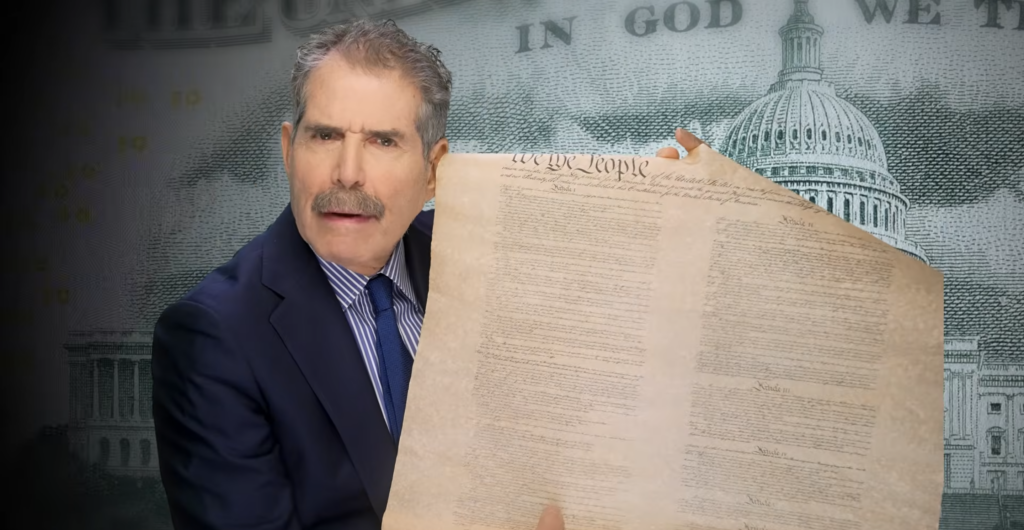

1 / 2
The story, neutrally told
Right · 2The US Supreme Court will hear a case about excessive fines brought by Ken Jouppi, an Alaska pilot, according to a column by John Stossel. The column says one of several excessive-fine cases has reached the court. ReasonRC “One of these excessive fine cases has reached the Supreme Court.” Read at Reason ↗ Hot AirR “Greenberg's law firm, the Institute for Justice, took Jouppi's case, and now the U.S. Supreme Court will hear it.” Read at Hot Air ↗ Right · 2Jouppi flew in Alaska for 30 years. State troopers stopped his plane before takeoff, searched it and found beer in a passenger's groceries. Some Alaska towns ban beer, and Jouppi was convicted of bootlegging. ReasonRC “Ken Jouppi worked as a pilot in Alaska for 30 years, until one day, state troopers stopped his plane before takeoff.” Read at Reason ↗ Hot AirR “Jouppi was convicted of bootlegging.” Read at Hot Air ↗ Right · 2Alaskan officials say the beer was visible, so Jouppi should have known about it. They jailed him for three days and seized his plane. His lawyer, Mike Greenberg of the Institute for Justice, says Jouppi has fought for 14 years to keep the plane, which still sits on a tarmac. ReasonRC “Alaskan officials say the beer was visible, so Jouppi should have known about it.” Read at Reason ↗ Hot AirR “"Jouppi has been fighting to keep his plane for 14 years," says Greenberg.” Read at Hot Air ↗
Right · 2The column also describes retired professor Tuncay Saydam. It says the IRS demands more than $400,000 over a missed one-page form about an old bank account in Turkey, although his unpaid tax is under $30,000. It says a California court upheld the penalty. Judge Donna Ryu wrote that the government "suffered a significant tax loss." ReasonRC “His unpaid tax is less than $30,000. But the IRS demands he pay them more than $400,000.” Read at Reason ↗ Hot AirR “A California court upheld that penalty.” Read at Hot Air ↗ Right · 2In Humboldt County, California, officials used aerial photos to look for unlicensed marijuana farms and fined owners of greenhouses. Blu Graham says the fine was $900,000, at $30,000 a day, for growing vegetables. Greenberg says no marijuana was found on the property. The column says a lawsuit led the county to promise to end its fine system. ReasonRC “Blu Graham was fined $900,000, "$30,000 a day, when all I've ever done is grow vegetables in my greenhouses."” Read at Reason ↗ Hot AirR “Finally, a lawsuit got the county to promise to end its "ruinous fine system."” Read at Hot Air ↗ Right · 2Greenberg argues that governments keep heavy fines because they bring in money, since prosecutors and troopers keep the proceeds. Stossel writes that he invited the judges and government lawyers to explain the fines in his video and none agreed. He says he hopes the Supreme Court will stop the abuses. ReasonRC “Unlike other forms of punishment," says Greenberg, "fines make the government money.” Read at Reason ↗ Hot AirR “I invited the heavy-fining judges and government lawyers to appear in my video to explain these fines. None would agree to talk about it.” Read at Hot Air ↗
Every sentence links to the reporting it rests on. The pill in front of each says where its sources sit: Left, Centre or Right when one side supplies at least half of them, Mixed when they are evenly split. The number is how many outlets it cites.
Left0 outlets
No left outlet in our sources has covered this story yet.
Centre0 outlets
No centre outlet in our sources has covered this story yet.
Right2 outlets
- Framing
- Opinion column that presents excessive fines as government overreach against ordinary people, and welcomes the Supreme Court case as a possible remedy.
- Emphasis
- Individual hardship stories, the profit motive behind fines, and the Institute for Justice lawyer's account.
- Leaves out or plays down
- Neither version gives the case name, a hearing date or the legal question before the court. Neither gives the government's legal arguments beyond Alaska's point that the beer was visible and a judge's quoted line on the tax loss. The only government voices are those two brief quotes, and officials declined to be interviewed.
- Charged language
- “act like tyrants”“ruinous fine system”“abusive system”“Protection Racket Media”
What every side reports
- Both outlets carry the same John Stossel column, saying the Supreme Court will hear Ken Jouppi's Alaska case.
- The column cites Jouppi's seized plane, Tuncay Saydam's IRS penalty and Humboldt County's greenhouse fines as examples of excessive fines.
Supreme Court of the United States organisation
The column says the court will hear Jouppi's case. It reports no statement from the court.
“now the U.S. Supreme Court will hear it.” — Hot Air
Excessive fines topic
Stossel says the Constitution bars excessive fines and that officials get around the ban because fines raise money for them.
“Doesn't America's Constitution say government may not impose "excessive fines"?” — Reason
Left0 articles
No coverage yet.
Centre0 articles
No coverage yet.
Right2 articles
-
ReasonRC · · Opinion
How Local Governments Turn Minor Violations Into Financial Ruin
Critical Opinion column by John Stossel that casts local and federal fines as ruinous bureaucratic overreach and hopes the Supreme Court acts.
-
Hot AirR · · Opinion
Critical The same Stossel column under the headline 'Not Fine at All', with a Hot Air editor's note about reader support.
- 14 Oct 16:47 First ReasonRC How Local Governments Turn Minor Violations Into Financial Ruin Opinion
- 17 Oct 16:30 +71h 42m Hot AirR Not Fine at All Opinion
Times are when each article was published, or when we first saw it if the outlet gave no time.
Ask about this story
Loading…