Supreme Court to hear challenge to federal ban on home distilling
On Oct. 19 the Supreme Court agreed to decide whether Congress may ban distilling spirits at home, in Department of Justice v. McNutt. Appeals courts have split on the 1868-era ban; the coverage so far is opinion from right-leaning outlets.

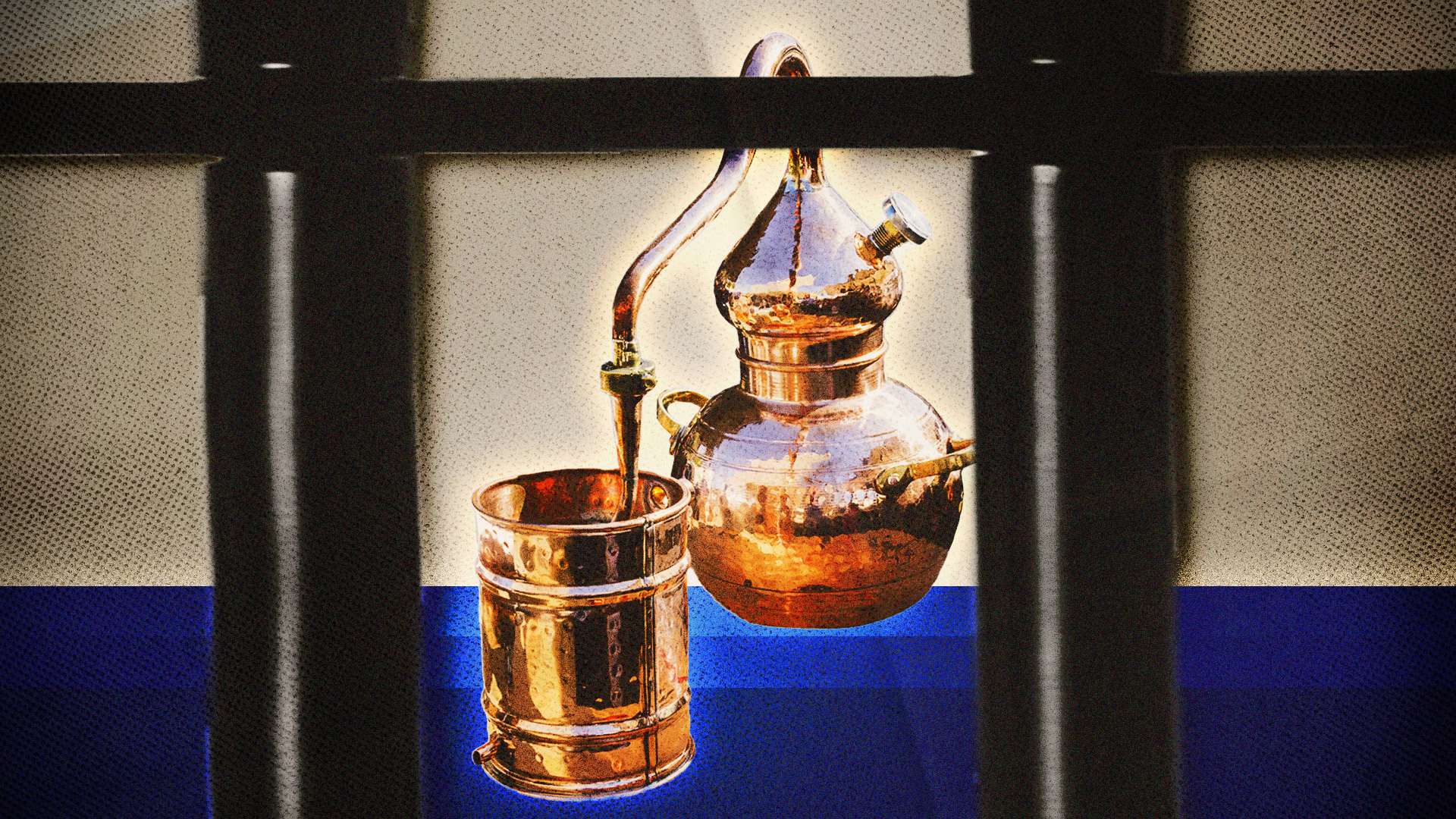
1 / 2
The story, neutrally told
Right · 2On Oct. 19 the Supreme Court agreed to hear Department of Justice v. McNutt, which asks whether Congress may bar people from distilling spirits at home. Washington ExaminerR “On Oct. 19, the Supreme Court agreed to decide whether Congress may impose that rule, in Department of Justice v. McNutt.” Read at Washington Examiner ↗ ReasonRC “The federal ban on home distilling is at the center of a case that the Supreme Court recently agreed to hear” Read at Reason ↗ Right · 2Federal law bars a distilled spirits plant from any dwelling house or connected shed, yard or enclosure (26 U.S.C. § 5178), a rule dating to 1868. A violation is punishable by a fine of up to $10,000 and up to five years in prison. Washington ExaminerR “26 U.S.C. § 5178 still bars a distilled spirits plant “in any dwelling house, in any shed, yard, or inclosure connected with any dwelling house.”” Read at Washington Examiner ↗ ReasonRC “an offense currently punishable by a maximum $10,000 fine and up to five years in prison” Read at Reason ↗ Right · 2Home brewing of beer and wine for personal use is permitted. The Washington Examiner's author says an adult may brew up to 100 gallons of beer a year without federal tax, and a household with two or more adults may brew 200. Washington ExaminerR “An adult may brew up to 100 gallons of beer a year for personal use without federal tax, and a household with two or more adults may brew 200.” Read at Washington Examiner ↗ ReasonRC “federal law has long permitted home wine and beer production "for personal or family use."” Read at Reason ↗
Right · 2In April the 5th Circuit held the ban invalid, in an opinion by Judge Edith Jones. It found the provisions "tax nothing" and are an "anti-revenue provision" that reduce revenue rather than raise it. The Washington Examiner's author says a divided 6th Circuit upheld the ban in a separate case 11 days later, and that both courts agreed the taxing clause alone could not support it, leaving the necessary and proper clause as the point of dispute. Washington ExaminerR “In April, the 5th Circuit held the ban invalid. Eleven days later, a divided 6th Circuit upheld it in a separate case.” Read at Washington Examiner ↗ ReasonRC “the ban is "an anti-revenue provision that prevents distilled spirits from coming into existence," meaning its effect is "to reduce revenue instead of raising it."” Read at Reason ↗ Right · 2The Justice Department, now under the Trump administration, wants the 5th Circuit overturned. It argues that home stills are harder to inspect and that the ban is a "necessary and proper" safeguard against tax evasion. Its petition says Congress acted "160 years ago in response to an extensive history of evasion." Washington ExaminerR “Its petition says Congress acted “160 years ago in response to an extensive history of evasion.”” Read at Washington Examiner ↗ ReasonRC “The Trump administration, which wants the Supreme Court to overturn the 5th Circuit's decision, argues that threatening to imprison home distillers is a "necessary and proper" safeguard against tax evasion.” Read at Reason ↗ Right · 2The lead respondent, Scott McNutt, is a member of the Hobby Distillers Association. He received a 2014 notice from the Treasury's tobacco tax bureau warning of possible civil and criminal liability. In November 2023 the agency told his lawyers that home distilling is illegal and that it would not consider a permit. Co-plaintiff Thomas Cowdrey wants to experiment with beverage spirits such as "apple pie vodka." Washington ExaminerR “In November 2023, the agency told his lawyers that home distilling is illegal and that it wouldn’t consider a permit.” Read at Washington Examiner ↗ ReasonRC “The lead plaintiff in this case is Scott McNutt, a member of the Hobby Distillers Association.” Read at Reason ↗
Right · 2Both writers say enforcement is sporadic. The Examiner's author cites the 6th Circuit saying the ban "apparently has not been enforced in court for a long while" even though the government "conspicuously declined to disavow enforcement." Reason notes that online retailers openly sell home stills. Washington ExaminerR “the ban “apparently has not been enforced in court for a long while,” yet the government “conspicuously declined to disavow enforcement of the ban.”” Read at Washington Examiner ↗ ReasonRC “online retailers such as Amazon sell a wide variety of home stills” Read at Reason ↗ Right · 1The Examiner's author expects arguments early next year and a decision by late June or early July. He notes that the grant of review decides nothing on the merits, that the Court could rule narrowly, and that the 5th Circuit never reached the commerce clause because the government did not press it on appeal. Washington ExaminerR “The court will likely hear arguments early next year and decide by late June or early July.”“the 5th Circuit never reached the commerce clause because the government didn’t press it on appeal” Read at Washington Examiner ↗
Every sentence links to the reporting it rests on. The pill in front of each says where its sources sit: Left, Centre or Right when one side supplies at least half of them, Mixed when they are evenly split. The number is how many outlets it cites.
Left0 outlets
No left outlet in our sources has covered this story yet.
Centre0 outlets
No centre outlet in our sources has covered this story yet.
Right2 outlets
- Framing
- Both pieces are opinion columns that argue the home distilling ban is unconstitutional or absurd. They use the Supreme Court's grant of review as a news peg for a libertarian case against the ban.
- Emphasis
- The inconsistency with legal home beer and wine production, the 5th Circuit's reasoning that the ban cuts revenue, and the lack of any limiting principle on Congress's power.
- Leaves out or plays down
- Neither piece gives the 6th Circuit's reasoning or dissent in detail, and neither carries a defender of the ban beyond the Justice Department's brief arguments. Reason does not mention the 6th Circuit ruling at all.
- Charged language
- “absurdity”“morally indefensible”“a standing threat”
- For example
-
“Criminalizing the hobby is morally indefensible and inconsistent with the treatment of wine and beer.” — Reason
“A rule the government won’t promise to leave alone stays a standing threat.” — Washington Examiner
What every side reports
- The Supreme Court has agreed to hear the case on the federal home distilling ban.
- The ban dates to 1868 and carries up to five years in prison and a $10,000 fine.
- Federal law allows home brewing of beer and wine for personal use.
- The 5th Circuit ruled the ban invalid in April, and the Justice Department is seeking to overturn that ruling.
Where accounts differ
-
Whether the ban is a valid exercise of Congress's powers
- Right
- Both columnists say it is not. They argue the ban collects no tax, has no limiting principle, and goes beyond the necessary and proper clause.
-
Whether the ban is a legitimate tax-protection measure
- Right
- The Justice Department, as relayed by both columnists, says home stills are hard to inspect and the ban guards against evasion. The Examiner's author concedes the government "has a fair point" on inspection; Reason calls the policy morally indefensible.
Supreme Court of the United States organisation
Has agreed to decide the constitutional question. The Examiner's author notes that the grant itself decides nothing on the merits and that the Court could rule narrowly; arguments are expected early next year.
“the grant itself decides nothing about the merits” — Washington Examiner
Home distilling topic
Both columnists treat home distilling as a harmless hobby that is unfairly criminalised compared with home beer and wine. The Examiner's author proposes a personal-use exemption for spirits with an annual cap and no sales.
“Congress should then adopt a personal-use rule for spirits modeled on the beer exemption, with an annual cap and no sales.” — Washington Examiner
“highlights the absurdity of treating this hobby as a crime” — Reason
Left0 articles
No coverage yet.
Centre0 articles
No coverage yet.
Right2 articles
-
Washington ExaminerR · · Opinion
Beer in my garage is legal. Whiskey could cost me five years
Critical First-person op-ed by a finance professional who argues the ban exceeds Congress's taxing and necessary-and-proper powers, and who proposes a narrow ruling plus a personal-use exemption.
-
ReasonRC · · Opinion
A Supreme Court Case Underlines the Absurdity of the Federal Ban on Home Distilling
Critical Reason column that summarises Judge Jones's 5th Circuit opinion and calls the ban absurd and morally indefensible.
- 27 Oct 12:00 First Washington ExaminerR Beer in my garage is legal. Whiskey could cost me five years Opinion
- 28 Oct 04:01 +16h 2m ReasonRC A Supreme Court Case Underlines the Absurdity of the Federal Ban on Home Distilling Opinion
Times are when each article was published, or when we first saw it if the outlet gave no time.
Ask about this story
Loading…