Survey finds about 183,000 Aldabra giant tortoises on Seychelles atoll, a record
A study by the Seychelles Islands Foundation and the University of Exeter estimates nearly 183,000 adult and sub-adult Aldabra giant tortoises live on Aldabra Atoll, the highest figure recorded. Authors warn climate change and invasive mammals remain threats.
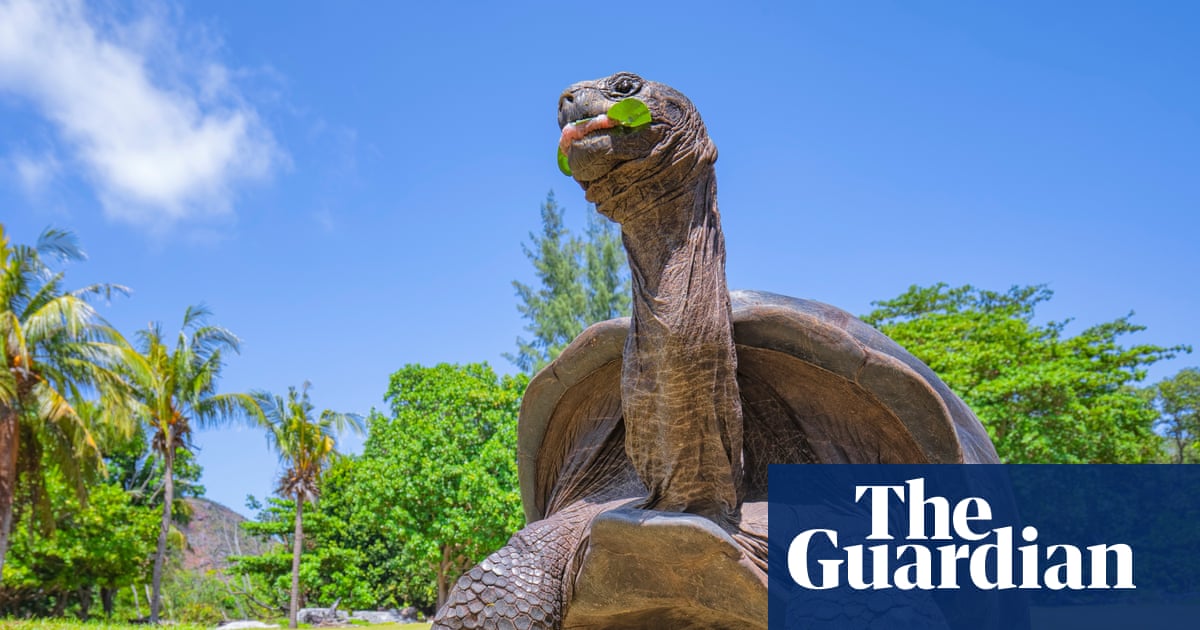
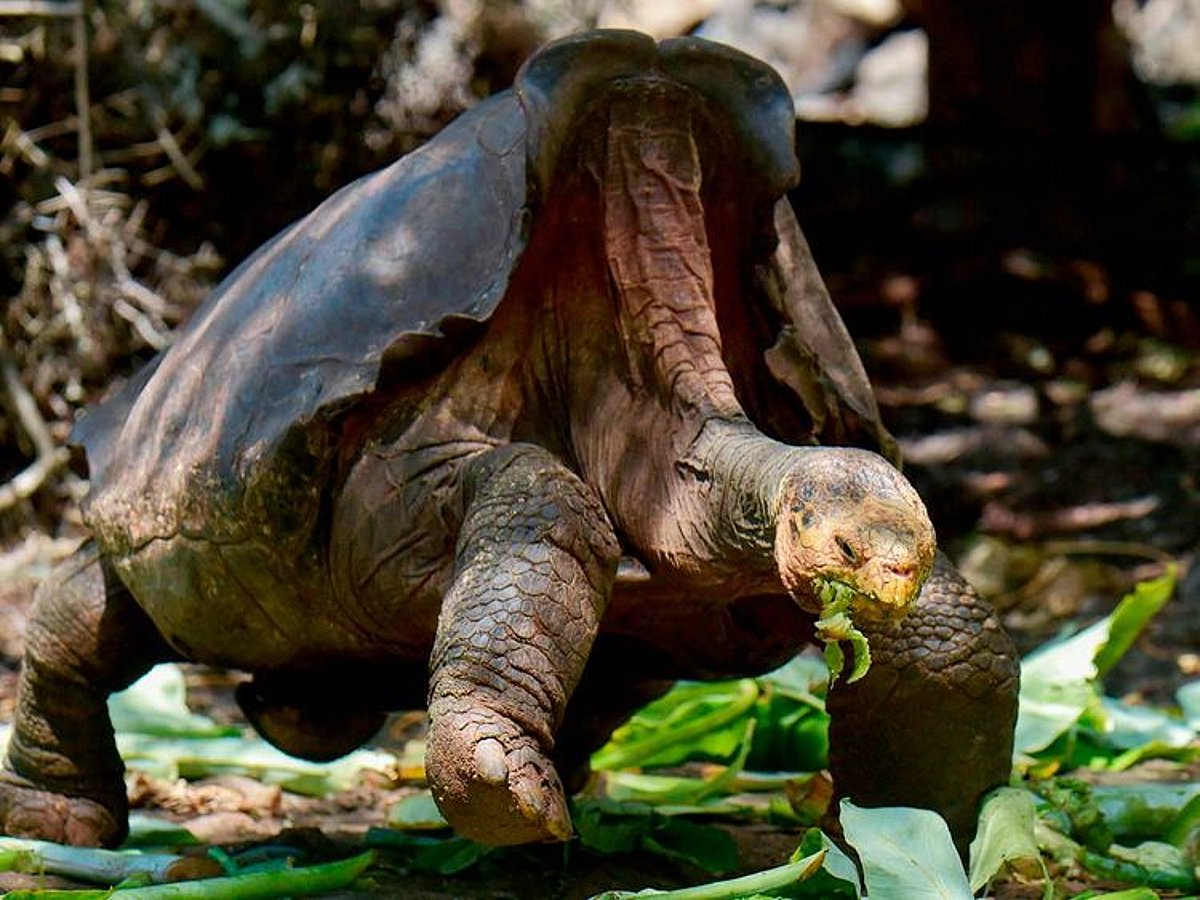
1 / 2
The story, neutrally told
Mixed · 2A survey led by the Seychelles Islands Foundation (SIF) and the University of Exeter found approximately 180,000 Aldabra giant tortoises on Aldabra Atoll in Seychelles, the highest figure ever recorded for the species. The GuardianLC “The most recent survey, led by Seychelles Islands Foundation (SIF) and the University of Exeter, revealed there were approximately 180,000 tortoises living on the island.” Read at The Guardian ↗ Gulf NewsN “The new estimate, the highest ever recorded for the species, comes from research conducted by the Seychelles Islands Foundation (SIF) and Britain’s University of Exeter.” Read at Gulf News ↗ Mixed · 2The study, published in the journal Ecology and Evolution, gives a best estimate of almost 183,000 adult and sub-adult tortoises, based on five years of counts between 2018 and 2022, and found the population relatively stable over that period. The GuardianLC “found that the population was relatively stable for this period, with a best estimate of almost 183,000 adult and sub-adult tortoises.” Read at The Guardian ↗ Gulf NewsN “The survey analysed five years of population monitoring data collected between 2018 and 2022” Read at Gulf News ↗ Centre · 1Gulf News reported that the figure exceeds the Seychelles human population, which it put at about 123,000 at the end of 2025 according to official statistics, and said Exeter issued a statement on 7 October. Gulf NewsN “exceeding the human population of the Seychelles which stood at approximately 123,000 at the end of 2025, according to official statistics”“according to a University of Exeter statement released on October 7” Read at Gulf News ↗
Mixed · 2The figure is the first update to a widely cited estimate of 100,000 tortoises from the late 1990s, but Gulf News said scientists caution it does not necessarily mean the population nearly doubled, because earlier surveys did not fully account for animals hidden under vegetation or in shade. The GuardianLC “It is the first update since a widely cited figure of 100,000 tortoises from the late 1990s.” Read at The Guardian ↗ Gulf NewsN “scientists caution that this does not necessarily mean the population has nearly doubled.” Read at Gulf News ↗ Mixed · 2Researchers used statistical modelling to estimate animals they could not see; co-author Dr Nancy Bunbury said dense vegetation makes counting difficult and the approach produced the most reliable baseline yet. The GuardianLC “By modelling what we didn’t see, as well as what we did, we’ve produced the most reliable baseline yet for this iconic Seychelles species” Read at The Guardian ↗ Gulf NewsN “Researchers used advanced statistical modelling to estimate the number of tortoises that survey teams could not directly observe.” Read at Gulf News ↗ Mixed · 2Exploitation in the 19th century left fewer than 1,000 tortoises on the atoll; it became a strict nature reserve in 1981 and a Unesco site in 1982, and the recovery is described as one of the Indian Ocean's greatest conservation success stories. The GuardianLC “the island became a strict nature reserve in 1981 and a Unesco site in 1982.” Read at The Guardian ↗ Gulf NewsN “being hailed as one of the Indian Ocean’s greatest conservation success stories” Read at Gulf News ↗
Mixed · 2Aldabra is one of only two places where giant tortoises live in the wild, the other being the Galápagos. The GuardianLC “Aldabra Atoll is one of only two places in the world where giant tortoises are found in the wild” Read at The Guardian ↗ Gulf NewsN “the other being Ecuador’s Galápagos Islands” Read at Gulf News ↗ Mixed · 2SIF chief executive Dr Frauke Fleischer-Dogley called the result proof of what long-term commitment to conservation can achieve. The GuardianLC “is proof of what long-term commitment to conservation can achieve.” Read at The Guardian ↗ Gulf NewsN “This is wonderful news for Seychelles, for the world, and for everyone who has worked to protect Aldabra.” Read at Gulf News ↗ Mixed · 2The authors warn that longer and more frequent droughts and rising sea levels threaten the atoll, and that feral cats and black rats prey on eggs and hatchlings; they say eradicating remaining invasive mammals could help further growth. Gulf News adds that feral goats were eradicated in 2012. The GuardianLC “feral cats and black rats that prey on tortoise eggs and hatchlings.” Read at The Guardian ↗ Gulf NewsN “feral goats, which previously damaged Aldabra’s vegetation, were successfully eradicated in 2012” Read at Gulf News ↗
Mixed · 2Dr Dave Hudson of the University of Exeter said the numbers are a baseline, not an endpoint, to help managers track change and act early. The GuardianLC “the numbers provide a baseline – not an endpoint.” Read at The Guardian ↗ Gulf NewsN “Researchers hope the new estimate will help conservation managers track population changes and respond early to emerging environmental threats.” Read at Gulf News ↗
Every sentence links to the reporting it rests on. The pill in front of each says where its sources sit: Left, Centre or Right when one side supplies at least half of them, Mixed when they are evenly split. The number is how many outlets it cites.
Left1 outlet
- Framing
- Conservation good-news story with a warning that vigilance is needed.
- Emphasis
- Record figure, researcher quotes, climate and invasive-species threats.
- Leaves out or plays down
- Does not give the Seychelles human population figure or caution against reading the rise as a doubling.
- Charged language
- “landmark survey”“greatest conservation success stories”
- For example
-
“A landmark survey of the world’s largest free-roaming giant tortoise population has revealed the once endangered species is thriving.” — The Guardian
Centre1 outlet
- Framing
- Tortoises outnumber Seychellois, with context on why the numbers are higher.
- Emphasis
- Comparison with the human population of about 123,000, methodological caveat, goat eradication in 2012.
- Leaves out or plays down
- Omits Bunbury's quote on counting difficulty, though it describes the modelling.
- Charged language
- “remarkable recovery”“hunted to the brink of extinction”
- For example
-
“Giant tortoises that were once hunted to the brink of extinction now outnumber humans in the Seychelles” — Gulf News
Right0 outlets
No right outlet in our sources has covered this story yet.
What every side reports
- Study by SIF and University of Exeter published in Ecology and Evolution
- Best estimate almost 183,000 adult and sub-adult tortoises, from 2018-2022 counts
- Highest figure ever recorded; earlier widely cited figure was about 100,000 from the late 1990s
- Fewer than 1,000 tortoises in the 19th century; reserve in 1981, Unesco site in 1982
- Climate change and invasive cats and rats remain threats
Where accounts differ
-
Whether the rise from 100,000 means the population nearly doubled
- Left
- Presents the figure as the first update since the late-1990s 100,000 and calls it a conservation success, without discussing methodological differences.
- Centre
- Says scientists caution it does not necessarily mean a near doubling, as earlier surveys missed hidden animals.
Aldabra Atoll place
Described as home to the world's largest free-roaming giant tortoise population, a strict nature reserve since 1981 and Unesco site since 1982.
“the island became a strict nature reserve in 1981 and a Unesco site in 1982.” — The Guardian
Seychelles place
Seychelles is presented as the beneficiary of the recovery; its SIF chief calls the result wonderful news for Seychelles and the world.
“This is wonderful news for Seychelles, for the world, and for everyone who has worked to protect Aldabra.” — Gulf News
Left1 article
-
Researchers find 180,000 giant tortoises living on island in Seychelles
Celebratory Reports the record count as a conservation success while noting threats from climate and invasive mammals.
Centre1 article
-
Giant tortoises now outnumber people in Seychelles
Celebratory Leads on tortoises outnumbering people and adds caution that the rise from 100,000 is partly a counting artefact.
Right0 articles
No coverage yet.
- 8 Oct 17:11 First The GuardianLC Researchers find 180,000 giant tortoises living on island in Seychelles
- 9 Oct 12:06 +18h 54m Gulf NewsN Giant tortoises now outnumber people in Seychelles
Times are when each article was published, or when we first saw it if the outlet gave no time.