Sweden reintroduces internal border controls for six months, citing Russia-linked threats
Sweden's government said it will run internal border controls from 12 November 2026 to 11 May 2027, citing a serious security situation tied to Russia's invasion of Ukraine and hybrid threats. Russia has denied involvement in such attacks.
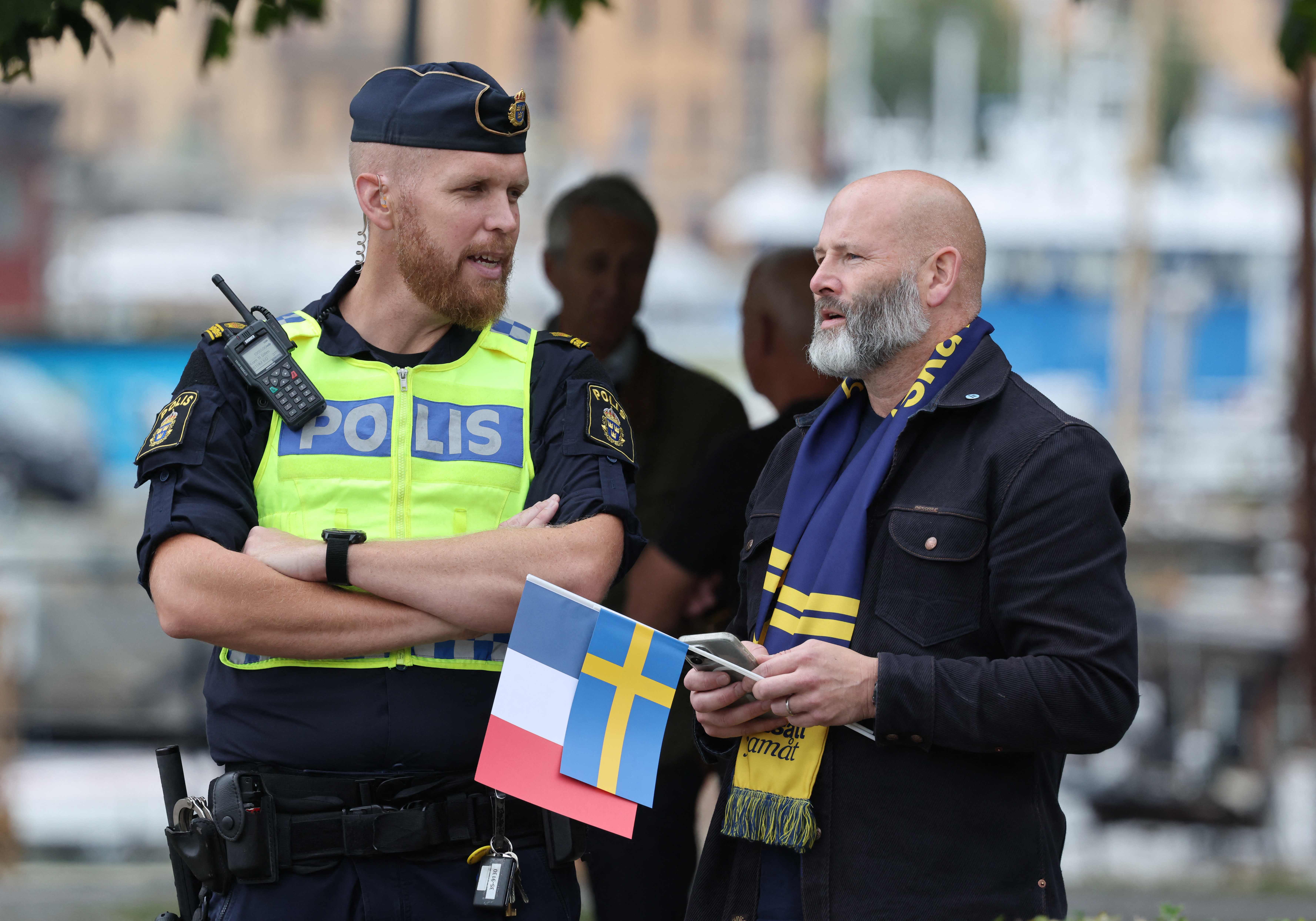

1 / 2
The story, neutrally told
Right · 1Sweden will reintroduce controls at its internal borders for six months, the government said in a statement on Thursday 5 November, based on an assessment of a serious threat to public order and internal security. Arab NewsRC “Sweden will reintroduce border controls at its internal borders for a period of six months” Read at Arab News ↗ Right · 1The controls will run from 12 November 2026 to 11 May 2027. Arab NewsRC “The border control will be in place for six months, from November 12 of 2026 to May 11 of 2027.” Read at Arab News ↗ Right · 1The government said the assessment rests primarily on the serious security situation resulting from Russia's full-scale invasion of Ukraine, which it said has led to hybrid threats and hostile actors moving and operating within the Schengen area. Arab NewsRC “which has led to hybrid threats and hostile actors moving and operating within” Read at Arab News ↗
Right · 1Sweden said the checks will be targeted and aimed at preventing sabotage and other hybrid attacks by hostile actors linked to Russia. The Straits TimesRC “it will conduct targeted border checks in the next six months to prevent sabotage and other hybrid attacks by hostile actors linked” Read at The Straits Times ↗ Right · 1Justice Minister Gunnar Strommer said in a written comment to Reuters that the invasion means Sweden faces a serious security situation, including an increased sabotage threat against Sweden and other EU member states. The Straits TimesRC “This concerns, among other things, an increased sabotage threat against Sweden and other EU member states," Justice Minister Gunnar Strommer said” Read at The Straits Times ↗ Right · 1Sweden, a member of the Schengen area, which as a rule allows travel between members without routine controls, has in the last decade introduced checks related to illegal migration and organised crime, but is now tying its effort directly to Russia. The Straits TimesRC “in the last decade introduced checks related to illegal migration and organised crime, but is now tying its effort directly to Russia” Read at The Straits Times ↗
Right · 1A May 2026 government decision had said border checks would be based on serious cross-border crime with links to state actors and terrorism, without naming any countries. The Straits TimesRC “without naming any countries” Read at The Straits Times ↗ Right · 1The Swedish government noted that France, Germany, Norway and Denmark, among other Schengen members, also have internal border controls. The Straits TimesRC “Several other Schengen members, including France, Germany, Norway and Denmark, also have internal border controls” Read at The Straits Times ↗ Right · 1Suspected hybrid warfare in Europe has drawn renewed attention after Germany blamed Russia in September for an attempted drone attack at an airport and Estonia said Russian security services commissioned an arson attack on a defence group; Russia called both accusations baseless. The Straits TimesRC “Germany blamed Russia in September for an attempted drone attack at an airport, while Estonia said Russian security services commissioned an arson attack on a defence group” Read at The Straits Times ↗
Right · 1The Kremlin denies any links to hybrid attacks in Europe, and the Russian embassy in Stockholm did not immediately respond to a request for comment. The Straits TimesRC “The Kremlin denies any links to hybrid attacks in Europe, calling the accusations unfounded.” Read at The Straits Times ↗
Every sentence links to the reporting it rests on. The pill in front of each says where its sources sit: Left, Centre or Right when one side supplies at least half of them, Mixed when they are evenly split. The number is how many outlets it cites.
Left0 outlets
No left outlet in our sources has covered this story yet.
Centre0 outlets
No centre outlet in our sources has covered this story yet.
Right2 outlets
- Framing
- Both outlets carry Reuters copy that presents the controls as a security response to Russia-linked hybrid threats, using the Swedish government's own rationale.
- Emphasis
- The Straits Times version adds the Justice Minister's quote, the German and Estonian incidents and Russia's denials; Arab News gives the dates and the government's stated basis.
- Leaves out or plays down
- Neither carries independent criticism of the decision or evidence for the hybrid threat beyond official statements. Arab News omits Russia's denial.
- Charged language
- “hybrid threats”“hostile actors”
- For example
-
“serious security situation resulting from Russia’s full-scale invasion of Ukraine” — Arab News
“Sweden says Russia hybrid threats make internal border checks necessary” — The Straits Times
What every side reports
- Sweden will have internal border controls for six months.
- The government cites the security situation from Russia's invasion of Ukraine and hybrid threats.
- Both reports are Reuters copy.
Sweden place
The Swedish government says the controls respond to a serious security situation from Russia's invasion of Ukraine, including sabotage threats and hostile actors operating in Schengen.
“so-called internal border checks were necessary to counter threats and "hostile actors who have moved and operated within the Schengen area"” — The Straits Times
Russia place
The Kremlin denies any links to hybrid attacks in Europe and calls the accusations unfounded.
“The Kremlin denies any links to hybrid attacks in Europe, calling the accusations unfounded.” — The Straits Times
Left0 articles
No coverage yet.
Centre0 articles
No coverage yet.
Right2 articles
-
Arab NewsRC · · via Reuters
Sweden reintroduces internal border control, citing security situation
Neutral Short Reuters copy relaying the government's statement, dates and security rationale.
-
The Straits TimesRC · · via Reuters
Sweden says Russia hybrid threats make internal border checks necessary
Neutral Reuters copy that ties the checks to Russia-linked hybrid threats and includes Russia's denial and context on other European incidents.
- 5 Nov 13:48 First Arab NewsRC Sweden reintroduces internal border control, citing security situation via Reuters
- 5 Nov 16:52 +3h 5m The Straits TimesRC Sweden says Russia hybrid threats make internal border checks necessary via Reuters
Times are when each article was published, or when we first saw it if the outlet gave no time.
Ask about this story
Loading…