Tehran international flights fall 42% after US ban on Iranian airlines, tracking data shows
AFP, using FlightRadar24 data, reports that international flights at Tehran's Imam Khomeini airport averaged 53 a day after the US ban took effect on 23 September, against 91 before. Some routes, notably China and Turkey, largely continue.

1 / 2
The story, neutrally told
Flights to and from Tehran's main international airport have fallen 42 percent since a US ban on Iranian airlines, according to tracking data up to Wednesday 30 September. Gulf NewsN “Flights to and from Tehran's main international airport have fallen by nearly half, 42 percent, since a US ban on Iranian airlines” Read at Gulf News ↗ Arab NewsRC “Flights to and from Tehran’s main international airport have fallen by nearly half, 42 percent, since a US ban on Iranian airlines” Read at Arab News ↗ Imam Khomeini International Airport averaged 53 daily international flights since the ban took effect on 23 September, compared with a daily average of 91 before it, according to the tracking platform FlightRadar24. Arab NewsRC “On average 53 daily international flights have operated to and from Tehran’s Imam Khomeini International Airport since Sept. 23, when the US ban took effect, compared to a daily average of 91 flights before the ban” Read at Arab News ↗ Gulf NewsN “compared to a daily average of 91 flights before the ban, according to data from tracking platform FlightRadar24” Read at Gulf News ↗ Traffic had already fallen after Israeli-American strikes on Iran at the end of February closed its airspace completely, and since flights resumed only Iranian carriers have operated services out of Iran. Arab NewsRC “Traffic had already fallen after Israeli-American strikes on Iran at the end of February led to the complete closure of its airspace.” Read at Arab News ↗ Gulf NewsN “Since flights resumed, only Iranian carriers operated services out of Iran.” Read at Gulf News ↗
Before the ban, a typical September week included services to 18 countries; since it, flights have stopped completely to Georgia, Oman and Azerbaijan. Arab NewsRC “Pre-ban September data shows that a typical week included services to 18 countries.”“flights have completely stopped to Georgia, Oman and Azerbaijan, which normally have regular service to Tehran.” Read at Arab News ↗ Three flights in each direction ran between Tehran and Dubai on 23 September but none since, and the UAE has said it is enforcing the US ban. Arab NewsRC “Three flights in each direction operated between Tehran and Dubai on Sept. 23, but none have operated since and the United Arab Emirates has said it is enforcing the US ban.” Read at Arab News ↗ No flights have flown between Iraq and Tehran since 25 September, but Iraq's transport ministry said on Tuesday that the US had permitted its national carrier to fly between Najaf and Iran, with services due to start in October. Arab NewsRC “No flights have taken off between Iraq and Tehran since Sept. 25 but Iraq’s transport ministry said on Tuesday that the US has given permission for its national carrier to operate flights between the holy city of Najaf and Iran.” Read at Arab News ↗ Gulf NewsN “They are set to start in October.” Read at Gulf News ↗
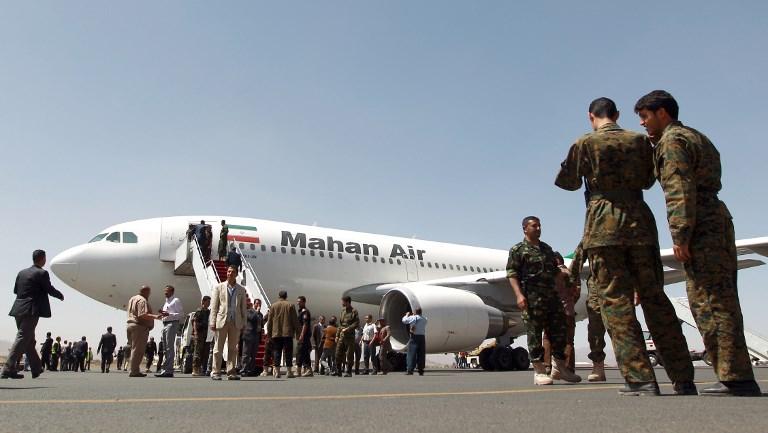
Some of the busiest routes have held up: China flights are unchanged at eight a day on average, and Turkey, by far the busiest route, is down only 19 percent, although passengers told AFP the Iran-Turkey air traffic has been heavily disrupted. Arab NewsRC “Flights to and from China have stayed the same at eight flights per day on average.”“Despite this, passengers told AFP earlier this week that air traffic between Iran and Turkiye has been heavily disrupted.” Read at Arab News ↗ Mahan Air has not flown to Turkey since 20 September, while other carriers such as Caspian Airlines have increased Tehran-Turkey flights since the ban. Arab NewsRC “Mahan Air, one of Iran’s main airlines has not operated any flights to Turkiye since Sept. 20.”“some airlines have increased their flights between Tehran and Turkiye since the ban came into effect, such as Caspian Airlines.” Read at Arab News ↗ Flights have also continued to Armenia, Russia, Afghanistan, Pakistan, Thailand, Tajikistan, Vietnam, Malaysia and Qatar, in that order of frequency; the analysis may have excluded flights that could not be reliably tracked. Gulf NewsN “Other countries where flights have continued since the ban are Armenia, Russia, Afghanistan, Pakistan, Thailand, Tajikistan, Vietnam, Malaysia and Qatar, in order of flight frequency.” Read at Gulf News ↗ Arab NewsRC “The analysis may have excluded some flights that could not be reliably tracked” Read at Arab News ↗
Every sentence links to the reporting it rests on.
Left0 outlets
No left outlet in our sources has covered this story yet.
Centre1 outlet
- Framing
- Gulf News runs the AFP report under a headline stressing that some international routes remain, with related-story links on the UAE suspension, US sanctions and Hormuz tensions.
- Emphasis
- The drop and the routes that survive; the page adds links on UAE flight suspensions and the wider US-Iran tensions.
- Leaves out or plays down
- No notable omissions against the other copy of the report.
- For example
-
“Tehran flights down 42% after US ban — but these international routes remain” — Gulf News
Right1 outlet
- Framing
- Arab News runs the AFP report essentially unchanged under a plain headline; its lede says flights have 'plummeted' while some routes stay active.
- Emphasis
- The size of the fall, with the continuing routes as a secondary point.
- Leaves out or plays down
- No related links or wider context beyond the AFP text.
- Charged language
- “plummeted”
- For example
-
“Since the US ban on Iranian airlines, flights at Tehran’s main international airport have plummeted by 42 percent.” — Arab News
What every side reports
- Flights at Tehran's main international airport fell 42 percent after the US ban took effect on 23 September.
- Daily international flights averaged 53 after the ban versus 91 before, per FlightRadar24.
- Flights to Georgia, Oman and Azerbaijan stopped completely; China flights are unchanged and Turkey flights fell 19 percent.
- Both outlets carry the same AFP report.
Left0 articles
No coverage yet.
Centre1 article
-
Gulf NewsN · · via AFP
Tehran flights down 42% after US ban — but these international routes remain
Neutral AFP copy carried by Gulf News, with a headline balancing the drop against surviving routes and links to related coverage of the ban.
Right1 article
-
Arab NewsRC · · via AFP
Tehran international flights drop 42 percent after US ban
Neutral AFP copy carried by Arab News, with a headline leading on the 42 percent drop; the lede's 'plummeted' is the outlet's own wording.
- 1 Oct 12:42 First Gulf NewsN Tehran flights down 42% after US ban — but these international routes remain via AFP
- 1 Oct 14:24 +1h 42m Arab NewsRC Tehran international flights drop 42 percent after US ban via AFP
Times are when each article was published, or when we first saw it if the outlet gave no time.