The Social Reckoning opens to about $5.5 million at US box office
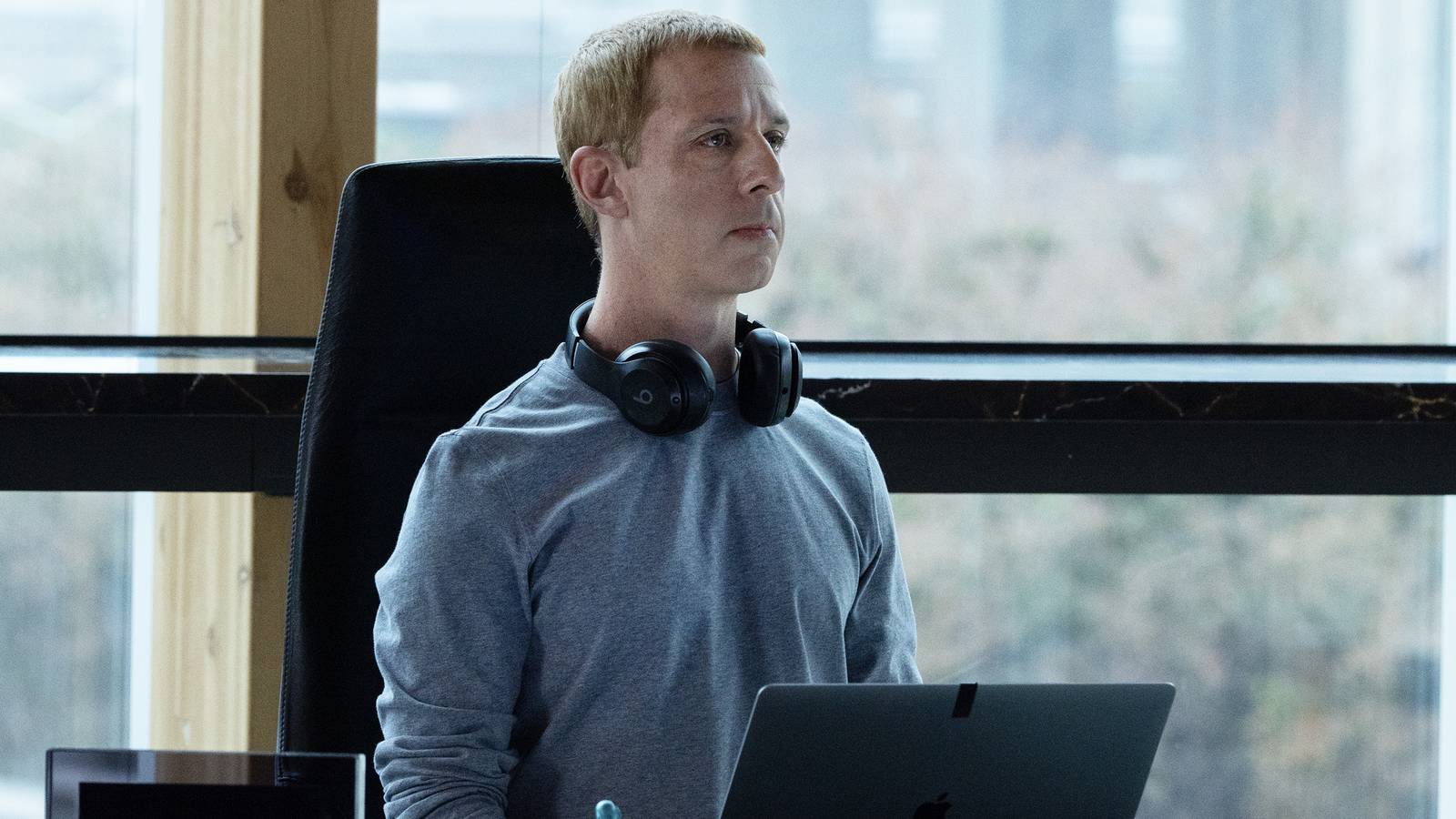
Aaron Sorkin's Facebook-whistleblower film, a follow-up to The Social Network, opened to roughly $5.5–6 million domestically. Both outlets call the debut a disappointment and cite mixed-to-poor reviews and the absence of David Fincher and Jesse Eisenberg.

1 / 2
The story, neutrally told
Mixed · 2The Social Reckoning, Aaron Sorkin's follow-up to 2010's The Social Network, took in about $5.5 million in its opening weekend, according to IndieWire; Collider put the domestic debut at around $6 million. IndieWireLC “which bombed in its opening weekend, collecting a mere $5.5 million” Read at IndieWire ↗ ColliderN “grossed around $6 million in its domestic debut” Read at Collider ↗ Mixed · 2Both outlets compare it unfavourably with the original, which opened to about $22 million and finished with around $225 million worldwide. IndieWireLC “Its predecessor earned $22.1 million in its debut and closed out its run with $225 million globally.” Read at IndieWire ↗ ColliderN “it ended up grossing around $225 million worldwide” Read at Collider ↗ Mixed · 2Director David Fincher did not return, and Sorkin, who wrote the first film, also directed this one; Jeremy Strong replaced Jesse Eisenberg as Mark Zuckerberg. ColliderN “The only member of the original creative team who returned is Aaron Sorkin, who serves as both the writer and director this time around.” Read at Collider ↗ IndieWireLC “Instead, he was replaced by Jeremy Strong.” Read at IndieWire ↗
Left · 1IndieWire reports Eisenberg reportedly sat out because he worried about glamorising the tech mogul, and says the lack of returning talent made the film harder to market, with Sony Pictures shying away from selling it as a sequel. IndieWireLC “Eisenberg also opted to sit this one out, reportedly because he was worried about glamorizing the tech mogul.”“Sony Pictures shied away from selling it as a sequel” Read at IndieWire ↗ Mixed · 2The film centres on Facebook whistleblower Frances Haugen, played by Mikey Madison, and a reporter played by Jeremy Allen White, rather than mainly on Zuckerberg. ColliderN “The movie revolves around a Facebook whistleblower and an investigative reporter, played by Mikey Madison and Jeremy Allen White” Read at Collider ↗ IndieWireLC “focuses less on Zuckerberg, and more on data engineer Frances Haugen’s decision to blow the whistle” Read at IndieWire ↗ Mixed · 2Reviews were weak: Collider cites a 54% Rotten Tomatoes score against 96% for the original, while IndieWire calls the reviews "blistering" and quotes The New Yorker's Richard Brody criticising Sorkin's direction. ColliderN “It currently holds a 54% score on the aggregator website Rotten Tomatoes” Read at Collider ↗ IndieWireLC “The reviews were blistering” Read at IndieWire ↗
Mixed · 2The outlets differ on the budget: IndieWire says Sony kept it at $30 million, so losses should be limited, while Collider reports $40 million. IndieWireLC “Sony wisely kept “The Social Reckoning’s” budget at $30 million” Read at IndieWire ↗ ColliderN “against a reported budget of $40 million” Read at Collider ↗ Left · 1IndieWire argues the story lacked urgency because AI now dominates concerns about Silicon Valley, and points to upcoming films about Elon Musk and Sam Altman as likelier to spark debate. IndieWireLC “Artificial intelligence is dominating the headlines”““Musk,” which opened in limited release this week earning $22,000 across four locations” Read at IndieWire ↗
Every sentence links to the reporting it rests on. The pill in front of each says where its sources sit: Left, Centre or Right when one side supplies at least half of them, Mixed when they are evenly split. The number is how many outlets it cites.
Left1 outlet
- Framing
- IndieWire treats the opening as a flop and writes an analysis of why it failed: bad reviews, Fincher's and Eisenberg's absence, and a topic overtaken by AI.
- Emphasis
- Cultural and industry context, Sony's low budget, and upcoming AI-themed films.
- Leaves out or plays down
- Gives no Rotten Tomatoes score.
- Charged language
- “Bombs”“bombed”“blistering”
- For example
-
““The Social Reckoning” isn’t just a financial failure, it’s a critical one, too.” — IndieWire
Centre1 outlet
- Framing
- Collider reports the underperformance as a short box-office news item, comparing it with the original film.
- Emphasis
- Rotten Tomatoes scores, comparison with the first film's returns, and Strong's mixed reception.
- Leaves out or plays down
- Does not discuss Eisenberg's reasons for leaving, marketing choices, or the AI-era context.
- Charged language
- “Officially Falls Short”“disappointing”
- For example
-
“Unlike that film, however, The Social Reckoning opened to mediocre reviews and disappointing box-office returns.” — Collider
Right0 outlets
No right outlet in our sources has covered this story yet.
What every side reports
- The film opened to roughly $5.5–6 million domestically.
- The original The Social Network earned about $22 million in its opening and around $225 million worldwide.
- Fincher and Eisenberg did not return; Jeremy Strong plays Zuckerberg.
- Reviews were weaker than for the original.
Where accounts differ
-
Budget
- Left
- IndieWire says $30 million.
- Centre
- Collider reports $40 million.
-
Opening gross
- Left
- $5.5 million.
- Centre
- Around $6 million.
Left1 article
-
Critical Analytical piece explaining why the film flopped, while noting Sony's low budget limits losses.
Centre2 articles
-
Aaron Sorkin’s ‘Social Network’ Follow-Up Officially Falls Short at the Box Office
Mixed Brief news report on a disappointing debut, benchmarked against the original film's scores and grosses.
-

Right0 articles
No coverage yet.
- 11 Oct 15:56 First IndieWireLC ‘The Social Reckoning’ Bombs With $5.5 Million Opening. Why Did Aaron Sorkin’s Facebook Follow-Up Fail at the Box Office?
- 11 Oct 16:45 +48m ColliderN Aaron Sorkin’s ‘Social Network’ Follow-Up Officially Falls Short at the Box Office
- 11 Oct 17:15 +1h 18m ColliderN ‘Yellowstone’ Star’s John Wayne Remake Officially Stumbles at the Box Office
Times are when each article was published, or when we first saw it if the outlet gave no time.