Three Iranian men on trial in London accused of spying on Iran International journalists
Three Iranian men went on trial at Woolwich Crown Court accused of surveilling Iran International journalists for Iran's intelligence service, allegedly to prepare a violent attack. All deny the National Security Act charges.


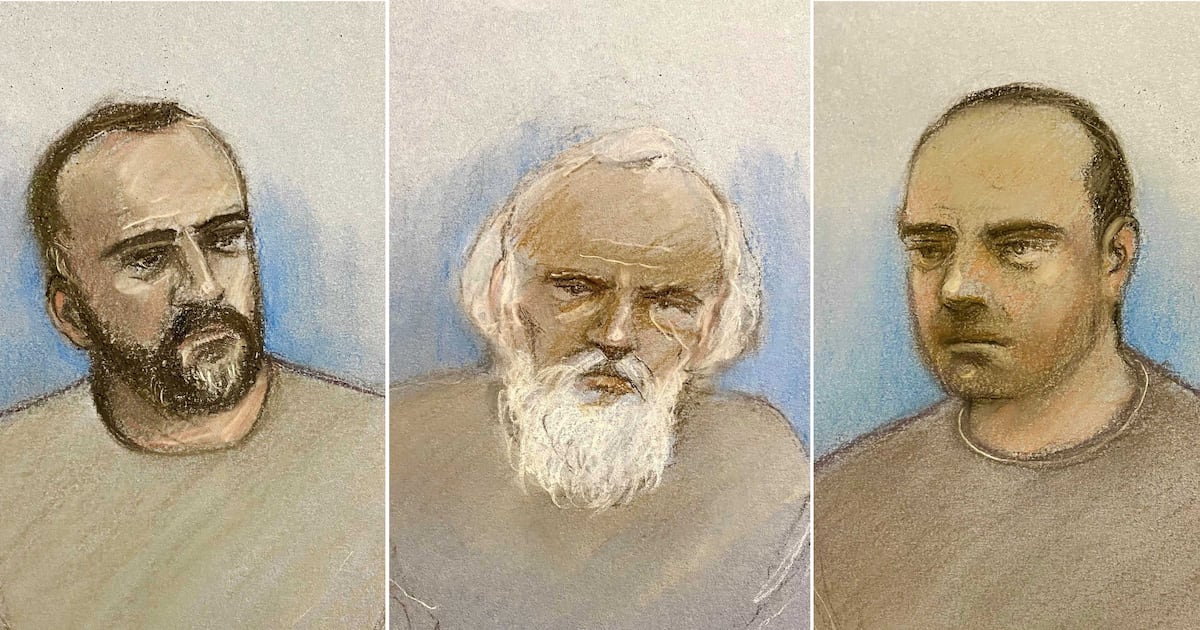

1 / 4
The story, neutrally told
Mixed · 2Three Iranian men went on trial at Woolwich Crown Court in London on 6 October 2026, accused of spying on UK-based dissident journalists on behalf of Iran's foreign intelligence service. The Straits TimesRC “Three Iranian men spied on British-based dissident journalists on behalf of Iran's foreign intelligence service” Read at The Straits Times ↗ BBC NewsN “Three Iranian men have gone on trial in London accused of spying for Iran on UK-based journalists” Read at BBC News ↗ Mixed · 2The defendants are Mostafa Sepahvand, 41, Farhad Javadi Manesh, 46, and Shapoor Qalehali Khani Noori, 57; each has denied two charges under Britain's National Security Act. The Straits TimesRC “have each denied two charges under Britain's National Security Act” Read at The Straits Times ↗ The NationalN “Mr Sepahvand is also accused of one count of preparing to commit serious violence, while the other two are accused of assisting him.” Read at The National ↗ Mixed · 2Prosecutors say the targets worked for Iran International, a Persian-language channel critical of Tehran and headquartered in London, and that the surveillance ran between August 2024 and March 2025. The Straits TimesRC “between August 2024 and March 2025” Read at The Straits Times ↗ BBC NewsN “has its headquarters in London” Read at BBC News ↗
Mixed · 2Prosecutor Bill Emlyn Jones told jurors the men researched at least two journalists, visiting linked addresses and taking photos and videos in preparation for an attack that Sepahvand was to carry out, with the aim of serious violence as retribution and to deter others. The Straits TimesRC “in preparation for an attack which Sepahvand was to carry out.” Read at The Straits Times ↗ BBC NewsN “to try to silence and deter others who might dare to voice their criticism” Read at BBC News ↗ Right · 2Jones said that "eliminating hostile or critical voices ... has effectively become a staple policy of the Islamic Republic of Iran"; the trial comes amid growing tension between Britain and Iran. The Jerusalem PostRC “has effectively become a staple policy of the Islamic Republic of Iran” Read at The Jerusalem Post ↗ The Straits TimesRC “at time of growing tension between Britain and Iran” Read at The Straits Times ↗ Centre · 2The BBC and The National name the journalists allegedly targeted as Mojtaba Pourmohsen, whose Brentford flats were photographed, and Kambiz Hosseini, host of the show The Program; briefing documents on Sepahvand's phone covered both. BBC NewsN “Images of him, his workplace and a hotel where he had lived were found in a "briefing document" on Sepahvand's mobile phone.” Read at BBC News ↗ The NationalN “including the name of the latter’s dog, the court heard” Read at The National ↗
Centre · 1The BBC adds that the men allegedly held a briefing sheet on barrister Jonathan Turner, a founding member of UK Lawyers for Israel. BBC NewsN “a "briefing sheet" on a barrister, Jonathan Turner” Read at BBC News ↗ Mixed · 2The defence positions as relayed: Manesh and Noori say they did not know they were assisting Iranian intelligence, while Sepahvand accepts he knew but says he was bullied or threatened into it. The Straits TimesRC “Manesh and Noori's case was that they did not know they were doing so to assist Iranian intelligence” Read at The Straits Times ↗ BBC NewsN “does not deny his involvement but said he did it out of fear of the consequences of refusing” Read at BBC News ↗ Centre · 2The prosecution called Sepahvand's claim "an entirely bogus claim", saying he acted for money and to have a theft conviction in Iran "fixed"; he was in contact with two men with Iranian phone numbers. BBC NewsN “"an entirely bogus claim"” Read at BBC News ↗ The NationalN “to have had a series of accusations of theft against him in Iran withdrawn” Read at The National ↗
Centre · 1All three were born in Iran, lived in London and had been granted temporary leave to remain after claiming asylum, arriving between 2016 and 2022. BBC NewsN “They arrived in the UK between 2016 and 2022.” Read at BBC News ↗
Every sentence links to the reporting it rests on. The pill in front of each says where its sources sit: Left, Centre or Right when one side supplies at least half of them, Mixed when they are evenly split. The number is how many outlets it cites.
Left0 outlets
No left outlet in our sources has covered this story yet.
Centre2 outlets
- Framing
- BBC and The National report the opening of the trial in detail, naming targets and the prosecution's account of motive.
- Emphasis
- Named journalists, briefing documents, Sepahvand's alleged motive, defendants' asylum backgrounds (BBC).
- Leaves out or plays down
- Neither stresses the wider UK-Iran tension context as much as the wire copy.
- Charged language
- “very obviously a form of spying”
- For example
-
“"The defendants were engaged in what is very obviously a form of spying," he added.” — BBC News
“Mr Hosseini was monitored by Mr Noori and Mr Manesh” — The National
Right2 outlets
- Framing
- Straits Times and Jerusalem Post run Reuters copy centred on the prosecution's claim of Iranian state retribution against critics.
- Emphasis
- Iran's policy of silencing critics; UK-Iran tension.
- Leaves out or plays down
- Omit named targets, the alleged motive of money and conviction fixing, and the defendants' immigration backgrounds.
- Charged language
- “Iranian regime”“staple policy”
- For example
-
“as retribution for their criticism of the Iranian regime” — The Straits Times
“has effectively become a staple policy of the Islamic Republic of Iran” — The Jerusalem Post
What every side reports
- Three men, Sepahvand, Manesh and Noori, are on trial at Woolwich Crown Court.
- They deny charges under the National Security Act.
- Prosecutors say the targets were Iran International journalists and that serious violence was intended.
Where accounts differ
-
Why Sepahvand took part
- Centre
- Prosecution says he did it for money and to have his Iranian theft conviction fixed, calling his duress claim bogus.
- Right
- Reuters copy says he accepted he knew but claims he was bullied or threatened.
-
The three defendants carried out surveillance of Iran International journalists for Iran's intelligence service in preparation for a violent attack.
Reported- Reports 4
- BBC News, The National, The Jerusalem Post, The Straits Times
-
Sepahvand acted under threat and Manesh and Noori did not know they were assisting Iranian intelligence.
Reported- Reports 3
- BBC News, The Jerusalem Post, The Straits Times
Left0 articles
No coverage yet.
Centre2 articles
-
Iranian men accused of spying targeted journalists for 'serious violence', court hears
Neutral Detailed BBC account including motive, targets and defendants' backgrounds.
-
Three Iranians 'spied on dissident journalists and plotted violent attack' in London
Neutral Focuses on Kambiz Hosseini as target and prosecution's account of Iranian pressure on his family.
Right2 articles
-
The Straits TimesRC · · via Reuters
Three Iranians on trial in UK for spying on dissident journalists
Neutral Reuters wire copy relaying the prosecution's opening and the defences.
-
Three Iranian men on trial for spying on UK-based journalists, planning 'serious violence'
Neutral Reuters wire copy run by the Jerusalem Post, with an added line describing Iran International.
- 6 Oct 11:43 First The Straits TimesRC Three Iranians on trial in UK for spying on dissident journalists via Reuters
- 6 Oct 14:18 +2h 34m BBC NewsN Iranian men accused of spying targeted journalists for 'serious violence', court hears
- 6 Oct 14:54 +3h 10m The Jerusalem PostRC Three Iranian men on trial for spying on UK-based journalists, planning 'serious violence'
- 6 Oct 15:30 +3h 47m The NationalN Three Iranians 'spied on dissident journalists and plotted violent attack' in London
Times are when each article was published, or when we first saw it if the outlet gave no time.