Georgia Tech team sends signals between injectable implants through body tissue in rats
Researchers reported in Science a system called SWANS that links tiny implants by sending small electrical pulses through tissue instead of Bluetooth. It has been tested in rats and animal tissue, not in people.
1 / 2
The story, neutrally told
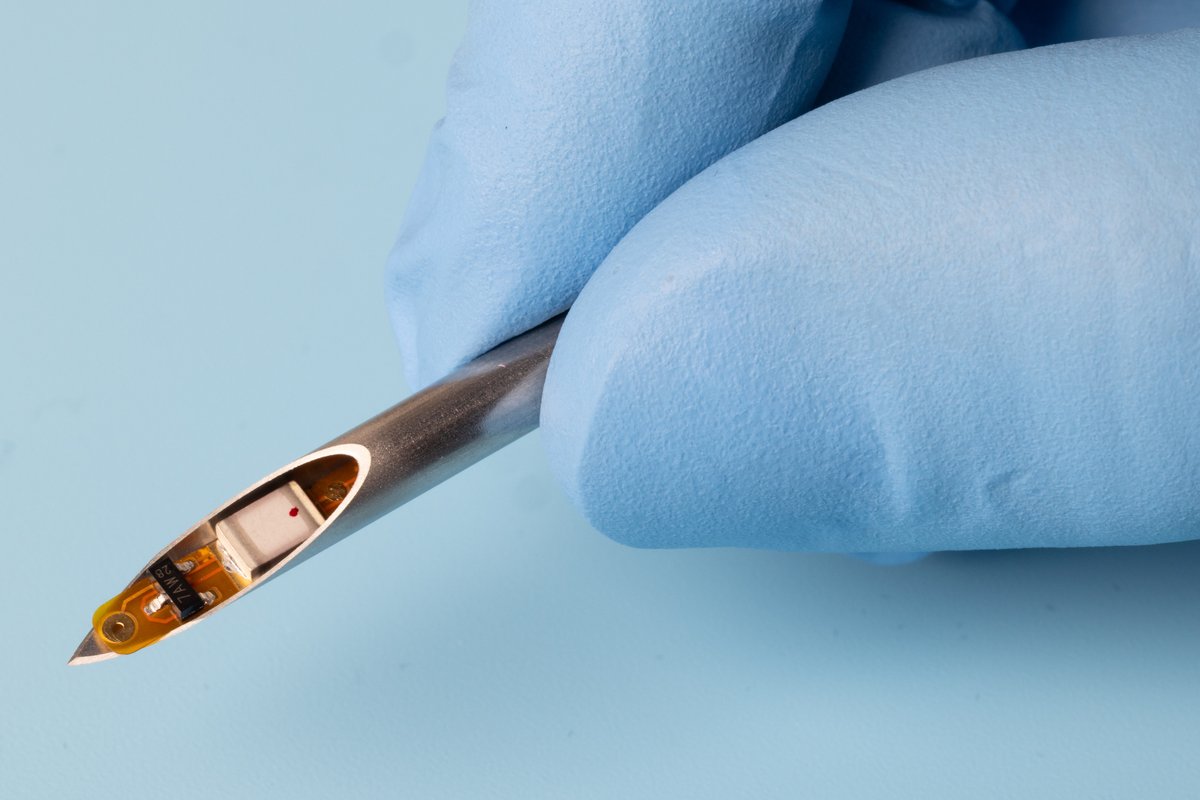
Researchers described a networking system called SWANS (Smart Wireless Autonomous Networking System) in the journal Science, in which implants communicate through body tissue rather than by radio. Scientific AmericanLC “The experiment showcased the Smart Wireless Autonomous Networking System, or SWANS, which researchers described in the journal Science last week.” Read at Scientific American ↗ Ars TechnicaLC “a team of Georgia Tech researchers built a networking system that sends signals through body tissue instead of antennas and radio waves” Read at Ars Technica ↗ A wearable hub sends voltage pulses into the body, and the body's salty tissue conducts them to injectable implants that contain sensors or actuators. Scientific AmericanLC “the body’s salty tissues conduct electricity, so a tiny voltage pulse from the hub could spread across the rat’s body to reach the implant” Read at Scientific American ↗ Ars TechnicaLC “emits voltage pulses of up to 12 volts” Read at Ars Technica ↗ In the most advanced rat experiment, sensors on the front legs triggered an implant that stimulated the sciatic nerve and made the matching hind leg twitch. Ars TechnicaLC “stimulated the sciatic nerve and made that leg twitch” Read at Ars Technica ↗ Scientific AmericanLC “In the rat, sensors worn on the front paws reported to a wearable hub” Read at Scientific American ↗
Senior author Alex Abramson says Bluetooth and near-field communication drain batteries, weaken in tissue and need antennas that make implants too big to inject. Ars Technica reports the paper puts the battery-life cut from Bluetooth at up to 90 percent. Ars TechnicaLC “Bluetooth components, when they’re activated, can cut an implant’s battery life by up to 90 percent.” Read at Ars Technica ↗ Scientific AmericanLC “where there’s little room for the bulky battery that wireless communication demands” Read at Scientific American ↗ Because the implants use passive components and only a simple signal, they draw almost no power while listening. Ars Technica reports battery life extended more than 15 times, and Scientific American says an actuator triggered daily could last about a year. Ars TechnicaLC “extending battery life more than 15 times compared to Bluetooth and NFC” Read at Ars Technica ↗ Scientific AmericanLC “an actuator triggered once a day could last for about a year” Read at Scientific American ↗ Signals travelled about 40 centimetres in the rat study, and in pork belly a 10-volt pulse produced a detectable gradient over more than 30 centimetres. Scientific AmericanLC “the signals traveled about 40 centimeters” Read at Scientific American ↗ Ars TechnicaLC “more than 30 centimeters across the tissue and up to 14 centimeters deep” Read at Ars Technica ↗
Limits include small data capacity, the need to tune voltage thresholds for each body and implant placement, and no testing yet in large animals or humans. Purdue's Hyowon Lee, who was not involved, says humans' bulk may shorten the signal range and that spoofing a wearable could be a security risk. Ars TechnicaLC “voltage thresholds need to be tuned for each body and implant placement” Read at Ars Technica ↗ Scientific AmericanLC “If you have some way of spoofing a wearable device to be able to activate things that are not supposed to be activated, that could be problematic” Read at Scientific American ↗ On safety, Abramson says pacemakers already use similar voltages, and in a two-month rat study the pulses did not stimulate other nerves or change heart activity. Scar tissue up to a millimetre thick formed around the implants. Ars TechnicaLC “The pulses didn’t stimulate nerves other than the targeted one, didn’t change the heart’s electrical activity” Read at Ars Technica ↗ Scientific AmericanLC “the pulses are basically imperceptible, comparable to what a pacemaker sends to the heart” Read at Scientific American ↗
Every sentence links to the reporting it rests on.
Left2 outlets
- Framing
- Both outlets present the work as a promising engineering advance that treats the body as a communication network, and both set out its limits.
- Emphasis
- Scientific American stresses the nervous-system analogy, the range limit and an outside expert's caution. Ars Technica stresses how the hardware works, power savings versus Bluetooth, and safety results.
- Leaves out or plays down
- Scientific American leaves out the chicken and pork tests, the 15-fold battery figure and the safety data. Ars Technica leaves out independent expert comment and the earlier BION trials.
- Charged language
- “digital nervous system”“the body as a shuttle”
- For example
-
“It’s a bid to build a sort of digital nervous system for medical devices.” — Scientific American
“But SWANS is not a do-it-all in-body communication system, and it likely never will be.” — Ars Technica
Centre0 outlets
No centre outlet in our sources has covered this story yet.
Right0 outlets
No right outlet in our sources has covered this story yet.
What every side reports
- SWANS was published in Science and comes from researchers including Alex Abramson at Georgia Tech.
- Pulses travel through body tissue from a wearable hub to injectable implants.
- In rats, front-limb movement triggered a hind-leg nerve stimulator.
- It has not been tested in people, and signal range and data capacity are limited.
Body-communication implants topic
Researchers present body-conducted signalling as a way to link tiny implants without Bluetooth, while acknowledging range, data and testing limits.
“This new communication protocol can be plugged into any of those previous systems” — Ars Technica
“SWANS has only made it into rats.” — Scientific American
Left2 articles
-
Tiny implants use the body as a communication network
Mixed Explains the concept through a rat experiment, with enthusiasm for the idea and caveats from an independent expert on range, human scale and security.
-
A local network of implants uses your body as the wiring
Neutral Technical explainer that leads with the problems of Bluetooth in implants and details how SWANS works, what was tested and where it falls short.
Centre0 articles
No coverage yet.
Right0 articles
No coverage yet.
- 29 Sep 12:00 First Scientific AmericanLC Tiny implants use the body as a communication network
- 30 Sep 22:06 +34h 7m Ars TechnicaLC A local network of implants uses your body as the wiring
Times are when each article was published, or when we first saw it if the outlet gave no time.