US federal deficit rose to $1.99 trillion in fiscal 2026, Treasury says
The Treasury Department said the federal budget deficit for fiscal 2026 was nearly $2 trillion, up about 12% from a year earlier. Coverage differs on emphasis: one outlet stresses structural spending-revenue mismatch, another the effect of tariff refunds on Trump's revenue strategy.

1 / 2
The story, neutrally told
Mixed · 2The Treasury Department announced on Friday 16 October 2026 that the federal budget deficit rose to nearly $2 trillion in fiscal 2026. Washington ExaminerR “The federal budget deficit rose to nearly $2 trillion in fiscal 2026, the Treasury Department announced on Friday.” Read at Washington Examiner ↗ NewsweekN “The $1.992 trillion shortfall was about 12 percent higher than the $1.775 trillion deficit recorded in fiscal 2025” Read at Newsweek ↗ Centre · 1Newsweek reported that the $1.992 trillion figure was the third-highest annual deficit in US history, behind only 2020 and 2021, and that Treasury put it at an estimated 6.2% of GDP, against 5.8% in fiscal 2025. NewsweekN “It was the third-highest annual deficit in U.S. history, trailing only the pandemic-era deficits of 2020 and 2021.”“The Treasury calculated the deficit at an estimated 6.2 percent of gross domestic product, compared with 5.8 percent in fiscal 2025.” Read at Newsweek ↗ Centre · 1Receipts rose 3% to a record $5.40 trillion, while spending rose 6% to a record $7.40 trillion; debt-service outlays hit a record $1.36 trillion (up $144 billion, or 12%), and defense spending rose 6% to $917 billion. NewsweekN “Federal receipts rose 3 percent to a record $5.40 trillion, but spending increased 6 percent to a record $7.40 trillion.”“Debt-service outlays reached a record $1.36 trillion, an increase of $144 billion, or 12 percent” Read at Newsweek ↗
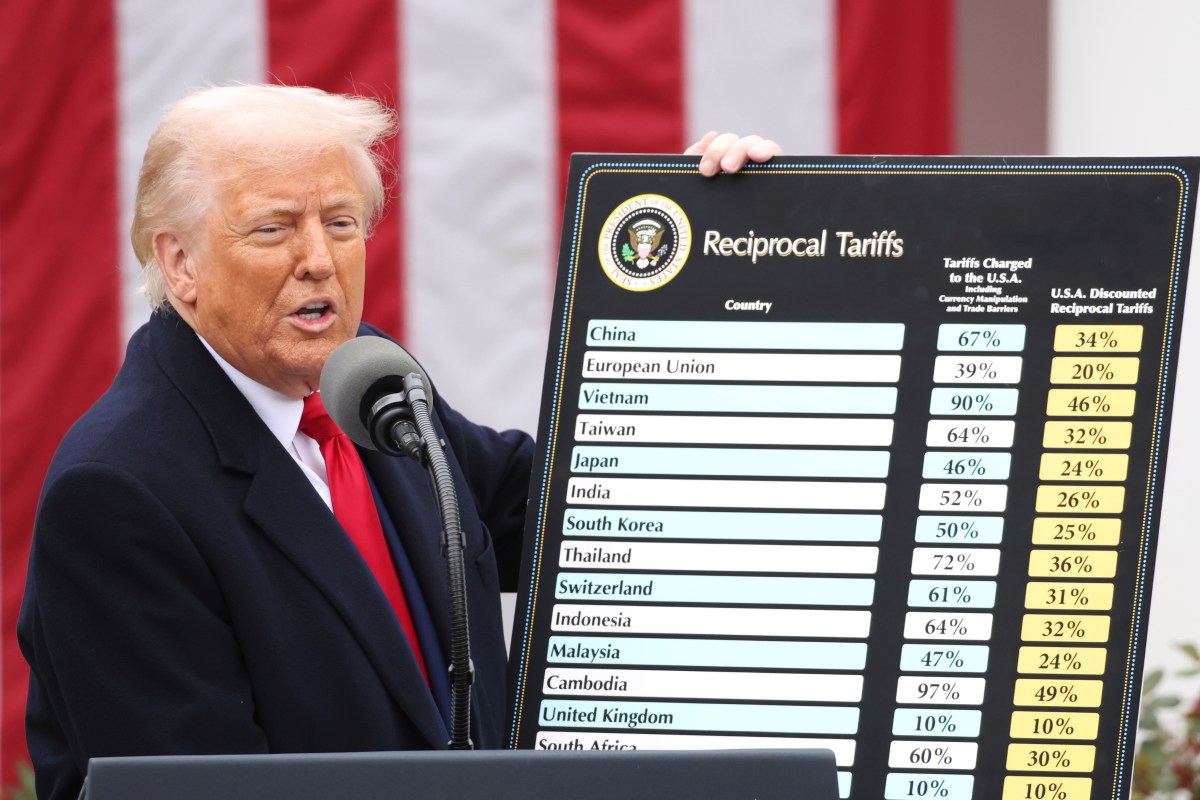
Right · 1The Washington Examiner described the shortfall as large for a nation that is not at war or in a recession, saying it shows a long-term mismatch between spending and revenues. Washington ExaminerR “The shortfall is large for a nation that is not at war or in a recession, and shows that the government faces a long-term mismatch between spending and revenues.” Read at Washington Examiner ↗ Centre · 1Newsweek tied the result to President Donald Trump's tariff strategy: after the Supreme Court's February ruling struck down many of his tariffs, roughly $145 billion in refunds were issued during the fiscal year, and net tariff income fell 11% to about $173 billion, according to Treasury figures reported by Reuters. NewsweekN “Roughly $145 billion in tariff refunds were issued during the fiscal year, contributing to an 11 percent decline in net tariff income to about $173 billion, according to Treasury figures reported by Reuters.” Read at Newsweek ↗ Centre · 1The Congressional Budget Office projected in August that trade-policy changes through 31 July would add $900 billion to cumulative deficits for 2027–2036 relative to its February baseline, and that replacement tariffs imposed under other authorities would raise less revenue. NewsweekN “changes in trade policy through July 31 would increase cumulative deficits by $900 billion from 2027 through 2036 compared with its February baseline”“The administration imposed replacement tariffs using other authorities, but CBO projected those would raise less revenue.” Read at Newsweek ↗
Centre · 1Boston University finance professor Mark Williams called the 12% rise "staggering" and said the deficit could reach $3 trillion by 2032 on current trajectories; Treasury Secretary Scott Bessent has said the US can "grow our way out of" the problem. NewsweekN “"If current spending trajectories hold, the total annual deficit could reach $3 trillion by 2032."”“He told CNBC in August that the United States could "grow our way out of" the problem.” Read at Newsweek ↗ Centre · 1Newsweek also noted this was the 25th straight fiscal year of deficit, that total US debt passed $40 trillion, and that the Tax Foundation estimated Trump's proposed $5,000 payments to adults would cost about $1.25 trillion, versus about $125 billion in net revenue expected in 2027 from his newer tariffs. NewsweekN “Friday's figures marked the 25th consecutive fiscal year in which the federal government operated at a deficit.”“$5,000 payments to roughly 250 million adults would cost about $1.25 trillion.” Read at Newsweek ↗
Every sentence links to the reporting it rests on. The pill in front of each says where its sources sit: Left, Centre or Right when one side supplies at least half of them, Mixed when they are evenly split. The number is how many outlets it cites.
Left0 outlets
No left outlet in our sources has covered this story yet.
Centre1 outlet
- Framing
- Frames the deficit as a collision between Trump's tariff-as-revenue strategy and fiscal reality, with detailed figures, CBO projections and an academic's warnings.
- Emphasis
- Tariff refunds after the Supreme Court ruling, record spending and interest costs, and the cost of proposed $5,000 payments.
- Leaves out or plays down
- Does not quote any administration response to the deficit figures beyond Bessent's August remark.
- Charged language
- “staggering”“collided”
- For example
-
“President Donald Trump's push to use tariffs to raise federal revenue and help tackle the national debt collided with a stark fiscal reality Friday” — Newsweek
Right1 outlet
- Framing
- Reports the Treasury announcement briefly and frames the deficit as a structural spending-revenue problem, large for a nation not at war or in recession.
- Emphasis
- Long-term mismatch between spending and revenues.
- Leaves out or plays down
- Offers no mention of tariffs, refunds or the drivers of the increase in the available text.
- Charged language
- “long-term mismatch”
- For example
-
“The shortfall is large for a nation that is not at war or in a recession, and shows that the government faces a long-term mismatch between spending and revenues.” — Washington Examiner
What every side reports
- Treasury announced on Friday that the fiscal 2026 federal deficit was nearly $2 trillion.
- The deficit is large given the US is not in a recession or at war (Examiner) and is about 12% above fiscal 2025 (Newsweek).
US Department of the Treasury organisation
Released the figures showing the fiscal 2026 deficit of nearly $2 trillion, about 6.2% of GDP.
“according to figures released Friday by the Treasury Department” — Newsweek
Donald Trump person
Has promoted tariffs as a trade tool and revenue source for debt reduction and direct payments; Newsweek says court-ordered refunds undercut that.
“Trump has repeatedly promoted tariffs as both a tool for reshaping U.S. trade and a potentially substantial source of revenue.” — Newsweek
Left0 articles
No coverage yet.
Centre1 article
-
Trump’s Tariff Strategy Collides With $2 Trillion US Deficit
Critical Analytical piece linking the deficit to Trump's tariff policy and refunds, with expert warnings and cost estimates for proposed payments.
Right1 article
-
Treasury announces deficit rose to $1.99 trillion in fiscal year 2026
Critical Short news item presenting the near-$2 trillion deficit as large for peacetime and non-recession conditions.
- 16 Oct 19:07 First Washington ExaminerR Treasury announces deficit rose to $1.99 trillion in fiscal year 2026
- 17 Oct 03:35 +8h 28m NewsweekN Trump’s Tariff Strategy Collides With $2 Trillion US Deficit
Times are when each article was published, or when we first saw it if the outlet gave no time.
Ask about this story
Loading…