Interior Department strategy to sell public lands draws bipartisan opposition
A five-year Interior Department strategy says the Trump administration wants to sell some federal land to states, tribes and local governments. Lawmakers of both parties and conservation groups have objected.
Updated (version 3). New coverage since the last version from Inside Climate News, Just the News, The Times of India.


1 / 6
The story, neutrally told
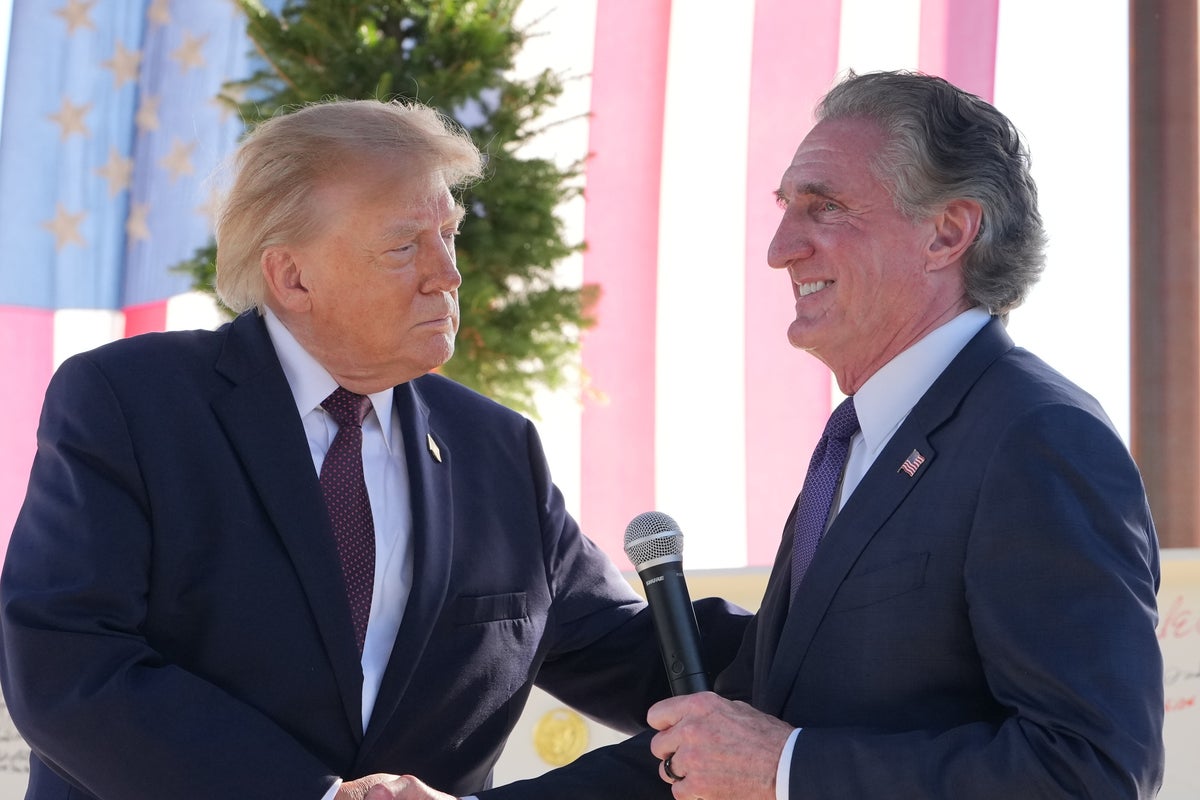
Left · 1The Interior Department's new five-year strategy, covering 2026 to 2030, says the Trump administration wants to sell public lands to states, tribes and local governments to "decrease the size of the federal estate". The IndependentLC “President Donald Trump's administration wants to sell public lands to states, tribes and local governments as part of a push to "decrease the size of the federal estate,"” Read at The Independent ↗ Left · 1The department said selling property would let it focus resources on "nationally significant" lands. The strategy names no specific areas and gives no scale or geography for sales. The IndependentLC “No specifics were provided regarding which areas might be offered, nor the exact scale or geography of prospective sales.” Read at The Independent ↗ Centre · 1Newsweek reports this is the first time Interior has confirmed it will sell federal land, after Secretary Doug Burgum previously said the administration had no plans to sell public land. The plan was released on November 10, and Newsweek says it offers no details on how sales would be arranged. NewsweekN “This is the first time that the Interior Department has confirmed it will sell federal land, despite the fact that Interior Secretary Doug Burgum previously said the Trump administration had no plans to sell public land.”“in the newly proposed strategic plan, released on November 10” Read at Newsweek ↗
Mixed · 2Outlets differ on the plan's length: the Independent and Rep. Chellie Pingree call it a five-year strategy covering 2026 to 2030, while the Washington Examiner and Newsweek call it a four-year plan; the Examiner says the document is 28 pages. Washington ExaminerR “The public land sales were detailed in the Interior Department’s four-year strategic plan released this week” Read at Washington Examiner ↗ The IndependentLC “Laying out a framework for the Interior Department's operational goals from 2026 to 2030” Read at The Independent ↗ Left · 1The strategy also recommends targeted land exchanges and transfers to boost domestic energy production. Interior officials said a share of sale revenue would go to purchasers to fund conservation elsewhere. The IndependentLC “a share of the revenue from land sales would be returned to purchasers to support environmental conservation elsewhere, Interior officials said.” Read at The Independent ↗ Left · 1Inside Climate News says the plan also commits Interior to "consolidate its workforce", after the department has already lost more than 17 percent of its staff under the second Trump administration. It says the plan rules out using the Land and Water Conservation Fund to buy more land, shifting instead to buying recreation and conservation easements on private land. Inside Climate NewsLC “The plan also says the agency will “consolidate its workforce to advance operational efficiencies.” Interior has already lost more than 17 percent of its workforce under the second Trump administration.”“Instead of using the Land and Water Conservation Fund to purchase additional acreage, the agency says it will “shift its investment focus” to buying recreational and conservation easements on privately owned lands.” Read at Inside Climate News ↗
Left · 1Opposition came from both parties. Rep. Ryan Zinke of Montana, Interior Secretary in Trump's first term, said through his office that he "remains firmly opposed to the sale or transfer of public lands" and would vote against related measures before leaving Congress at the end of this term. The IndependentLC “he "remains firmly opposed to the sale or transfer of public lands."” Read at The Independent ↗ Mixed · 2Democratic Sen. Martin Heinrich of New Mexico, the leading Democrat on the Senate Natural Resources Committee, said "Public lands belong in public hands". He said he led the fight against an earlier sale proposal and would do so again. The IndependentLC “"These lands belong to the American people, not private interests looking to cash in. Public lands belong in public hands,"” Read at The Independent ↗ Washington ExaminerR ““Two summers ago, I led the successful fight to stop an unprecedented proposal to sell off millions of acres of public lands, and I will do it again,”” Read at Washington Examiner ↗ Right · 1Republican Sen. Tim Sheehy of Montana said his office was not consulted and that he "will not allow ONE ACRE of Montana land to be sold". The Washington Examiner reports that Rep. Mike Simpson of Idaho and Sen. Steve Daines of Montana also confirmed their opposition. Washington ExaminerR “Our office was not consulted on this,” he said.”“Rep. Mike Simpson (R-ID), Sen. Steve Daines (R-MT), and Rep. Ryan Zinke (R-MT)” Read at Washington Examiner ↗
Centre · 1Rep. Chellie Pingree of Maine said on X that Trump was treating public lands "like his personal real estate portfolio" and that Burgum "just put the sell-off in writing", asking which lands and how many acres. The American Conservation Coalition said any swaps or sales must ensure public access and conservation, and noted that "a strategic plan is not legal authority to sell public lands". NewsweekN “Donald Trump is treating America’s public lands like his personal real estate portfolio. And Doug Burgum just put the sell-off in writing.”“It should be noted that a strategic plan is not legal authority to sell public lands,” the statement added.” Read at Newsweek ↗ Mixed · 2The Examiner says Heinrich spoke as the expected chair of the Senate Energy and Natural Resources Committee in the next Congress. Interior did not respond to the Examiner's inquiry, and Newsweek said it had asked Interior for comment. Washington ExaminerR “As Chair of the Senate Energy and Natural Resources Committee next Congress, I will fight efforts to sell off or privatize our public lands,””“Interior did not respond to the Washington Examiner‘s inquiry.” Read at Washington Examiner ↗ NewsweekN “Newsweek reached out to the Interior Department via email for comment.” Read at Newsweek ↗ Right · 1The Washington Examiner says groups including the Sierra Club, Center for Western Priorities, Nature is NonPartisan, the Sagebrush Institute and Save our Parks oppose the plan. Maya Cohn of United by Nature called land sales "nearly universally unpopular" and warned that no federal law would stop a buyer from immediately reselling land to the highest bidder, while Independent Women's Gabriella Hoffman warned the plan could be seen as a "Trojan horse" to privatize public land. Washington ExaminerR ““Selling off our public lands is nearly universally unpopular,” Maya Cohn, vice president of policy and external affairs at United by Nature”“this maneuver could be seen as a Trojan horse to privatize all public land in the US” Read at Washington Examiner ↗
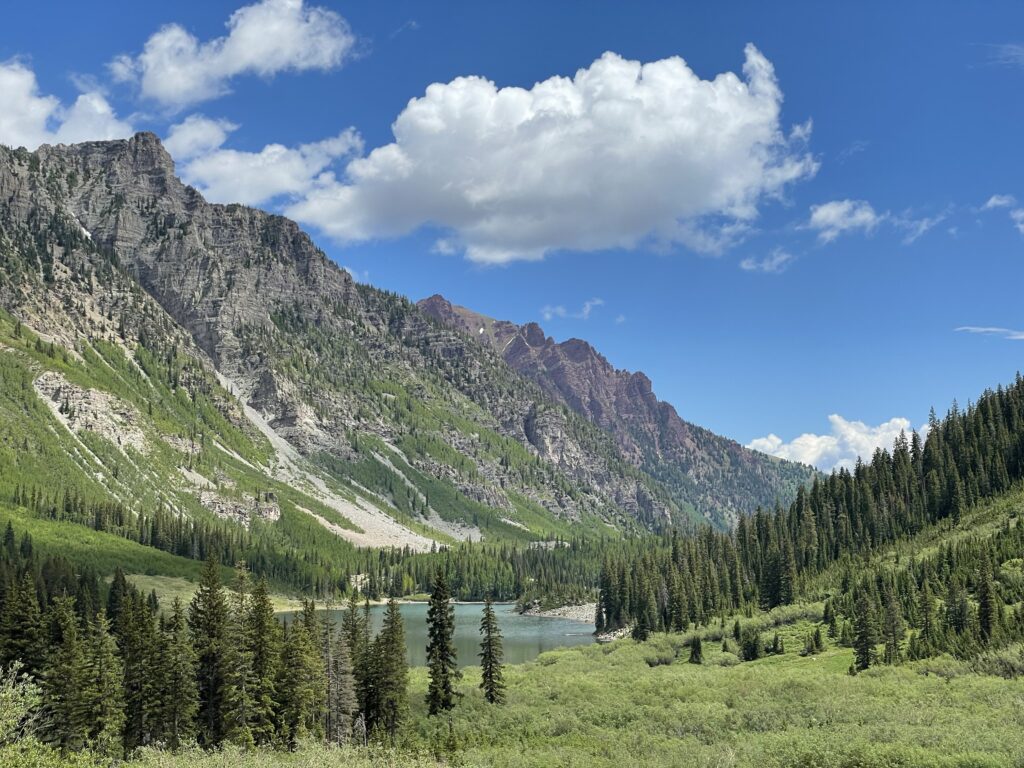
Left · 1Kate Groetzinger of the Center for Western Priorities called it "the biggest attack we've ever seen on public lands". She and other critics told Inside Climate News that states and counties may be unable to afford the land and could resell it to data center, mining or energy firms, and that the law's "national interest" test for sales can be read broadly. The outlet notes the plan does not name data centers as buyers, but the White House earlier asked BLM state offices to identify land suited to them. Interior did not respond to its requests for comment. Inside Climate NewsLC ““This is the biggest attack we’ve ever seen on public lands,” said Kate Groetzinger, communications director for the nonprofit Center for Western Priorities.”“The plan doesn’t specifically identify data centers as potential customers to purchase federal property, but the White House previously asked Bureau of Land Management state offices to identify lands that would be appropriate for these uses.” Read at Inside Climate News ↗ Left · 1Inside Climate News also points to moves it sees as precursors: a September Forest Service permit letting Pitkin County, Colorado, manage part of the White River National Forest including the Maroon Bells Scenic Area, which critics see as a trial run for transfers. Inside Climate NewsLC “Critics see this move as a trial run for public land transfers.” Read at Inside Climate News ↗ Mixed · 2Earlier sale efforts failed. Land-sale provisions proposed to fund the One Big Beautiful Bill were struck from the tax and spending package after backlash. Sen. Mike Lee of Utah's proposal to transfer over 2 million acres also collapsed amid opposition from both parties. Washington ExaminerR “land sale provisions proposed to fund the One Big Beautiful Bill last summer, that were ultimately struck from the tax and spending package.” Read at Washington Examiner ↗ The IndependentLC “Those proposals ultimately collapsed amid opposition from both parties.” Read at The Independent ↗
Mixed · 2Newsweek says the One Big Beautiful Bill Act, signed in July 2025, had included provisions to sell between 2.2 million and 3.3 million acres across 11 western states before the provision was withdrawn; the Examiner puts Lee's proposal at roughly 3 million acres. NewsweekN “it suggested selling between 2.2 million and 3.3 million acres of federally owned land across 11 western states” Read at Newsweek ↗ Washington ExaminerR “proposed selling roughly 3 million acres of public land to pay for the One Big Beautiful Bill Act” Read at Washington Examiner ↗ Mixed · 2Whether Interior Secretary Doug Burgum can achieve the goals without Congress is unclear. Under the Federal Land Policy and Management Act, the Bureau of Land Management can sell land in limited circumstances, and sales over 2,500 acres must go to Congress, which can approve or veto them. The IndependentLC “it remains unclear whether Interior Secretary Doug Burgum can realize the administration’s objectives without legislative support from Congress.” Read at The Independent ↗ Washington ExaminerR “does require that sale of more than 2,500 acres must be sent to Congress, which has the authority to approve or veto a sale.” Read at Washington Examiner ↗ Mixed · 2The Independent notes the strategy will not bind future administrations. The Examiner reports that between 2014 and 2023 the BLM sold or transferred about 1.08 million acres and acquired 291,400 acres, according to Resources For the Future data. The IndependentLC “the strategy document will not bind future presidential administrations.” Read at The Independent ↗ Washington ExaminerR “BLM sold or transferred approximately 1.08 million acres of land, and acquired 291,400 acres of land” Read at Washington Examiner ↗
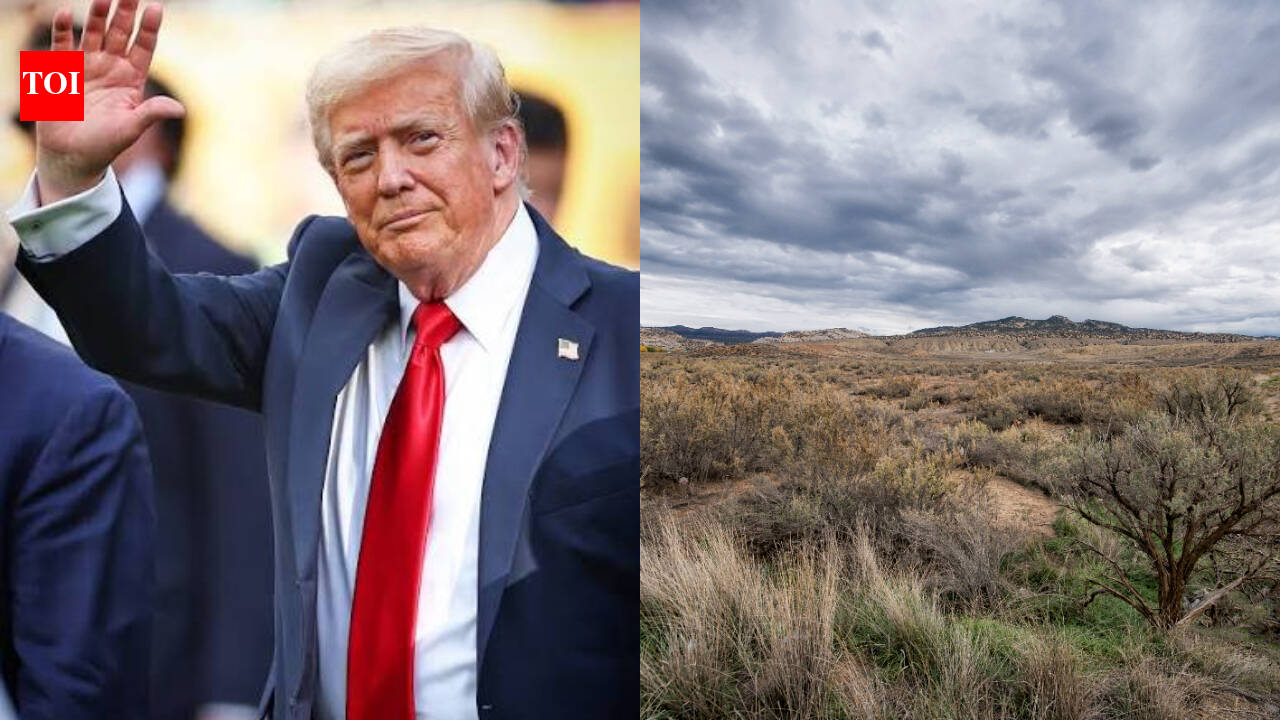
Centre · 1The Times of India, citing the Washington Post and Outdoor Life, says hunting and fishing advocates fear losing access to lesser-known BLM land if it passes to states, which often have different rules on camping and driving. Natural resources law professor Mark Squillace told the Post that protected lands cannot simply be sold and other parcels must meet requirements such as being uneconomical to manage. The Times of India adds that the plan does not define "nationally significant", and that the only staffing growth it names is in law enforcement and public safety. The Times of IndiaN “Outdoor Life reports that hunting and fishing advocates are particularly worried about losing access to lesser-known Bureau of Land Management properties that remain important recreational destinations.”“Natural resources law professor Mark Squillace told The Washington Post that federal legislation places significant limits on property disposals.”“The only areas identified for potential staffing expansion are law enforcement and public safety, rather than conservation operations.” Read at The Times of India ↗ Centre · 1Separately, the BLM has proposed a rule that would drop the 90-day public comment period for major resource management plans, which help determine where mining, drilling and grazing are allowed and which land may be considered for disposal. Comments are open until January 11, 2027. The Times of IndiaN “The proposed rule would eliminate the existing 90-day public comment period for major plans and remove the requirement to release draft plans for public feedback”“The proposal remains open for public comments until January 11, 2027.” Read at The Times of India ↗ Left · 1Interior manages more than 750,000 square miles of land, which the Independent says is larger than Texas and California combined. Most of it is in the West, and Nevada is nearly 80% federally controlled. The IndependentLC “Controlling more than 750,000 square miles (1.9 million square kilometers)”“Nevada, for instance, is nearly 80% under federal jurisdiction.” Read at The Independent ↗
Every sentence links to the reporting it rests on. The pill in front of each says where its sources sit: Left, Centre or Right when one side supplies at least half of them, Mixed when they are evenly split. The number is how many outlets it cites.
Left2 outlets
- Framing
- The Independent runs a straight report on the 'immediate backlash'. Inside Climate News goes further, framing the plan as a step toward privatization that would benefit data center, mining and energy interests.
- Emphasis
- Pro-industry context (energy, AI data centers, workforce cuts, Land and Water Conservation Fund), lack of specifics, and doubt over whether Burgum can act without Congress.
- Leaves out or plays down
- Neither mentions Sheehy, Daines or Simpson; Inside Climate News does not cover Republican opposition.
- Charged language
- “biggest attack we’ve ever seen on public lands”“wholesale privatization”“environmentally harmful operations”
- For example
-
“Data center developers, mining firms and energy companies—all favored industries of the Trump administration—could seize the opportunity to acquire vast tracts for their environmentally harmful operations, critics say.” — Inside Climate News
“Critics are concerned that many states, cities and counties can’t afford to maintain the lands, and would sell them to private interests” — Inside Climate News
Centre2 outlets
- Framing
- Newsweek leads on the plan as a shift from Burgum's earlier denial. The Times of India, drawing on the Washington Post and Outdoor Life, presents an explainer on a political battle over who controls public land, noting the efficiency and conservation rationale and the absence of identified parcels.
- Emphasis
- Unidentified parcels, bipartisan opposition, recreation access for hunters and anglers, legal limits on disposals, and the BLM planning-rule change.
- Leaves out or plays down
- Neither carries an Interior response; the Times of India does not name Republican senators such as Sheehy or Daines.
- For example
-
“While officials have presented the move as an effort to improve efficiency and redirect resources towards conservation, the absence of clearly identified properties and disposal criteria has raised concerns” — The Times of India
“For now, with no specific parcels identified, the proposal has opened a wider debate about whether America's public lands should primarily serve economic development, conservation or the millions of people who rely on them for recreation.” — The Times of India
Right2 outlets
- Framing
- Washington Examiner reports the plan as sparking 'bipartisan outrage', with Republicans, Democrats and conservation groups united against it.
- Emphasis
- Republican opposition (Sheehy, Daines, Simpson, Zinke), cross-ideological advocacy groups, and legal and historical background on BLM land sales.
- Leaves out or plays down
- Does not give the strategy's conservation revenue-sharing idea or any administration response; Interior did not reply to its inquiry.
- Charged language
- “bipartisan outrage”“Trojan horse”
- For example
-
“sending Republicans and Democrats alike into an uproar” — Washington Examiner
What every side reports
- Interior's strategy proposes selling or transferring some federal land.
- Sen. Martin Heinrich and Rep. Ryan Zinke oppose land sales.
- Earlier sale proposals failed after bipartisan opposition.
- Congress has a role in approving larger land sales.
Where accounts differ
-
Length of the Interior strategic plan
- Left
- The Independent calls it a five-year strategy covering 2026 to 2030.
- Centre
- Newsweek calls it a four-year plan (while quoting Pingree's 'five-year plan').
- Right
- The Washington Examiner calls it a four-year, 28-page strategic plan.
-
The Trump administration plans to sell federal land to states, tribes and local governments to shrink the federal estate.
Reported- Reports 5
- Inside Climate News, The Independent, Newsweek, The Times of India, Washington Examiner
-
The plan does not say which lands would be sold or how much.
Reported- Reports 5
- Inside Climate News, The Independent, Newsweek, The Times of India, Washington Examiner
-
Republican lawmakers have publicly opposed the plan to sell public lands.
Reported- Reports 4
- The Independent, Newsweek, The Times of India, Washington Examiner
-
An earlier Republican-led push to sell public lands was dropped after bipartisan opposition.
Reported- Reports 4
- The Independent, Newsweek, The Times of India, Washington Examiner
US public lands topic
Lawmakers of both parties and conservation groups say public lands should stay public, and cite the failure of earlier sale efforts.
“Public lands belong in public hands.” — Washington Examiner
Donald Trump person
Through the Interior strategy, the administration says it wants to shrink the federal estate and sell lands to states, tribes and local governments, to focus on 'nationally significant' lands. Neither article quotes Trump directly.
“The agency said that selling federal property would allow the U.S. government to focus resources on "nationally significant" lands.” — The Independent
Washington Examiner organisation
The Washington Examiner's Daily on Energy newsletter reports bipartisan and cross-ideological opposition to the plan.
“Environmental and conservationist groups across the political spectrum” — Washington Examiner
Left2 articles
-
Trump team's plan to sell public lands to decrease size of federal estate draws immediate backlash
Neutral Reports the strategy and its criticism, with context on energy policy and the doubt over Burgum's authority.
-
Federal Government Could Sell Off Untold Acres of Public Lands
Critical Reports the plan as a step toward privatization benefiting data center, mining and energy interests, led by critics' voices.
Centre2 articles
-
Trump Administration's 4-Year Plan To Shrink Public Land
Mixed Presents the plan as a first official confirmation of land sales that contradicts Burgum's earlier statement, followed by critical reactions.
-
Trump administration plans federal land sales, but leaves parcels unidentified
Neutral Explainer relaying Washington Post and Outdoor Life reporting on unidentified parcels, access worries, legal limits and bipartisan opposition.
Right4 articles
-
Daily on Energy: Public land sell off blasted across the spectrum
Critical Newsletter item presenting the proposal as widely opposed across party lines, with legal background.
-
Trump proposal to sell off public lands sparks bipartisan outrage
Critical Frames the plan as provoking bipartisan outrage, quoting Republican and Democratic lawmakers and conservation groups, with legal background on BLM sales.
-

-
- 11 Nov 21:53 First The IndependentLC Trump team's plan to sell public lands to decrease size of federal estate draws immediate backlash
- 12 Nov 20:42 +22h 49m Washington ExaminerR Daily on Energy: Public land sell off blasted across the spectrum
- 12 Nov 21:26 +23h 33m Washington ExaminerR Trump proposal to sell off public lands sparks bipartisan outrage
- 13 Nov 11:11 +37h 18m NewsweekN Trump Administration's 4-Year Plan To Shrink Public Land
- 13 Nov 17:56 +44h 3m Inside Climate NewsLC Federal Government Could Sell Off Untold Acres of Public Lands
- 14 Nov 06:36 +56h 43m The Times of IndiaN Trump administration plans federal land sales, but leaves parcels unidentified
- 16 Nov 10:00 +108h 7m Washington ExaminerR Interior public land selloff plan ‘fraught with challenges,’ says Oregon’s only Republican in Congress
- 18 Nov 12:26 +158h 33m Just the NewsRC Trump administration releases plan to sell of public lands to states, tribes and local governments
Times are when each article was published, or when we first saw it if the outlet gave no time.
Ask about this story
Loading…