Trump administration redefines 'harm' under Endangered Species Act; groups update lawsuit
A rule change that took effect on 14 September 2026 narrows "harm" under the Endangered Species Act, and agency memos limit the law to intentional killing. Conservation groups have updated their lawsuit in a Seattle federal court.

1 / 2
The story, neutrally told
A Trump administration rule change took effect on 14 September 2026 that redefines "harm" under the Endangered Species Act to mean only directly killing a member of an endangered species. The IndependentLC “On Sept. 14, 2026, a Trump administration rule change went into effect that redefines harm under the Endangered Species Act to mean only directly killing a member of an endangered species.” Read at The Independent ↗ Raw StoryL “As the “harm” rescission took effect on September 14” Read at Raw Story ↗ The new definition removes an interpretation used for half a century and upheld by the Supreme Court, under which harming a species included eliminating its habitat. The IndependentLC “The new definition removes an interpretation that had been used for half a century, and upheld by the Supreme Court, that harming an endangered species includes eliminating that species’ habitat.” Read at The Independent ↗ On the same date, US Fish and Wildlife Service Director Brian Nesvik issued a memo interpreting the law as covering only intentional killing, which critics say effectively allows "incidental" killing. Raw StoryL “US Fish and Wildlife Service Director Brian Nesvik issued a related memorandum with that interpretation—effectively allowing “incidental” killing.” Read at Raw Story ↗ The IndependentLC “further reinterpreting the law by arguing that it applies only to intentionally killing an endangered species.” Read at The Independent ↗
John Luce, general counsel at the National Oceanic and Atmospheric Administration, sent the same directive to eight sections of NOAA. Raw StoryL “John Luce, general counsel at the National Oceanic and Atmospheric Administration, sent the same directive to eight sections of NOAA.” Read at Raw Story ↗ The administration has also finalized removal of the Blanket 4(d) Rule, which gave automatic protections to species listed as "threatened"; without it, each threatened species depends on species-specific rules that can take years to draw up. The IndependentLC “The administration also recently finalized its removal of what’s known as the Blanket 4(d) Rule.”“Without that rule, threatened species no longer get automatic protections and instead rely on agencies drawing up species-specific rules for each one, a process that can take years.” Read at The Independent ↗ A coalition including the Center for Biological Diversity, Sierra Club and WildEarth Guardians, represented by Earthjustice, sued in July over the rescission and on Thursday 1 October filed a supplemental complaint in federal court in Seattle. Raw StoryL “The coalition’s supplemental complaint explains to a federal court in Seattle that since the lawsuit was first filed in July”“with legal representation by Earthjustice.” Read at Raw Story ↗
The filing argues the memos violate the plain language and purpose of the ESA, lack a reasoned basis, are arbitrary and capricious, and skipped notice-and-comment rulemaking required under the Administrative Procedure Act; it asks the court to vacate them. Raw StoryL “violate the plain language and overarching purpose of the ESA; they also lack any reasoned basis, are arbitrary and capricious, and failed to comply with applicable notice-and-comment rulemaking requirements” Read at Raw Story ↗ Noah Greenwald of the Center for Biological Diversity called the effort "despicable" and said it means "open season" on species on the brink; Earthjustice attorney Ben Levitan called the government's position "a prescription for extinction". Raw StoryL “This despicable effort to legalize most killings of endangered wildlife would essentially mean open season on species already on the brink of annihilation”“the government’s new legal position is a prescription for extinction.” Read at Raw Story ↗ Conservation scientist Timothy Randhir of UMass Amherst writes that if the changes survive court challenges, shipping, logging, mining and development practices could be affected, and some species could face extinction. The IndependentLC “The new interpretations, if they hold up to court challenges, could leave a vast number of endangered species at higher risk.” Read at The Independent ↗
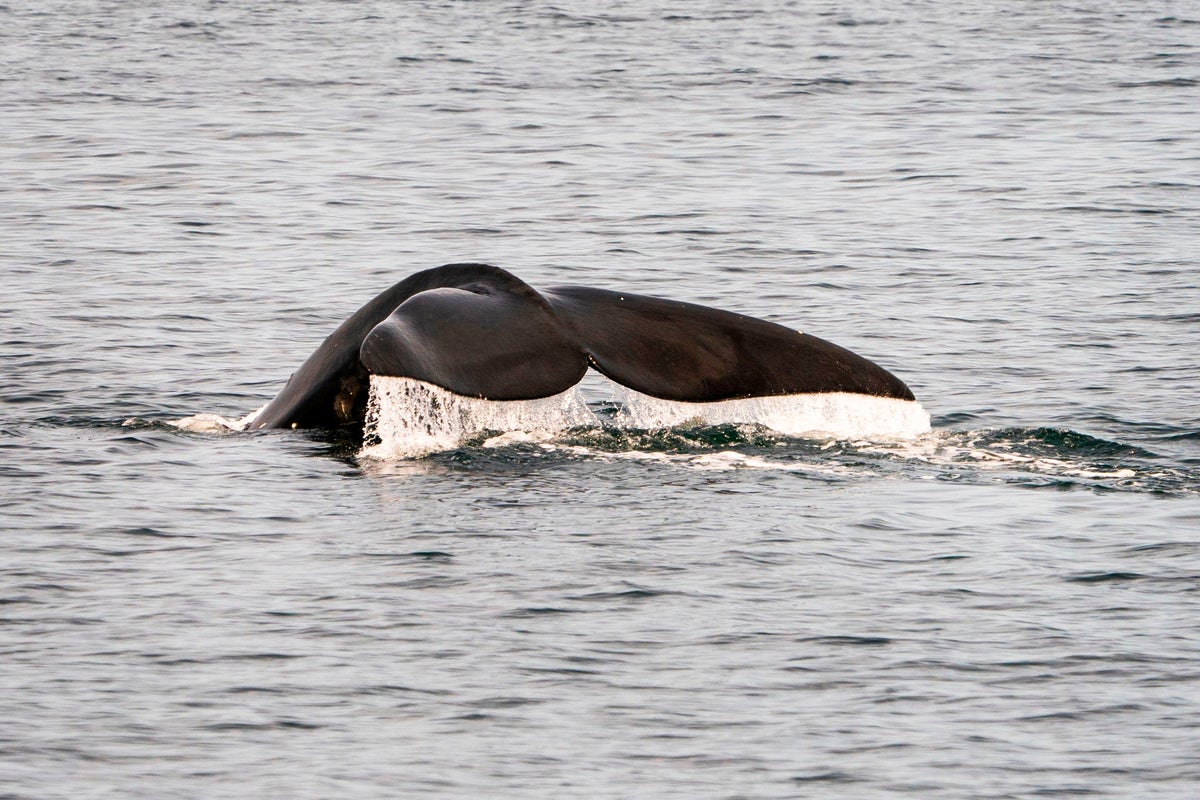
He points to three species: the Florida panther (about 120 to 230 adults, a third of its main habitat on private land), the North Atlantic right whale (about 380 animals, roughly 70 breeding females), and the monarch butterfly (population down about 80% over a decade), which would have benefited from the Blanket 4(d) Rule. The IndependentLC “The state’s wildlife agencies believe the number of adult panthers today to be between 120 and 230.”“estimated population of about 380 animals and only around 70 breeding females remaining”“The butterfly’s population has fallen by about 80% over the past decade” Read at The Independent ↗ Randhir argues the changes remove some legal basis for rules on seismic surveys, vessel speed limits and shipping routes meant to protect right whales, and would let landowners clear wildlife corridors without liability for harming panthers. The IndependentLC “remove some of the legal basis for enforcing rules for noisy seismic surveys”“allows landowners to clear areas that had been preserved as wildlife corridors on their land without being liable for harming the panthers” Read at The Independent ↗
Every sentence links to the reporting it rests on.
Left2 outlets
- Framing
- Both outlets present the change as a major rollback endangering species: The Independent runs a republished scientist's explainer on three species, Raw Story relays the conservationists' updated lawsuit and their condemnation.
- Emphasis
- Habitat loss as the main threat, species-level consequences, and legal challenges by conservation groups.
- Leaves out or plays down
- Neither gives the administration's rationale or any official response beyond describing the memos.
- Charged language
- “all-out war on America’s wildlife”“despicable”“open season”“prescription for extinction”“chips away”
- For example
-
“That’s changing as the federal government chips away at the U.S. Endangered Species Act.” — The Independent
“an all-out war on America’s wildlife” — Raw Story
Centre0 outlets
No centre outlet in our sources has covered this story yet.
Right0 outlets
No right outlet in our sources has covered this story yet.
What every side reports
- The harm rescission took effect on 14 September 2026.
- A memo from FWS Director Brian Nesvik dated that day reads the ESA as covering only intentional killing.
- Critics say the changes would leave habitat destruction unaddressed under the law.
Where accounts differ
-
Whether the new interpretation is lawful
- Left
- Both outlets present critics' view that it misreads the ESA and is illegal; Raw Story cites the lawsuit's claim it is arbitrary and capricious. Neither quotes the administration's legal rationale.
Donald Trump person
His administration is described as having rescinded the harm definition and directed agencies to read the ESA as barring only intentional killing; the coverage gives no direct statement from it.
“administrative leaders have directed various agencies to interpret the ESA to mean that only intentionally killing or wounding a protected species is illegal” — Raw Story
Endangered Species Act law
The law is portrayed as being narrowed from a proactive protection to one that acts only after immediate, intentional physical harm.
“change the law from one that is proactive to one that takes action only after there has been immediate and intentional physical harm” — The Independent
Left2 articles
-
The three endangered species facing extinction after Trump changed federal law
Alarmist Republished expert explainer warning that the changes could push three species toward extinction.
-
Outrage as Trump admin defends rule change targeting endangered animals: 'Despicable'
Critical Advocacy-sourced report on the updated lawsuit, led by groups' condemnation of the administration.
Centre0 articles
No coverage yet.
Right0 articles
No coverage yet.
- 1 Oct 22:19 First The IndependentLC The three endangered species facing extinction after Trump changed federal law
- 2 Oct 00:10 +1h 51m Raw StoryL Outrage as Trump admin defends rule change targeting endangered animals: 'Despicable'
Times are when each article was published, or when we first saw it if the outlet gave no time.