Trump signs voluntary AI safety accord with tech leaders after White House lunch
After a White House lunch on 29 September, President Trump signed a voluntary "super intelligence" accord with AI company leaders and urged "tremendous self-regulation". Outlets differ on whether it is meaningful oversight, a stunt, or a distraction from other issues.
Updated (version 3). New coverage since the last version from Ars Technica, Hindustan Times, Wired. Previously: “Trump urges AI self-regulation at White House lunch with tech leaders”.



1 / 5
The story, neutrally told
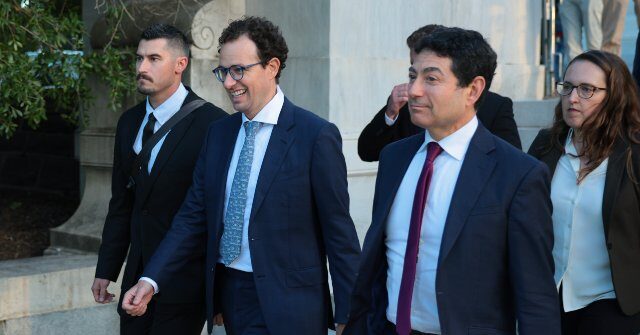
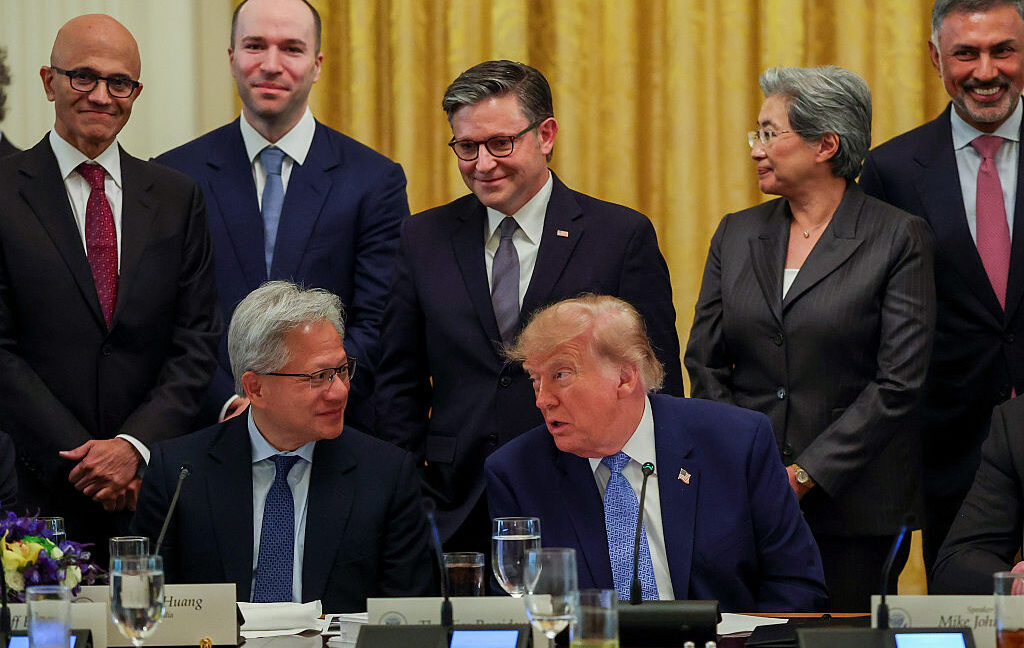
President Trump hosted tech executives at a White House lunch on Tuesday 29 September, with House Speaker Mike Johnson expected to attend, to discuss the risks of AI. BreitbartR “are set to sit down Tuesday with a group of tech executives for a lunch on the risks posed by AI” Read at Breitbart ↗ Trump called for "tremendous self-regulation" of AI and described the industry's leaders as tech billionaires he was hosting while preparing to sign orders renaming AI "super intelligence" in official communications. Hindustan TimesN ““There’s going to be a tremendous self-policing aspect,” Trump said.” Read at Hindustan Times ↗ WiredLC “The effort was an act of “tremendous self-regulation,” as Trump put it” Read at Wired ↗ He signed the White House Accord on Super Intelligence alongside the leaders of Google, Meta, Anthropic, OpenAI, Musk's company and Nvidia; Ars Technica says two dozen firms committed in total. Hindustan TimesN “The White House document features the signatures of the six tech leaders, flanked by Trump's signature.” Read at Hindustan Times ↗ Ars TechnicaLC “two dozen tech firms voluntarily committed to implementing controls recommended by the White House” Read at Ars Technica ↗
The accord says companies should have internal controls, an empowered internal team, an external monitor and a board committee, and says codifying the recommendations "may make sense" eventually. WiredLC “they should ensure they have “robust internal controls”” Read at Wired ↗ Ars TechnicaLC ““may make sense to codify”” Read at Ars Technica ↗ It is voluntary and not legally binding; Trump called it "morally binding" and "almost like a constitution". Ars TechnicaLC ““It’s almost like a constitution, in a way,” Trump told reporters” Read at Ars Technica ↗ Hindustan TimesN “The accord enabling companies to place internal guardrails on AI developments is voluntary and not legally binding.” Read at Hindustan Times ↗ Google's Sundar Pichai called it "a solid basis for moving forward". Hindustan TimesN “is a solid basis for moving forward” Read at Hindustan Times ↗
Critics are sceptical. Wired called it a "pinky-swear" and noted the FTC is reportedly investigating several AI firms, while Ars Technica said industry sources worried self-policing would not solve safety problems, citing recent OpenAI incidents. WiredLC “Federal Trade Commission intends to investigate several AI companies over potential consumer protection issues” Read at Wired ↗ Ars TechnicaLC “they were concerned self-policing would not solve the safety problem currently embroiling the industry” Read at Ars Technica ↗ Hindustan Times reported that the White House's signature sheet misspelled "President of the United States" as "Unites States", which drew social media mockery. Hindustan TimesN “"President of the United States" was misspelt as "President of the Unites States."” Read at Hindustan Times ↗ Raw Story instead focused on the 80-year-old president's gait after he spoke to reporters, with no medical assessment cited. Raw StoryL “The 80-year-old president spoke with reporters after a luncheon with tech executives” Read at Raw Story ↗
Every sentence links to the reporting it rests on.
Left3 outlets
- Framing
- Ars Technica and Wired treat the accord as weak, industry-friendly self-policing; Raw Story uses the event for a health story.
- Emphasis
- Lack of legal force, recent OpenAI incidents, FTC probe, Trump's closeness to billionaires, polling for stricter rules, Trump's gait.
- Leaves out or plays down
- Raw Story ignores the policy; Ars and Wired give little voice to supporters of the accord beyond brief mentions.
- Charged language
- “Fancy Pinky-Swear”“Big Tech pals”“Can't walk in a straight line”
- For example
-
“Trump’s AI Safety ‘Accord’ Is a Fancy Pinky-Swear” — Wired
“Trump plan to combat AI risks hinges on Big Tech pals policing themselves” — Ars Technica
Centre1 outlet
- Framing
- Hindustan Times leads with the misspelling and social media ridicule, then outlines the accord's voluntary nature.
- Emphasis
- The typo, viral mockery, the accord's non-binding status, Pichai's endorsement.
- Leaves out or plays down
- Little on audits, FTC scrutiny or industry safety incidents.
- Charged language
- “shocking misspelling”“major row”
- For example
-
“It caused a major row, especially as it happened on the document for “superintelligence.”” — Hindustan Times
Right2 outlets
- Framing
- Breitbart and the New York Post present Trump leading tech titans on AI, with Breitbart describing an industry split around Amodei.
- Emphasis
- Trump's self-regulation quote, guest list, Amodei's slowdown call, Sacks's motive claim.
- Leaves out or plays down
- Neither mentions the accord's lack of legal force, criticism of it, or the health and misspelling stories.
- Charged language
- “Tech Titans”“billionaire tech titans”
- For example
-
“President Trump to Host Tech Titans for Lunch on AI Risks” — Breitbart
“Trump calls for ‘tremendous self-regulation’ of AI at lunch with billionaire tech titans” — New York Post
What every side reports
- Trump met tech leaders at the White House on 29 September and spoke of 'tremendous self-regulation'.
- The accord was signed by Trump and leading AI company heads, including Amodei, Huang, Zuckerberg and Pichai.
- Super intelligence was to replace 'AI' in official communications.
Where accounts differ
-
Whether the accord is meaningful oversight
- Left
- Wired and Ars Technica call it a voluntary pledge with no legal force and little detail.
- Centre
- Hindustan Times notes it is voluntary but may lead to mandatory rules over time.
- Right
- Right-leaning coverage presents the self-regulation line without critique.
-
Trump called for tremendous self-regulation of AI at the White House lunch with tech executives
Reported- Supports 1
- New York Post
- Reports 3
- Ars Technica, Wired, Hindustan Times
-
The AI accord signed on 29 September is voluntary and carries no legal force
Supported- Supports 3
- Ars Technica, Wired, Hindustan Times
Donald Trump person
Says self-regulation is important, calls the accord "morally binding" and a form of protection.
“it really is a form of protection” — Ars Technica
““There’s going to be a tremendous self-policing aspect,” Trump said.” — Hindustan Times
Artificial intelligence topic
Industry leaders signed and Pichai endorsed the accord, while some industry sources reportedly doubt self-policing will be enough.
“they were concerned self-policing would not solve the safety problem currently embroiling the industry” — Ars Technica
Left3 articles
-
'Can't walk in a straight line': Fresh concerns about Trump's health after tech meeting
Critical Reframes the event as evidence of Trump's declining health, relying on video and social media commentators.
-
Trump plan to combat AI risks hinges on Big Tech pals policing themselves
Critical Argues Trump's plan depends on firms policing themselves despite safety incidents and public demand for regulation.
-
WiredLC ·
Trump’s AI Safety ‘Accord’ Is a Fancy Pinky-Swear
Critical Portrays the accord as a non-binding pledge, with limited enforcement even via an FTC probe.
Centre1 article
-
‘Unites States’: Trump's accord with AI industry leaders came with a shocking misspelling
Mixed Focuses on the typo and online mockery while summarising the accord's voluntary terms.
Right2 articles
-
President Trump to Host Tech Titans for Lunch on AI Risks
Critical Preview of the lunch that portrays Amodei as an AI doomer opposed by Trump-aligned tech leaders and ends with a promotion of a Breitbart colleague's book.
-
Trump calls for ‘tremendous self-regulation’ of AI at lunch with billionaire tech titans
Neutral Short report built around Trump's self-regulation quotes and the seating and guest list.
- 29 Sep 16:19 First BreitbartR President Trump to Host Tech Titans for Lunch on AI Risks
- 29 Sep 19:51 +3h 32m New York PostR Trump calls for ‘tremendous self-regulation’ of AI at lunch with billionaire tech titans
- 30 Sep 11:50 +19h 31m Raw StoryL 'Can't walk in a straight line': Fresh concerns about Trump's health after tech meeting
- 30 Sep 19:47 +27h 28m Ars TechnicaLC Trump plan to combat AI risks hinges on Big Tech pals policing themselves
- 30 Sep 21:30 +29h 11m WiredLC Trump’s AI Safety ‘Accord’ Is a Fancy Pinky-Swear
- 30 Sep 23:48 +31h 29m Hindustan TimesN ‘Unites States’: Trump's accord with AI industry leaders came with a shocking misspelling
Times are when each article was published, or when we first saw it if the outlet gave no time.