Tshisekedi signs law easing referendum rules, fuelling third-term fears in DR Congo
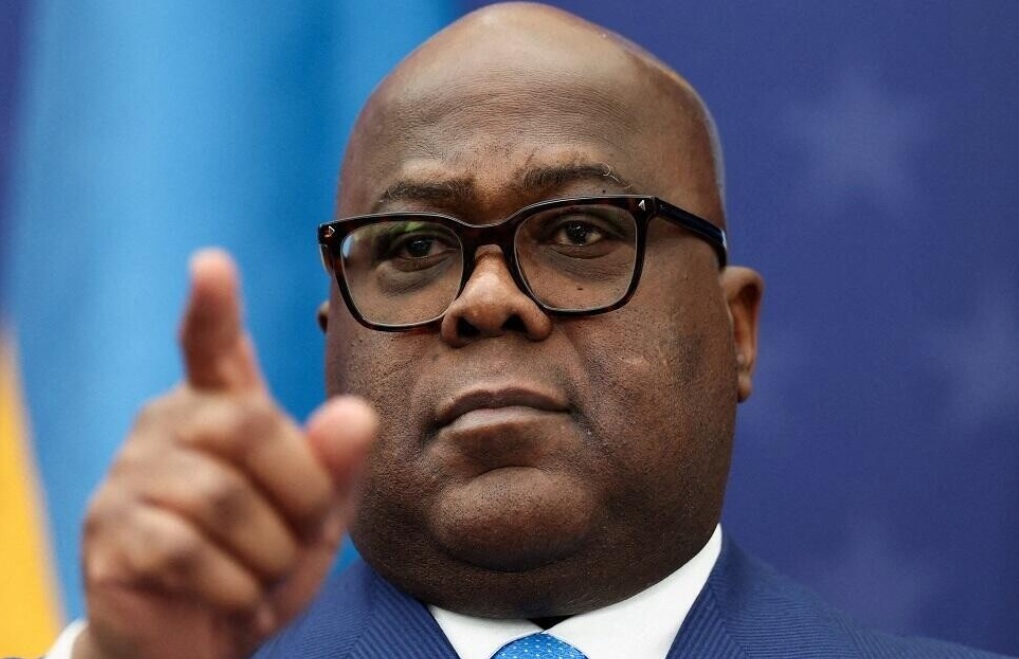
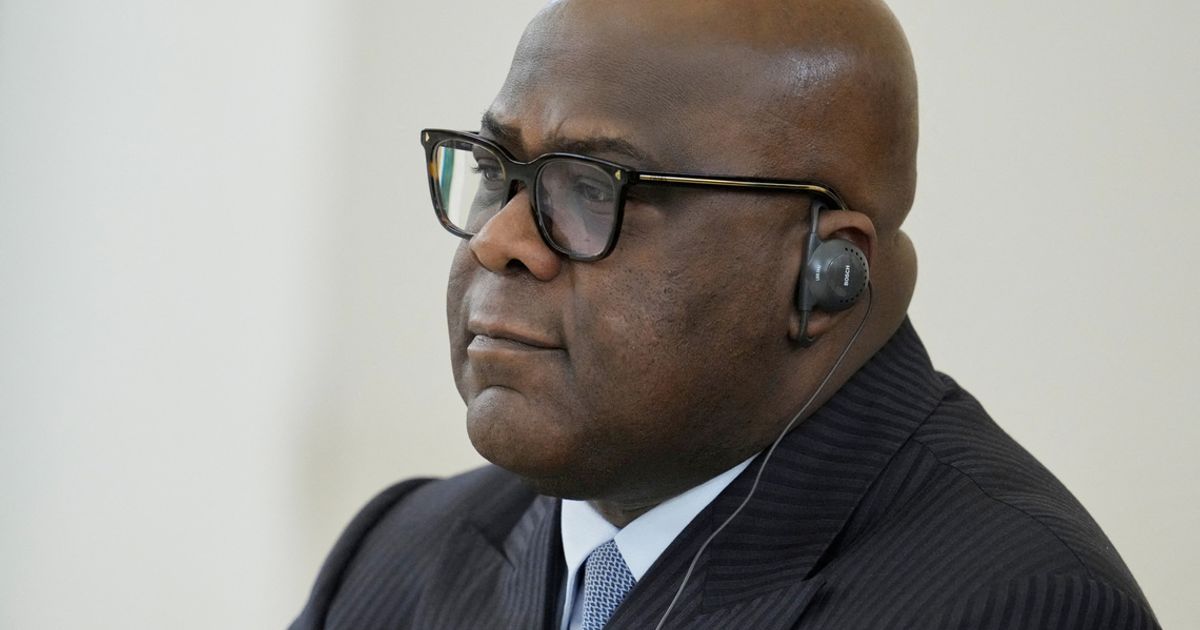
DR Congo President Félix Tshisekedi has signed a law setting out how constitutional changes can be put to a referendum. Opposition critics say it could open the way to a third term; Tshisekedi says they would accept one only if people want it.
Updated (version 2). New coverage since the last version from France 24, RFI.


1 / 4
The story, neutrally told
Right · 2DR Congo President Félix Tshisekedi has enacted a law that eases the rules for holding a referendum on constitutional matters, a step the opposition condemns as an attempt to cling to power. Arab NewsRC “DR Congo President Felix Tshisekedi has enacted a law that paves the way for constitutional change, condemned by the opposition as an attempt to cling onto power.” Read at Arab News ↗ The Straits TimesRC “has approved a law to allow constitutional changes to be put to a referendum” Read at The Straits Times ↗ Right · 2The law was announced in an order read on national television late on Tuesday 10 November; Reuters, carried by the Straits Times, reports it was signed on Monday and had been approved by parliament last month. Arab NewsRC “announced in an order read on national television overnight Tuesday to Wednesday” Read at Arab News ↗ The Straits TimesRC “The law, signed by Tshisekedi on Monday in a move announced on state television late on Tuesday”“The legislation, approved by parliament last month” Read at The Straits Times ↗ Right · 1It sets out how a new constitution could be drafted and put to a referendum, and how existing provisions could be changed. No date has been announced for a referendum. The Straits TimesRC “sets out how a new constitution could be drafted and put to a referendum, as well as how existing constitutional provisions could be changed”“No date has been announced for a possible referendum” Read at The Straits Times ↗
Right · 1Critics fear a referendum could be used to scrap the two-term presidential limit and change the length of presidential terms, both of which the current constitution protects from revision by parliament. The Straits TimesRC “a referendum could be used to scrap the two-term presidential limit and change the length of presidential terms, both of which are protected from revision by parliament” Read at The Straits Times ↗ Right · 1Tshisekedi, 63, in power since 2019, must step down at the end of a second five-year term at the end of 2028 under the current constitution. Arab NewsRC “Tshisekedi, 63, has been in power since 2019 and under the current constitution has to step down at the end of his second five-year term at the end of 2028.” Read at Arab News ↗ Right · 2At a rare news conference in early May, Tshisekedi said they had not planned to seek a third term but would accept one if people wanted it. In May Tshisekedi also said the late-2028 elections might not go ahead as scheduled if the conflict in eastern Congo continues and parts of North and South Kivu remain under rebel control. Arab NewsRC “If people want me to have a third term, I will accept.” Read at Arab News ↗ The Straits TimesRC “Tshisekedi said in May that elections due in late 2028 may not go ahead as scheduled if a conflict in eastern Congo continues” Read at The Straits Times ↗
Right · 1Opposition parties have united against constitutional change, including in a platform called C64, which rejects any change to the constitution, any third term and any postponement of the 2028 elections. Protests were held in Kinshasa and other cities in June and September; the UN said at least one person was killed in June, and the opposition said one supporter was killed in September. Main opposition parties have rejected Tshisekedi's offer of national dialogue. Arab NewsRC “Opposition demonstrations to protest against a “constitutional coup” were held in June and September in the capital, Kinshasa, and other cities.”“The United Nations said at least one person had been killed at the protests in June in Kinshasa”“Tshisekedi’s offer to hold national dialogue has been rejected by the main opposition parties.” Read at Arab News ↗ Right · 1The law comes amid war in the east, where the Rwanda-backed M23 has seized large areas, including the provincial capitals of North and South Kivu. Former president Joseph Kabila, sentenced to death in absentia for treason and under US sanctions, last month became head of the renamed rebel movement, the Front for the Refoundation of the Nation (FRN). Kabila has criticised the government's 'stubborn insistence' on changing the constitution and vowed to end 'tyranny by all means, including force'. Arab NewsRC “Ex-president Kabila last month became head of the now renamed eastern rebellion, the Front for the Refoundation of the Nation (FRN)”“Kabila, who ruled from 2001 to 2019, was sentenced to death in absentia just over a year ago for treason”“He has vowed to “put an end to tyranny by all means, including force.”” Read at Arab News ↗ Right · 1Diplomatic sources and observers fear any political opposition could be equated with support for Kabila's rebellion; opposition parties have sought to distance themselves from Kabila and condemn any seizure of power by force. Arab NewsRC “Diplomatic sources and observers have expressed fears that any political opposition could be equated with support for the ex-president’s rebellion.”“condemned “any seizure of power by force”” Read at Arab News ↗
Centre · 1France 24, in its evening news programme on 11 November, reported that the new law expanding the conditions for a constitutional referendum has ignited political tensions in the DRC. France 24N “A new law expanding the conditions for a constitutional referendum has ignited political tensions in the DRC.” Read at France 24 ↗
Every sentence links to the reporting it rests on. The pill in front of each says where its sources sit: Left, Centre or Right when one side supplies at least half of them, Mixed when they are evenly split. The number is how many outlets it cites.
Left0 outlets
No left outlet in our sources has covered this story yet.
Centre2 outlets
- Framing
- France 24 presents the law as a news item in its evening programme, under the headline 'Tshisekedi paves way for constitutional change', focusing on the political tensions it has caused rather than on third-term claims.
- Emphasis
- The widening of the conditions for a constitutional referendum and the resulting political tension; it is one item among several, alongside Kenya's Ebola declaration and COP31.
- Leaves out or plays down
- The short item gives no detail on the law's content, the opposition's third-term accusation, Tshisekedi's remarks, the eastern conflict or Kabila's rebellion.
- For example
-
“A new law expanding the conditions for a constitutional referendum has ignited political tensions in the DRC.” — France 24
Right2 outlets
- Framing
- Both outlets, running wire copy (AFP in Arab News, Reuters in the Straits Times), lead with the signing of the law and the opposition's third-term fears. AFP adds the conflict with Kabila-led rebels; Reuters gives a bulleted account of the law's content and the 2028 election remarks.
- Emphasis
- Arab News stresses the opposition's weakness, the protests and deaths, and Kabila's role in the eastern rebellion; the Straits Times stresses the law's mechanics, the absence of a referendum date and Tshisekedi's remark that the 2028 elections may slip.
- Leaves out or plays down
- Arab News does not mention Tshisekedi's May comment that elections might be delayed or that parliament approved the law last month; the Straits Times omits the Kabila-led rebellion and the protest deaths. Neither carries a government response beyond Tshisekedi's earlier remarks.
- For example
-
“condemned by the opposition as an attempt to cling onto power” — Arab News
“a move critics say could lay the groundwork for him to seek a third term in power” — The Straits Times
What every side reports
- Tshisekedi has signed a law enabling constitutional changes to be put to a referendum.
- The law was announced on state television late on Tuesday 10 November.
- The current constitution requires Tshisekedi to leave office at the end of 2028.
- Tshisekedi says they would accept a third term if people wanted it.
- The opposition has protested against constitutional change.
Where accounts differ
-
Whether the law is aimed at a third term
- Right
- Both outlets report opposition accusations that Tshisekedi is seeking to extend time in office; Reuters (via Straits Times) notes Tshisekedi has denied seeking a third term but would accept one if the people wanted it.
-
Tshisekedi has enacted a law that eases the rules for holding a constitutional referendum.
Supported- Supports 3
- France 24, Arab News, The Straits Times
-
The law has drawn opposition criticism as a possible route to a third term for Tshisekedi.
Reported- Reports 3
- France 24, Arab News, The Straits Times
Félix Tshisekedi person
Has signed the law; says they had not planned to seek a third term but would accept one if people want it, and said in May that 2028 elections may be delayed if the eastern conflict continues.
“If people want me to have a third term, I will accept.” — Arab News
“Tshisekedi has denied seeking a third term but said he would accept one if the Congolese people wanted it” — The Straits Times
Middle East1 outlet
Arab News carries AFP's longer account, with context on the opposition, protests and the Kabila-led rebellion.
“Opposition parties have joined forces in recent months to stand against his attempt to change the constitution” — Arab News
Arab News
East and Southeast Asia1 outlet
The Straits Times carries a shorter Reuters report focused on the law and the term-limit fears.
“No date has been announced for a possible referendum” — The Straits Times
The Straits Times
Left0 articles
No coverage yet.
Centre3 articles
-
Tshisekedi paves way for constitutional change
Neutral Brief programme item framing the law as a driver of political tension in the DRC, without detailing third-term claims.
-

-
Right2 articles
-
Arab NewsRC · · via AFP
DR Congo leader opens way for third term under new constitution
Critical AFP copy leads with the opposition's condemnation and places the law amid Kabila's rebel threat and the weakened opposition.
-
Congolese president signs contested referendum law amid fears over third-term bid
Neutral Reuters copy gives a concise, bulleted account of the law, the fears over term limits and the lack of a referendum date.
- 11 Nov 13:46 First Arab NewsRC DR Congo leader opens way for third term under new constitution via AFP
- 11 Nov 14:08 +23m The Straits TimesRC Congolese president signs contested referendum law amid fears over third-term bid
- 11 Nov 21:39 +7h 54m France 24N Tshisekedi paves way for constitutional change
- 12 Nov 10:51 +21h 6m France 24N DR Congo's Tshisekedi signs referendum law amid fears of third-term bid
- 12 Nov 14:58 +25h 12m RFIN DR Congo leader opens way for third term under new constitution
Times are when each article was published, or when we first saw it if the outlet gave no time.
Ask about this story
Loading…