Tucker Carlson criticised over interview questioning Britain's decision to fight Nazi Germany
In an interview with former UK lawmaker Jacob Rees-Mogg, Tucker Carlson questioned whether Britain benefited from fighting World War II. Several Republicans and commentators criticised him; he said he was not defending Hitler.
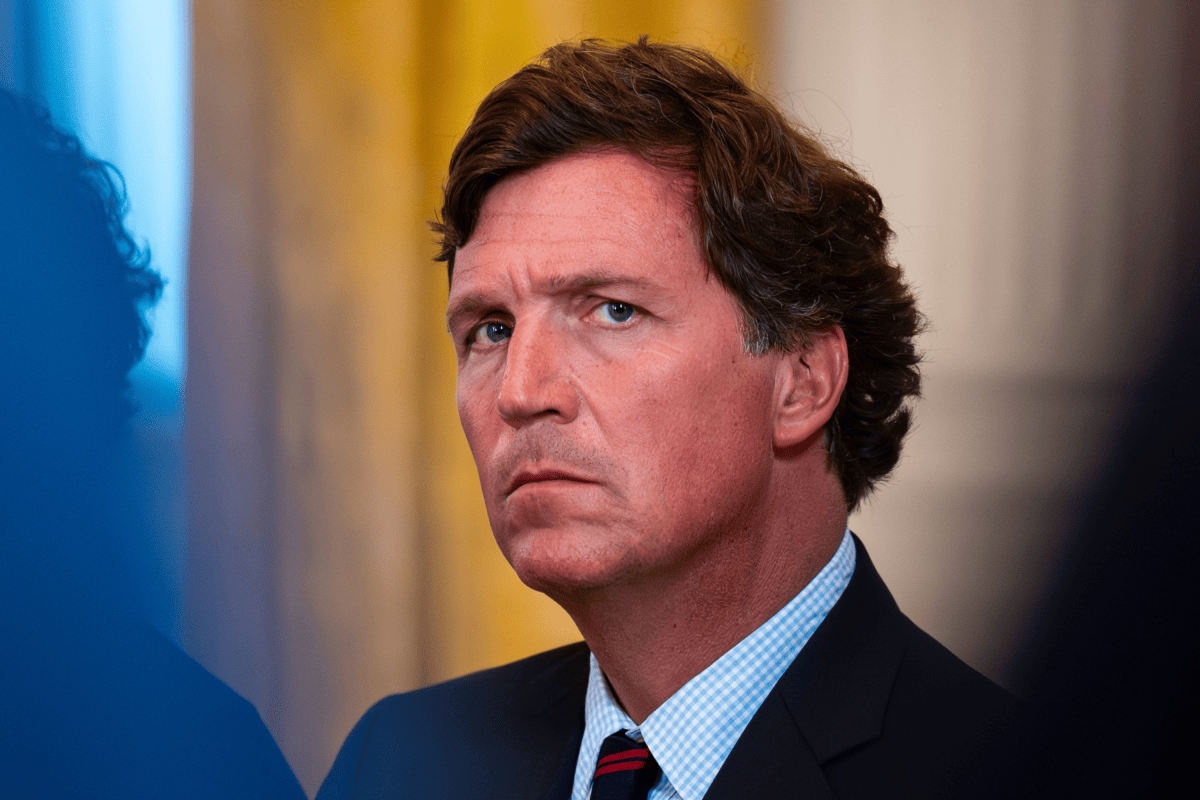
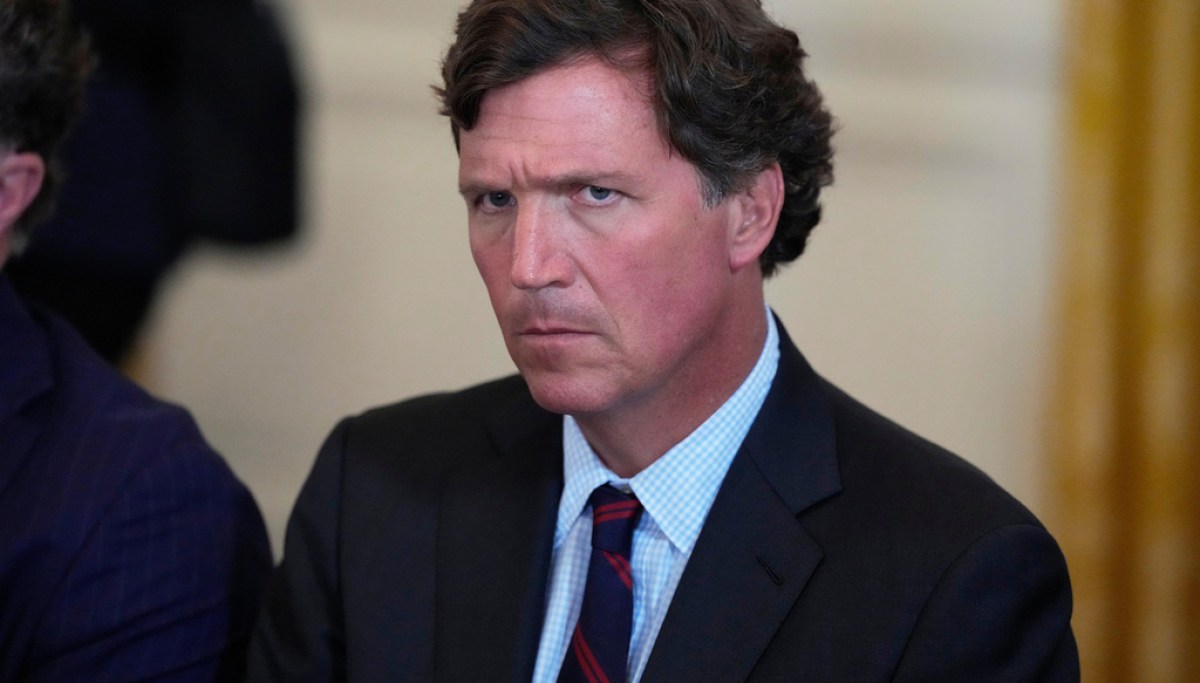

1 / 3
The story, neutrally told
Mixed · 2Tucker Carlson drew criticism after an interview, released on Friday 2 October and posted to his X account, in which he questioned whether Britain should have fought Nazi Germany. NewsweekN “Tucker Carlson sparked a conservative backlash after arguing in an interview released Friday that Britain’s decision to fight Nazi Germany was not a good idea.” Read at Newsweek ↗ Washington ExaminerR “Conservative commentator Tucker Carlson questioned whether Britain benefited from fighting World War II” Read at Washington Examiner ↗ Mixed · 2The interviewee was Sir Jacob Rees-Mogg, a former Conservative MP, in a wide-ranging conversation of over an hour that began with Britain's support for Ukraine and whether Britain should prepare for conflict with Russia. NewsweekN “Carlson made the remarks while questioning former British lawmaker Sir Jacob Rees-Mogg about whether Britain should prepare for a possible conflict with Russia” Read at Newsweek ↗ Washington ExaminerR “Carlson pressed former Conservative politician Jacob Rees-Mogg on the legacy of the war during a wide-ranging interview” Read at Washington Examiner ↗ Mixed · 2Carlson said he never understood why Britain fought the Second World War. He cited German territorial losses after the Treaty of Versailles and disputed that Nazi forces had "randomly rolled into Poland". He also pointed to the collapse of the British Empire, India's independence and the rise of the United States, and asked how Britain benefited from "winning" the war. NewsweekN “Carlson answered: “I never understood why fight the Second World War in the first place.”” Read at Newsweek ↗ Washington ExaminerR “Carlson pointed to the collapse of the British Empire, India’s independence shortly after the war, and the rise of the United States as the dominant global power.” Read at Washington Examiner ↗
Right · 1According to the Washington Examiner, he also noted that Hitler had said he did not want war with the UK and had reached agreements with Prime Minister Neville Chamberlain. He questioned whether Britain had given up sovereignty by letting US troops stay in the country. Washington ExaminerR “noting that Hitler had repeatedly claimed he did not want war with the U.K. and had previously reached agreements with British Prime Minister Neville Chamberlain.” Read at Washington Examiner ↗ Mixed · 2Rees-Mogg replied that defeating Nazism was "the classic good versus evil" and that Britain's self-respect was "hugely maintained by defeating the greatest evil the world has known". Asked to accept that Britons might otherwise have ended up speaking German, Carlson said: "Who cares?" Newsweek reports that he argued a war paid for with citizens' lives should leave them demonstrably better off. NewsweekN “Asked to accept that Britons might otherwise speak German, Carlson replied: “Who cares?”” Read at Newsweek ↗ Washington ExaminerR ““Our self-respect was hugely maintained by defeating the greatest evil the world has known,” Rees-Mogg said.” Read at Washington Examiner ↗ Mixed · 2Rees-Mogg told Carlson he was "verging on defending Hitler". Carlson answered: "I'm actually not a secret Nazi" and said he tries to think clearly about cause and effect. Newsweek quotes him saying he was "certainly not here defending Hitler". Washington ExaminerR ““I’m actually not a secret Nazi,” Carlson replied. “I’m someone who tries to think clearly about cause and effect.”” Read at Washington Examiner ↗ NewsweekN ““I’m certainly not here defending Hitler,” he said” Read at Newsweek ↗
Mixed · 2Critics included US Ambassador Mike Huckabee, who wrote "Forget that Hitler murdered 11 million people?" and said Carlson "needs help". Lance Forman, a former British MEP, replied that he was "beyond help". Senator Ted Cruz wrote that the UK, America and the world are better off for winning WWII. Commentators Christopher Snowdon and Meghan McCain also criticised the exchange. NewsweekN “U.S. Ambassador Mike Huckabee accused him of suggesting Britain should have allowed a Nazi takeover, writing: “Forget that Hitler murdered 11 million people?”” Read at Newsweek ↗ Washington ExaminerR ““Yes, Tucker, the U.K. is better off for winning WWII,” he said. “America is better off for winning WWII.” Read at Washington Examiner ↗ Mixed · 2Newsweek describes the row as part of a larger argument over military intervention and national interest, and says Carlson did not endorse Nazi ideology but argued that Britain made the wrong choice. The Washington Examiner places the interview in the context of earlier controversies, including his 2024 interview with Darryl Cooper and his interview with Nick Fuentes, and Cruz's earlier criticism of him. Washington ExaminerR “The exchange comes as Carlson has faced controversy for past commentary on World War II, Israel, and antisemitism.” Read at Washington Examiner ↗ NewsweekN “Carlson did not endorse Nazi ideology in the exchange, but he plainly argued Britain made the wrong choice by entering the conflict” Read at Newsweek ↗ Centre · 1Newsweek said it contacted Carlson and Rees-Mogg for comment on Saturday morning. Its article does not report a response. NewsweekN “Newsweek contacted Carlson via his Tucker Carlson Network and Rees-Mogg via WhatsApp for further comment on Saturday morning.” Read at Newsweek ↗
Every sentence links to the reporting it rests on. The pill in front of each says where its sources sit: Left, Centre or Right when one side supplies at least half of them, Mixed when they are evenly split. The number is how many outlets it cites.
Left0 outlets
No left outlet in our sources has covered this story yet.
Centre1 outlet
- Framing
- Leads with a 'conservative backlash' to Carlson's claim. It sets out the exchange in detail and lists critics from the American and British right.
- Emphasis
- Reactions from Huckabee, Forman, Cruz, Snowdon and McCain, and the noninterventionist logic behind Carlson's argument.
- Leaves out or plays down
- Does not mention Carlson's earlier controversies over Cooper and Fuentes.
- Charged language
- “Sparks Backlash”“Who cares?”
- For example
-
“Carlson’s challenge to one of the West’s strongest historical consensuses drew public rebukes from prominent figures on the American right.” — Newsweek
Right2 outlets
- Framing
- Presents it as Carlson questioning whether Britain benefited from the war, then places it in the context of his past controversies over antisemitism and Holocaust revisionism.
- Emphasis
- Carlson's historical arguments and the exchange with Rees-Mogg, plus Cruz's earlier criticism of him.
- Leaves out or plays down
- Omits the reactions from Huckabee, Forman, Snowdon and McCain, and the 'Who cares?' remark about speaking German.
- Charged language
- “Holocaust revisionist”“white nationalist”
- For example
-
“Carlson has faced criticism for interviewing Holocaust revisionist Darryl Cooper in 2024” — Washington Examiner
What every side reports
- Carlson interviewed Jacob Rees-Mogg and questioned whether Britain benefited from fighting World War II.
- Rees-Mogg defended the decision, citing defeat of 'the greatest evil the world has known'.
- Carlson denied defending Hitler.
- Ted Cruz publicly rebutted Carlson, saying the UK is better off for winning WWII.
Where accounts differ
-
How to characterise Carlson's argument
- Centre
- Newsweek says he did not endorse Nazi ideology but plainly argued Britain made the wrong choice, and frames it as a noninterventionist principle.
- Right
- The Washington Examiner reports Rees-Mogg saying Carlson was 'verging on defending Hitler' and Carlson denying being 'a secret Nazi', and links the exchange to his past controversies over antisemitism.
Tucker Carlson person
Says he is not defending Hitler or a secret Nazi, and that he is thinking about cause and effect. He argues that Britain did not demonstrably benefit from the war.
““I’m actually not a secret Nazi,” Carlson replied.” — Washington Examiner
““I’m certainly not here defending Hitler,” he said” — Newsweek
Jacob Rees-Mogg person
Defends Britain's entry into the war as a fight of good against evil that preserved the country's self-respect and kept it from German rule. Told Carlson he was 'verging on defending Hitler'.
“Rees-Mogg countered that defeating Nazism was “the classic good versus evil”” — Newsweek
““I’m very surprised you’re verging on defending Hitler,” Rees-Mogg told Carlson.” — Washington Examiner
Left0 articles
No coverage yet.
Centre1 article
-
Tucker Carlson Sparks Backlash With Claim UK Shouldn't Have Fought Hitler
Mixed Detailed account of the exchange and the backlash, with some analysis that sets Carlson's view within noninterventionism.
Right2 articles
-
Tucker Carlson questions if Britain should have fought in WW2: ‘Is the UK better off?’
Critical Short account of the exchange that stresses Carlson's earlier controversies over antisemitism and Cruz's criticism.
-
- 3 Oct 14:16 First NewsweekN Tucker Carlson Sparks Backlash With Claim UK Shouldn't Have Fought Hitler
- 3 Oct 21:12 +6h 56m Washington ExaminerR Tucker Carlson questions if Britain should have fought in WW2: ‘Is the UK better off?’
- 3 Oct 21:56 +7h 40m The Jerusalem PostRC Tucker Carlson claims UK had no reason to join WWII, appears to defend Hitler's invasion of Poland
Times are when each article was published, or when we first saw it if the outlet gave no time.