Tulane students find previously undescribed hip muscle attachment in cadaver lab
Two Tulane undergraduates dissecting hips in a cadaver lab in 2024 found a muscle attachment their professor could not immediately identify. The findings were published in Clinical Anatomy, and its function is still unknown.
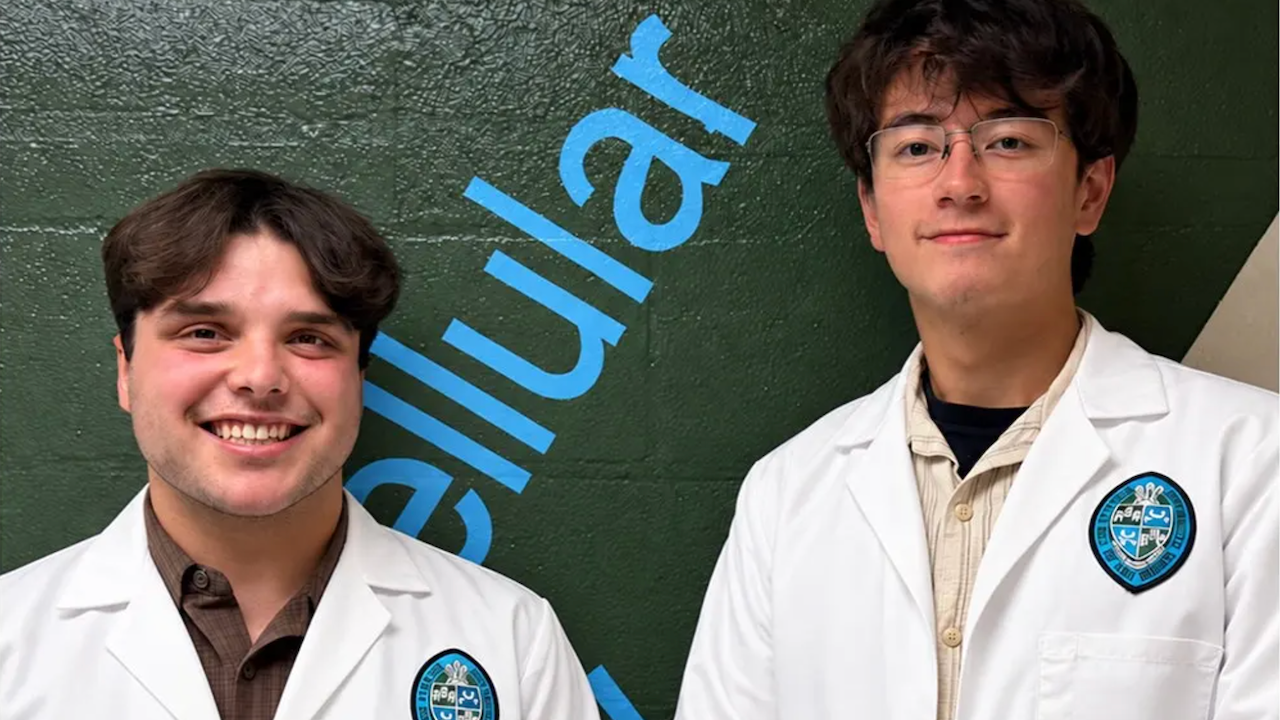

1 / 2
The story, neutrally told
Right · 2Two Tulane University undergraduates, Dominic Roy and Cooper Bruce, found an anatomical feature in the hip that their professor could not initially identify. Fox NewsR “Dominic Roy and Cooper Bruce were both 19-year-old college sophomores at the time of the finding in 2024.” Read at Fox News ↗ New York PostR “Two undergraduate students at Tulane University in New Orleans discovered an anatomical feature” Read at New York Post ↗ Right · 1They were volunteering in the cadaver lab with R. Shane Tubbs, professor of neurosurgery and director of surgical anatomy at Tulane School of Medicine, and were dissecting several specimens' hips to compare where the iliacus joins the psoas major. Fox NewsR “The students were dissecting several specimens’ hips to compare where the iliacus joins the psoas major”“professor of neurosurgery and director of surgical anatomy at Tulane School of Medicine” Read at Fox News ↗ Right · 2While looking for the iliocapsularis, Roy said, he spotted a similar-looking muscle on the other side of the iliac fascia, close to the inguinal region of the pelvis, and called Tubbs over, who he said was as stumped as he was. Fox NewsR “When looking for a particular muscle, the iliocapsularis, which sits laterally in the hip, Roy found something else instead.” Read at Fox News ↗ New York PostR “I think he was as stumped as me.” Read at New York Post ↗
Right · 1After searching the literature and textbooks and finding no earlier description, the team concluded it was probably a new discovery; physicians from overseas and rising medical students also helped. Fox NewsR “the team came up short, which suggested it was a new discovery.”“Physicians from overseas and rising medical school students also assisted with the discovery.” Read at Fox News ↗ Right · 1The findings were recently published in the journal Clinical Anatomy. Tubbs, who is also a co-editor-in-chief of Gray's Anatomy, called the discovery "serendipity" and described the muscle as deep in the pelvis, running out to the front of the hip. Fox NewsR “The findings were recently published in the journal Clinical Anatomy.”“It's deep in the pelvis and runs out to the front of your hip.” Read at Fox News ↗ Right · 2The team has not yet determined the muscle's function, though clues suggest it may help stabilize the psoas major. The next step is to test whether MRI scans can show it, so researchers can study whether its presence is linked to more or fewer symptoms. Fox NewsR “Although the team has not yet determined the muscle’s function, clues suggest it may help stabilize the psoas major” Read at Fox News ↗ New York PostR “The next step is to determine whether MRI scans can reveal the muscle attachment” Read at New York Post ↗
Right · 2Tubbs said awareness of the muscle could improve care, particularly in hip surgery. Because its fibres attach into the front of the hip joint, he suggested physical therapy to rehabilitate it if it is weak, or injections to weaken it if overactivity causes pain; he also suggested surgeons might correlate symptoms with its presence and consider cutting it. These are possibilities, not tested treatments. Fox NewsR “They might use physical therapy to help rehab the muscle, because we did find that the fibers of this attachment directly attach into the front of the hip joint” Read at Fox News ↗ New York PostR “Doctors could also use injections to weaken the new muscle if overactivity causes pain or other symptoms.” Read at New York Post ↗ Right · 1The muscle was not found in every cadaver, which the researchers attributed to normal anatomical variation. They also found the same attachment in gorillas, suggesting a possible evolutionary link, and Bruce said it is unclear why it persists in some humans and not others. Fox NewsR “This muscle was not found in every cadaver, the researchers noted, as each human body is different.”“The researchers found the same muscle attachment in gorillas, suggesting a possible evolutionary link.” Read at Fox News ↗ Right · 2Tubbs said the attachment will need to be studied across geographic regions, and he expects it to eventually be added to anatomical textbooks. He also argued that real cadavers teach variation that synthetic models, which he called cookie-cutter, do not. Fox NewsR “Although the new muscle attachment will have to be studied across geographic regions, Tubbs said he expects the students’ discovery will eventually be added to anatomical textbooks.” Read at Fox News ↗ New York PostR “the synthetic models that are now circulating in university labs are cookie-cutter.” Read at New York Post ↗
Right · 2The students are now seniors, and Roy said he plans to enter a master's program in anatomy. Fox NewsR “The discovery inspired the students, now seniors, to further explore a career in medicine.” Read at Fox News ↗ New York PostR “Roy said he plans to enter a master’s program in anatomy.” Read at New York Post ↗
Every sentence links to the reporting it rests on. The pill in front of each says where its sources sit: Left, Centre or Right when one side supplies at least half of them, Mixed when they are evenly split. The number is how many outlets it cites.
Left0 outlets
No left outlet in our sources has covered this story yet.
Centre0 outlets
No centre outlet in our sources has covered this story yet.
Right2 outlets
- Framing
- Upbeat human-interest science story led by the students' surprise discovery, with the surgical benefits presented as a likely payoff. The New York Post text matches Fox News Digital's article almost word for word, with a Fox News byline.
- Emphasis
- The students' quotes, Tubbs's view that anatomy is still being discovered, and possible uses in hip surgery and rehabilitation.
- Leaves out or plays down
- Neither article includes an independent expert outside the Tulane team or details of the Clinical Anatomy paper such as sample size. Both say the muscle's function is unknown but still lead with the surgical benefit.
- Charged language
- “serendipity”“stumped”
- For example
-
“Two Tulane University sophomores found a previously unknown muscle in the hip during a cadaver lab session that even their professor couldn't identify.” — Fox News
“In an interview with Fox News Digital, Roy said it had been an ordinary day volunteering in the cadaver lab” — New York Post
What every side reports
- Roy and Bruce were 19-year-old sophomores when they found the muscle attachment in 2024.
- The findings were published in Clinical Anatomy.
- The muscle's function is not yet determined and more research is needed.
- The attachment was also found in gorillas but not in every human cadaver.
Tulane University organisation
Tulane's researchers present the finding as a modest first step: Tubbs says the muscle's role is unknown and needs imaging and further study, while expecting it to reach textbooks eventually.
“More research is needed for us to better elucidate what it does,” — Fox News
“But I think this is the first step in identifying something.” — Fox News
Left0 articles
No coverage yet.
Centre0 articles
No coverage yet.
Right2 articles
-
College students discover new muscle attachment that could improve hip surgery
Celebratory Fox News Digital's feature presents the students' find as an exciting discovery with potential surgical benefits, with section subheads and promotional links.
-
College students discover new muscle attachment that could improve hip surgery
Celebratory The New York Post republishes the Fox News Digital feature almost verbatim, with the same upbeat framing and without the subheads.
- 5 Nov 11:00 First Fox NewsR College students discover new muscle attachment that could improve hip surgery
- 5 Nov 18:18 +7h 17m New York PostR College students discover new muscle attachment that could improve hip surgery
Times are when each article was published, or when we first saw it if the outlet gave no time.
Ask about this story
Loading…