Turkish intelligence captures Syrian suspect in 2013 Reyhanli bombing
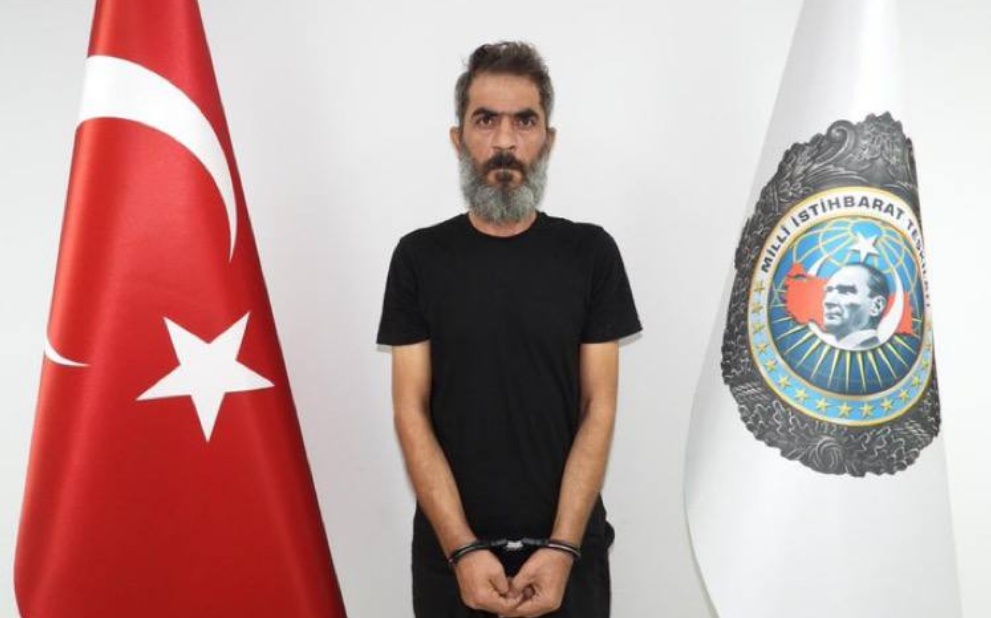
Turkey's MIT intelligence agency has captured Omer al-Khatib, a Syrian wanted under an Interpol Red Notice over the 2013 Reyhanli attack that killed 53 people, according to security sources cited by Anadolu.

1 / 3
The story, neutrally told
Turkey's National Intelligence Organization (MIT) captured Omer al-Khatib, a Syrian suspect in the 2013 Reyhanli attack that killed 53 people, as he was preparing to flee to Europe by sea, security sources said on Thursday 1 October 2026. Anadolu AgencyN “captured Omer al-Khatib, one of the Syrian suspects in the 2013 terror attack in Reyhanli that killed 53 people, as he was preparing to flee to Europe by sea” Read at Anadolu Agency ↗ Arab NewsRC “has captured a key suspect from a deadly 2013 attack near the Syrian border while he was attempting to flee to Europe” Read at Arab News ↗ Al-Khatib was wanted under an Interpol Red Notice and was brought to Turkey after the capture; Anadolu did not say where or when he was caught, according to Arab News. Anadolu AgencyN “who was wanted under an Interpol Red Notice” Read at Anadolu Agency ↗ Arab NewsRC “without saying exactly where or when he was caught” Read at Arab News ↗ Anadolu's sources say al-Khatib helped plan and organise the attack and coordinated between the perpetrators and intelligence officials affiliated with Bashar al-Assad. Anadolu AgencyN “was involved in planning and organizing the attack in the Turkish town and coordinated between the perpetrators and intelligence officials affiliated with Bashar al-Assad” Read at Anadolu Agency ↗
According to those sources, al-Khatib and Yusuf Nazik entered Turkey through Hatay in February 2013 and identified targets, with approval from Maj. Gen. Kifah Melhem in Latakia; in May 2013 al-Khatib and Temir Dukanci collected explosive materials at the Latakia branch of military intelligence. Anadolu AgencyN “Al-Khatib and Nazik first entered Türkiye through Hatay in February 2013 before the attack and identified the locations to be targeted.”“al-Khatib went with Temir Dukanci to the Latakia branch of military intelligence and received materials to be used in the explosive device” Read at Anadolu Agency ↗ The sources say the bomb-laden vehicle was driven to Reyhanli by Dukanci and Nazik and detonated by remote control, and that those involved were financially rewarded by the Assad government. Anadolu AgencyN “The bomb-laden vehicle was taken to Reyhanli by Dukanci and Nazik and detonated using a remote-controlled explosive device.”“were financially rewarded by the Bashar al-Assad regime, the sources said” Read at Anadolu Agency ↗ Other suspects were caught earlier: Nazik in 2018, Cengiz Sertel in 2024, and Muhammed Dib Korali and Dukanci in 2025, while Melhem, who is said to have ordered the attack and was made head of the National Security Bureau in February 2024, is known to have fled abroad after Assad's fall. Anadolu AgencyN “Nazik, one of the perpetrators and planners of the attack, was captured in 2018; Cengiz Sertel in 2024, and Muhammed Dib Korali and Dukanci were captured in 2025.”“Melhem is known to have fled abroad following the fall of the Assad regime.” Read at Anadolu Agency ↗
Arab News describes the twin bombing as the deadliest attack in Turkey linked to fallout from Syria's civil war; at the time Ankara blamed Turkish extremist groups allegedly backed by the Syrian government, which Damascus denied. Arab NewsRC “was the deadliest attack in Turkiye linked to fallout from Syria’s civil war, which began two years earlier”“accusations Damascus denied” Read at Arab News ↗ Arab News adds that Turkey has built close ties with Syria's new leadership under President Ahmed Al-Sharaa since Assad's ouster nearly two years ago. Arab NewsRC “Ankara has built close ties with Syria’s new leadership under President Ahmed Al-Sharaa” Read at Arab News ↗
Every sentence links to the reporting it rests on.
Left1 outlet
No left outlet in our sources has covered this story yet.
Centre1 outlet
- Framing
- Anadolu leads with the MIT operation and gives a detailed, sourced narrative of the plot, the roles of each suspect and the earlier arrests, presenting the security sources' account largely as established.
- Emphasis
- Operational detail of the plot, Assad-era intelligence links, and a record of MIT's years-long pursuit of suspects.
- Leaves out or plays down
- Does not note that the capture's place and date are unspecified, nor Damascus's earlier denial of involvement.
- Charged language
- “Bashar al-Assad regime”“terror attack”
- For example
-
“MIT began efforts to capture those responsible immediately after the Reyhanli attack and closely monitored al-Khatib's activities in Syria” — Anadolu Agency
Right1 outlet
- Framing
- Arab News presents a shorter report attributed to state media, flagged as 'report', adding regional context on Syria's war and Turkey's current ties with Syria's new government.
- Emphasis
- Attribution to Anadolu and unnamed sources, the unknown place and time of capture, Damascus's past denial, and Turkey-Syria relations today.
- Leaves out or plays down
- Leaves out the detailed plot narrative, the other suspects' names and earlier arrests, and Melhem's role.
- Charged language
- “key suspect”“Syrian regime”
- For example
-
“The participants were reportedly paid by the Syrian regime at the time, the reports said.” — Arab News
What every side reports
- MIT captured Syrian suspect Omer/Omar al-Khatib as he prepared to flee to Europe by sea.
- The 2013 Reyhanli attack killed 53 people.
- Al-Khatib was subject to an Interpol Red Notice.
- Al-Khatib is said to have coordinated between the attackers and intelligence officials loyal to Bashar al-Assad.
- The information comes from Turkish security sources via Anadolu; no independent confirmation is reported.
MIT (Turkish National Intelligence Organization) organisation
Per security sources cited by Anadolu, MIT tracked the Reyhanli suspects since the attack, monitored al-Khatib in Syria and captured him before he could flee to Europe.
“MIT captured al-Khatib as he was preparing to flee to Europe by sea and subsequently brought him to Türkiye.” — Anadolu Agency
2013 Reyhanli bombings event
Described as the deadliest attack in Turkey linked to the Syrian war; Turkish accounts attribute it to operatives working with Assad-era intelligence, which Damascus denied at the time.
“accusations Damascus denied” — Arab News
Centre1 article
-
Turkish intelligence captures suspect in 2013 Reyhanli terror attack
Neutral Detailed account relaying Turkish security sources' version of the plot and MIT's pursuit of suspects.
Right1 article
-
Turkiye detains suspect in 2013 attack by Syria border: report
Neutral Cautious, attributed report with context on the Syrian war and Turkey's ties to Syria's new leadership.
- 1 Oct 09:02 First Anadolu AgencyN Turkish intelligence captures suspect in 2013 Reyhanli terror attack
- 1 Oct 16:12 +7h 10m Arab NewsRC Turkiye detains suspect in 2013 attack by Syria border: report
- 1 Oct 17:04 +8h 2m The HinduLC Turkiye detains suspect in 2013 attack by Syria border: report
Times are when each article was published, or when we first saw it if the outlet gave no time.