UAE unveils asteroid-mission probe; testing continues ahead of March 2028 launch
Sheikh Hamdan announced that the probe for the Emirates Mission to the Asteroid Belt has reached flight readiness. The National's detail shows a flight-identical model still in thermal testing, with a flight-readiness review to come.
Updated (version 2). New coverage since the last version from Scientific American.

1 / 3
The story, neutrally told
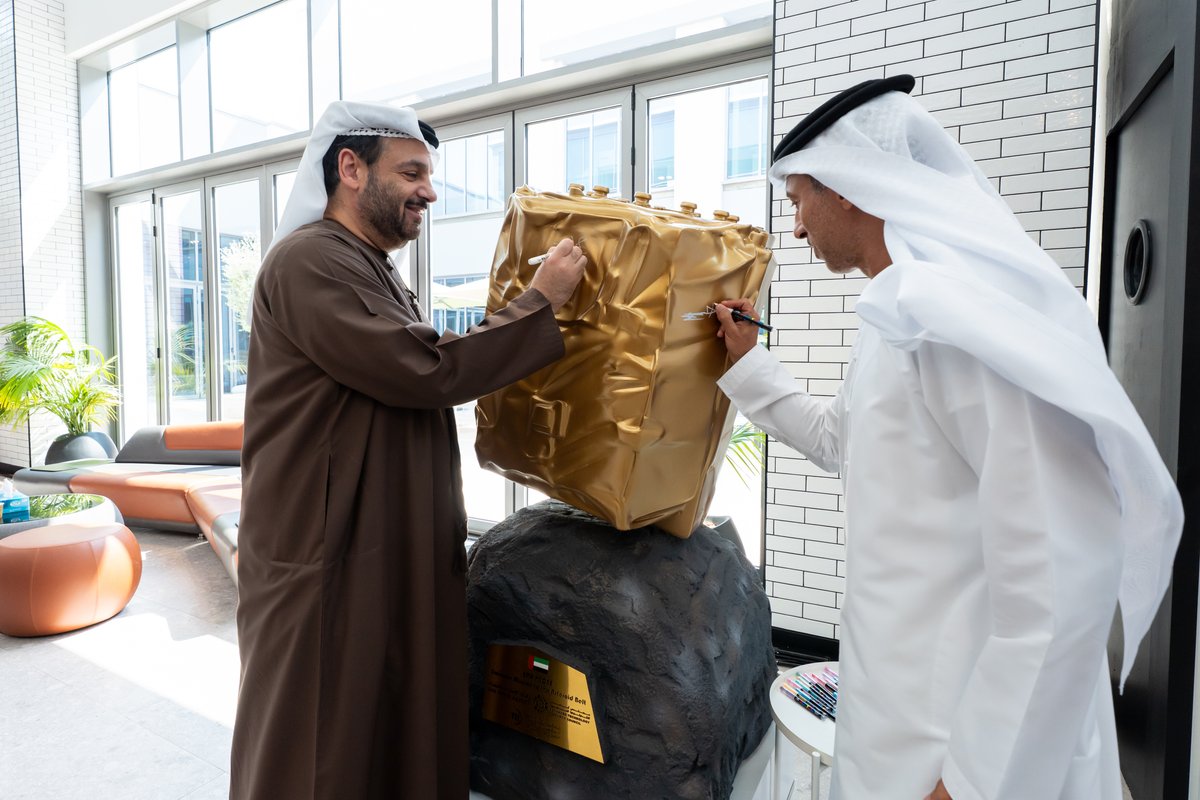
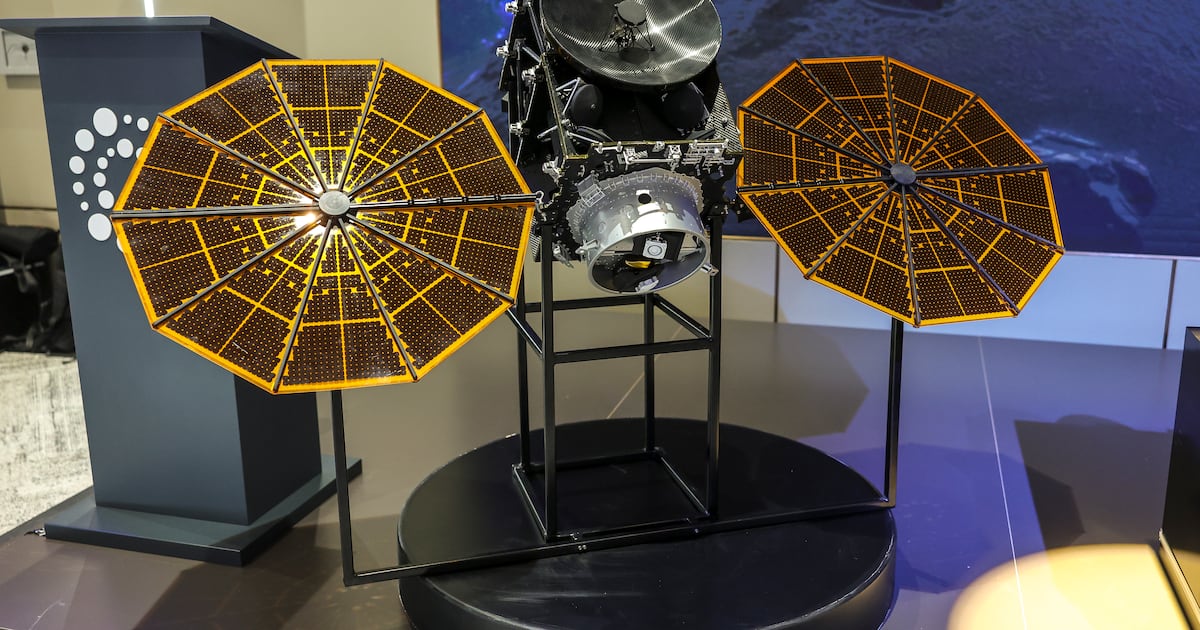
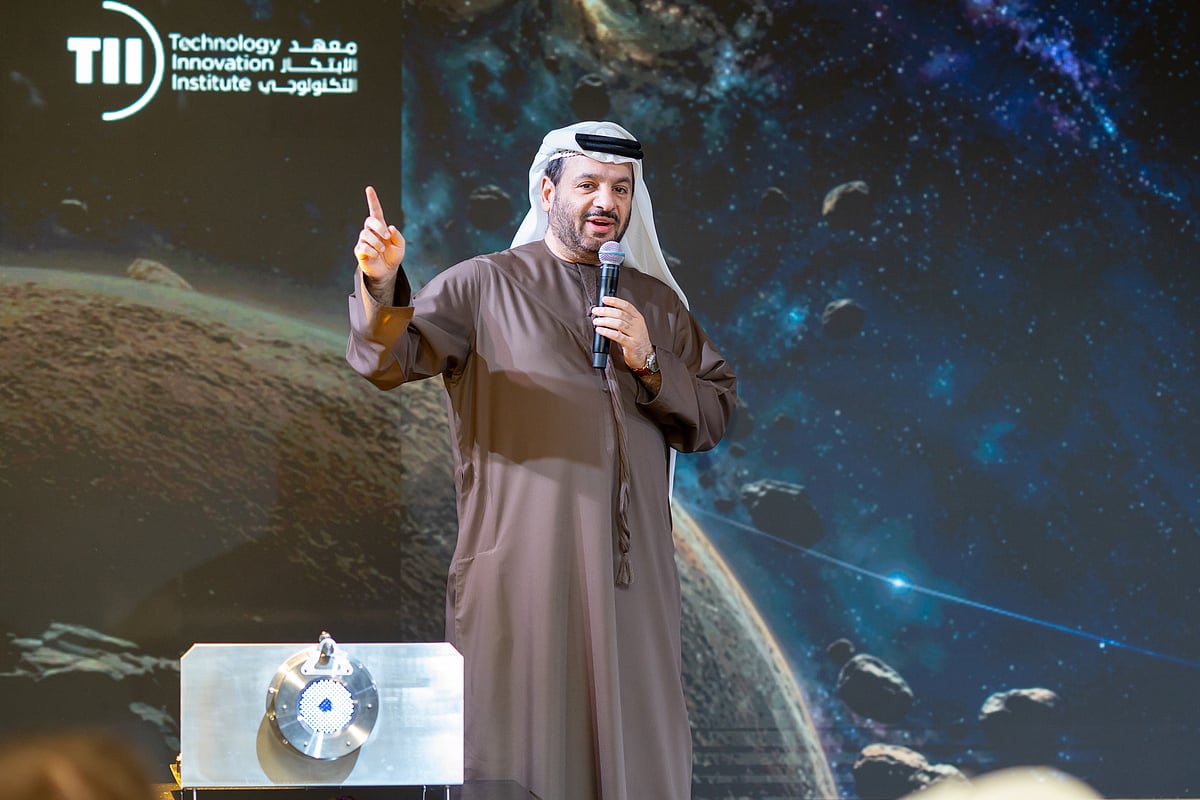
Centre · 1Sheikh Hamdan bin Mohammed bin Rashid Al Maktoum, Crown Prince of Dubai and the UAE's Deputy Prime Minister and Minister of Defence, announced that the spacecraft at the heart of the Emirates Mission to the Asteroid Belt has reached flight readiness less than two years after being developed, assembled and tested in the UAE. Gulf NewsN “has reached flight readiness less than two years after being developed, assembled and tested in the UAE” Read at Gulf News ↗ Centre · 2Sheikh Hamdan attended an unveiling of the probe; The National says the Crown Prince viewed a flight-identical model, developed by Abu Dhabi's Technology Innovation Institute (TII), at a press conference on Thursday. Gulf NewsN “attended the unveiling of the probe” Read at Gulf News ↗ The NationalN “viewed a flight-identical model of the probe, developed by Abu Dhabi’s Technology Innovation Institute, at a press conference on Thursday” Read at The National ↗ Centre · 1The National reports that the probe has completed vibration testing and is undergoing thermal cycles in a vacuum chamber at a university in Al Ain, according to TII executive director Anton Ivanov. Comprehensive performance tests and a flight-readiness review remain before shipment to Colorado later this month. The NationalN “the flight model had completed vibration testing and was undergoing thermal cycles inside a vacuum chamber at a university in Al Ain”“Comprehensive performance tests and a flight-readiness review remain before shipment to Colorado later this month.” Read at The National ↗
Centre · 2The MBR Explorer spacecraft is due to launch in a three-week window in March 2028 on an eight-year, five-billion-kilometre journey. It will use gravity assists around Venus, Earth and Mars, fly past six asteroids, and reach the asteroid 269 Justitia in 2036; Gulf News describes the mission as exploring seven asteroids. The NationalN “set to launch during a three-week window in March 2028 on an eight-year, five-billion-kilometre journey, reaching the 269 Justitia asteroid in 2036”“conducting fly-bys of six asteroids before its final encounter with Justitia” Read at The National ↗ Gulf NewsN “expected to travel about 5 billion kilometres and explore seven asteroids” Read at Gulf News ↗ Mixed · 2Scientific American, in a piece published on 5 October, gives a different arrival date and mission profile: it says the spacecraft will reach Justitia in 2034, after visiting 10253 Westerwald, 623 Chimaera, 13294 Rockox, 88055 Ghaf, 23871 Ousha and 59980 Moza, with a Mars flyby in between and Venus and Earth flybys in mid-2028 and spring 2029. The National and Gulf News give 2036. Scientific AmericanLC “The final destination, expected to be reached in 2034, is 269 Justitia”“10253 Westerwald, 623 Chimaera, 13294 Rockox—then a flyby of Mars—before visiting 88055 Ghaf, 23871 Ousha and 59980 Moza” Read at Scientific American ↗ The NationalN “reaching the 269 Justitia asteroid in 2036” Read at The National ↗ Centre · 1At Justitia the TII-built probe, the mission's only deployable payload, will separate and descend on a ballistic trajectory with no propulsion to slow it. The descent is expected to take two to three hours, with impact at 15 to 27 metres per second (about 60 km/h, per Dr Ivanov). Two cameras will image the descent and an on-board system will rank the pictures for relay. The probe is not expected to survive, though its battery and communications are designed to keep working for 20–50 minutes if it does. The NationalN “The descent is expected to take two to three hours, with the probe striking the asteroid at between 15 and 27 metres per second.”“The probe is not expected to survive the impact, although its battery and communications system are designed to continue working for 20–50 minutes if it does.” Read at The National ↗
Centre · 1Dr Elias Tsoutsanis, chief researcher at TII's Propulsion and Space Research Centre, told Gulf News the probe came from nearly two years of engineering and more than 600 design requirements, with bandwidth the main constraint. The probe may classify images on board and send only the useful ones to the main spacecraft, and he said clear images of the approach to Justitia are the priority, since the lander is expected to have only a few minutes of battery life after touchdown. Gulf NewsN “more than 600 design requirements”“The lander is expected to have a few minutes of battery life afterwards.”“capturing clear images of the probe’s approach to Justitia is a priority” Read at Gulf News ↗ Centre · 1Justitia is described as scientifically unusual, with a spectrum closer to distant Kuiper Belt objects than to neighbouring main-belt asteroids, and scientists believe it may have formed farther out in the Solar System before migrating inward. Studying it could offer clues to how water, volatiles and organic compounds were distributed as the planets formed. The NationalN “a spectrum that more closely resembles objects in the distant Kuiper Belt than neighbouring asteroids in the main belt” Read at The National ↗ Centre · 1Mission director Mohsen Al Awadhi said the team is not preparing a backup plan if the March 2028 window is missed, because the trajectory would no longer work: "If, God forbid, we miss that, we basically don't have a mission." The NationalN “If, God forbid, we miss that, we basically don’t have a mission,” Mr Al Awadhi said.” Read at The National ↗
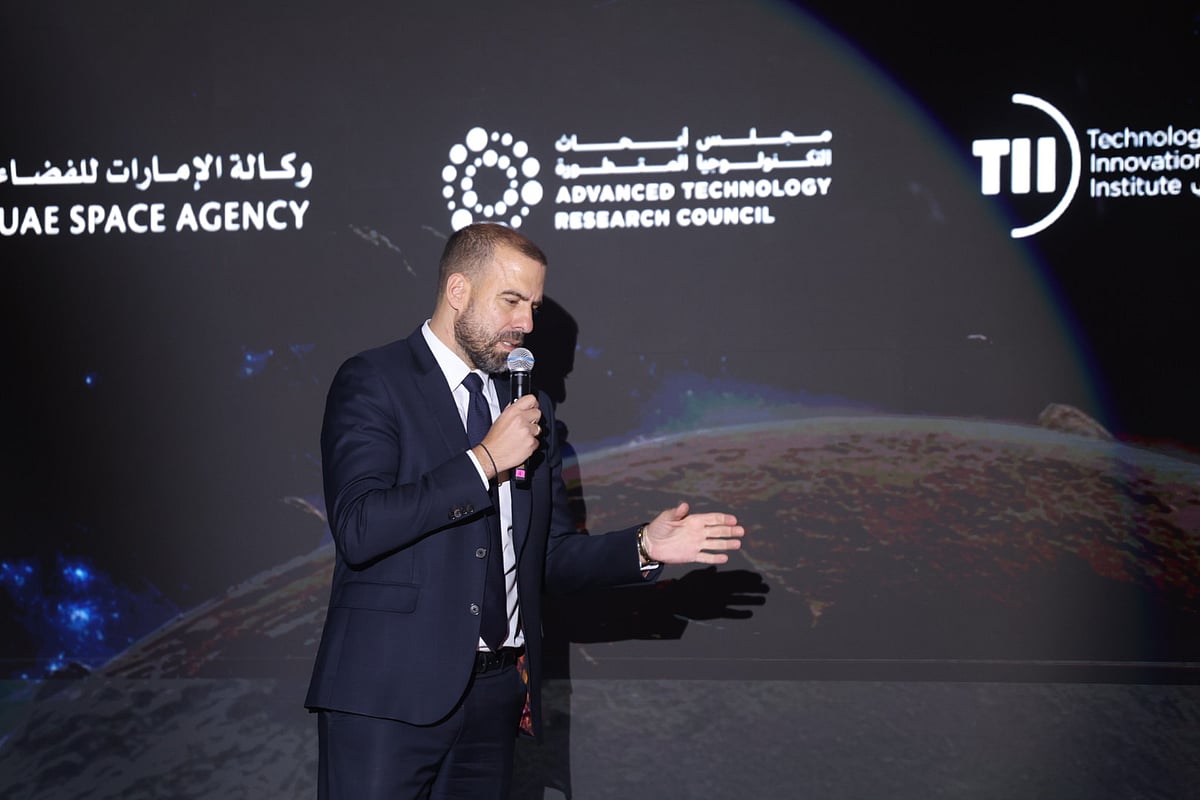
Centre · 1Gulf News adds that the launch window is about 21 days and that Dr Ahmad Al Falasi, chairman of the UAE Space Agency, said "there is no backup plan"; if the window is missed, the selected asteroids and mission design may not work again for another 100 years. TII chief executive Najwa Aaraj said there would be no remote control to call the spacecraft back if something went wrong, which makes engineering and testing essential before launch. Gulf NewsN “The mission has a launch window of about 21 days in March 2028. If they miss it, the selected asteroids and mission design may not work again for another 100 years.”“there would be no remote control to call it back if something went wrong” Read at Gulf News ↗ Centre · 2Sheikh Hamdan wrote that more than 150 engineers and scientists are working as one national team. TII chief executive Najwa Aaraj said the probe project involved about 40 people over 18 months and that about 80 per cent of the probe work is done by UAE engineers. Gulf NewsN “more than 150 engineers and scientists are working as one national team on the mission” Read at Gulf News ↗ The NationalN “The probe project involved about 40 people over 18 months, TII chief executive Najwa Aaraj said.”“about 80 per cent of the work on the probe was being done by UAE engineers” Read at The National ↗ Centre · 2Officials framed the mission as capacity-building. Sheikh Hamdan said the UAE's space sector is now valued at more than Dh44 billion, and the country aims by 2031 to double the returns from its space economy and rank among the world's 10 largest. Faisal Al Bannai, adviser to the UAE President, and Dr Ahmad Al Falasi, chairman of the UAE Space Agency, stressed local expertise and the technology and people "left behind". Gulf NewsN “the UAE’s space sector now valued at more than Dh44 billion”“establish itself among the world’s 10 largest space economies” Read at Gulf News ↗ The NationalN “it’s what’s left behind: the technology developed, the people developed, and also the interest in space overall” Read at The National ↗
Mixed · 2Scientific American reports that Sheikh Hamdan said on X that the UAE space sector is valued at roughly $12 billion, and it links the programme to the UAE's wish to rely less on fossil fuels and to compete in the space race between the US and China. Gulf News adds that Dr Al Falasi said space exploration has lifted STEM enrolment in the UAE, including a 30% increase in students overall, and that Dr Aaraj said the next mission would be fully developed in the UAE without needing Colorado. Scientific AmericanLC “the country’s space sector is currently valued at roughly $12 billion”“The expansion of its space program is also reflective of the country's desire to be less reliant on fossil fuels” Read at Scientific American ↗ Gulf NewsN “including a 30% increase in students overall” Read at Gulf News ↗
Every sentence links to the reporting it rests on. The pill in front of each says where its sources sit: Left, Centre or Right when one side supplies at least half of them, Mixed when they are evenly split. The number is how many outlets it cites.
Left1 outlet
- Framing
- Scientific American (the only left-labelled outlet) writes a short explainer for an international audience, presenting the UAE as a new, ambitious space power and placing the mission in the US-China space race and the push away from fossil fuels.
- Emphasis
- The list of asteroid targets, the flyby sequence, Justitia's Kuiper Belt origin and the UAE's earlier Mars mission; it cites Sheikh Hamdan's post on X for the sector's value.
- Leaves out or plays down
- Does not mention the testing status, the remaining flight-readiness review, the shipment to Colorado, the missed-window risk or the TII probe's impact design; its 2034 arrival date differs from the 2036 given by the Emirati outlets.
- Charged language
- “new and ambitious”“jockeying”
- For example
-
“The UAE is among the nations jockeying to carve out room in the space race between the U.S. and China.” — Scientific American
“The country’s space program is new and ambitious, having already sent a mission into Mars orbit” — Scientific American
Centre2 outlets
- Framing
- Both outlets are centre-labelled and mostly relay official statements. Gulf News leads with Sheikh Hamdan's flight-readiness announcement, then runs follow-ups on the stakes of an unrecoverable mission, local expertise and the probe's data limits. The National gives a longer technical and schedule account of testing, the descent and the science.
- Emphasis
- Gulf News stresses national achievement, sovereignty, the no-backup-plan launch window and economic targets. The National stresses testing status, the fixed 2028 launch window, the impact design and Justitia's scientific interest.
- Leaves out or plays down
- Gulf News does not mention that tests and a flight-readiness review remain. The National does not give the Dh44 billion figure or the 2031 target. Neither mentions a 2034 arrival date.
- Charged language
- “bold asteroid quest”“no turning back”
- For example
-
“Dr. Najwa, CEO of Technology Innovation Institute (TII), said there would be no remote control to call it back if something went wrong.” — Gulf News
“Comprehensive performance tests and a flight-readiness review remain before shipment to Colorado later this month.” — The National
Right0 outlets
No right outlet in our sources has covered this story yet.
What every side reports
- The probe was developed in the UAE for the Emirates Mission to the Asteroid Belt.
- The mission is about five billion kilometres long.
- Sheikh Hamdan attended the unveiling of the probe.
- Officials describe the mission as building a national team and domestic expertise.
Where accounts differ
-
When the spacecraft reaches Justitia and what it does there
- Left
- Scientific American says arrival is expected in 2034, and that the spacecraft will orbit Justitia for seven months before releasing a lander.
- Centre
- The National says arrival in 2036; Gulf News also gives early 2036 for the lander's detachment. The National describes the TII probe separating and descending on a ballistic trajectory.
-
Number of asteroids visited
- Left
- Scientific American: seven asteroids in the main belt.
- Centre
- The National: fly-bys of six asteroids before a final encounter with Justitia; Gulf News described seven.
-
The spacecraft is due to launch in March 2028 on the Emirates Mission to the Asteroid Belt.
Reported- Reports 3
- Scientific American, Gulf News, The National
-
The spacecraft will reach its final target, asteroid 269 Justitia, in 2036.
Mixed- Supports 2
- Gulf News, The National
- Disputes 1
- Scientific American
-
Justitia may have formed farther out in the Solar System and could offer clues to how water and organic materials were distributed.
Supported- Supports 2
- Scientific American, The National
- Reports 1
- Gulf News
Sheikh Hamdan bin Mohammed bin Rashid Al Maktoum person
Presents the probe as a national achievement built in under two years by more than 150 engineers and scientists, and as part of a push to grow the space economy.
“the probe has achieved flight readiness in less than two years” — Gulf News
“more than 150 engineers and scientists are working as one national team on the mission” — Gulf News
Emirates Mission to the Asteroid Belt other
Mission officials describe a fixed March 2028 launch window with no fallback, an autonomous low-cost impact probe, and a mission meant to build UAE expertise.
““We always calculate the schedule from launch, and launch cannot be moved,” Dr Ivanov said.” — The National
““We don’t have one team. We have a team called the National Team,” Mr Al Awadhi said.” — The National
Left1 article
-
United Arab Emirates to launch spacecraft to probe seven asteroids in 2028
Neutral Scientific American gives a brief explainer of targets and timeline, framing the UAE as an ambitious newcomer in the space race.
Centre5 articles
-
UAE asteroid probe reaches flight readiness ahead of 5 billion-km mission
Celebratory Reports the announcement of flight readiness as a national milestone tied to space-economy goals.
-
UAE's MBR Explorer probe enters final tests for 2028 mission
Neutral Detailed explanatory report on testing status, schedule risk, the probe's design and the science of Justitia.
-
Sheikh Hamdan attends unveiling of asteroid probe
Celebratory Gulf News leads with the Crown Prince attending the unveiling and announcing flight readiness, relaying official statements about national achievement.
-
Eight years, no turning back: UAE’s bold asteroid quest
Sympathetic Gulf News stresses the stakes of an unrecoverable eight-year mission, the no-backup-plan launch window and the growth of local expertise and sovereignty.

Show 1 moreShow fewer
-
600 requirements, two years of work, and a few minutes to send back what matters
Sympathetic Gulf News gives a TII engineer's view of design requirements and the data-selection challenge, presenting the probe as a test of UAE engineering.
Right0 articles
No coverage yet.
- 4 Oct 10:11 First Gulf NewsN UAE asteroid probe reaches flight readiness ahead of 5 billion-km mission
- 4 Oct 11:44 +1h 33m The NationalN UAE's MBR Explorer probe enters final tests for 2028 mission
- 4 Oct 12:30 +2h 19m Gulf NewsN Sheikh Hamdan attends unveiling of asteroid probe
- 5 Oct 09:42 +23h 31m Gulf NewsN Eight years, no turning back: UAE’s bold asteroid quest
- 5 Oct 14:35 +28h 24m Gulf NewsN 600 requirements, two years of work, and a few minutes to send back what matters
- 5 Oct 17:30 +31h 19m Scientific AmericanLC United Arab Emirates to launch spacecraft to probe seven asteroids in 2028
Times are when each article was published, or when we first saw it if the outlet gave no time.
Ask about this story
Loading…