UN climate chief Stiell to warn extreme heat endangers pregnant women and newborns
UN climate chief Simon Stiell is due to tell the pre-COP31 summit in Nadi, Fiji, that extreme heat is raising risks in pregnancy and birth, citing a Wellcome-commissioned survey of 1,000 midwives and doctors.


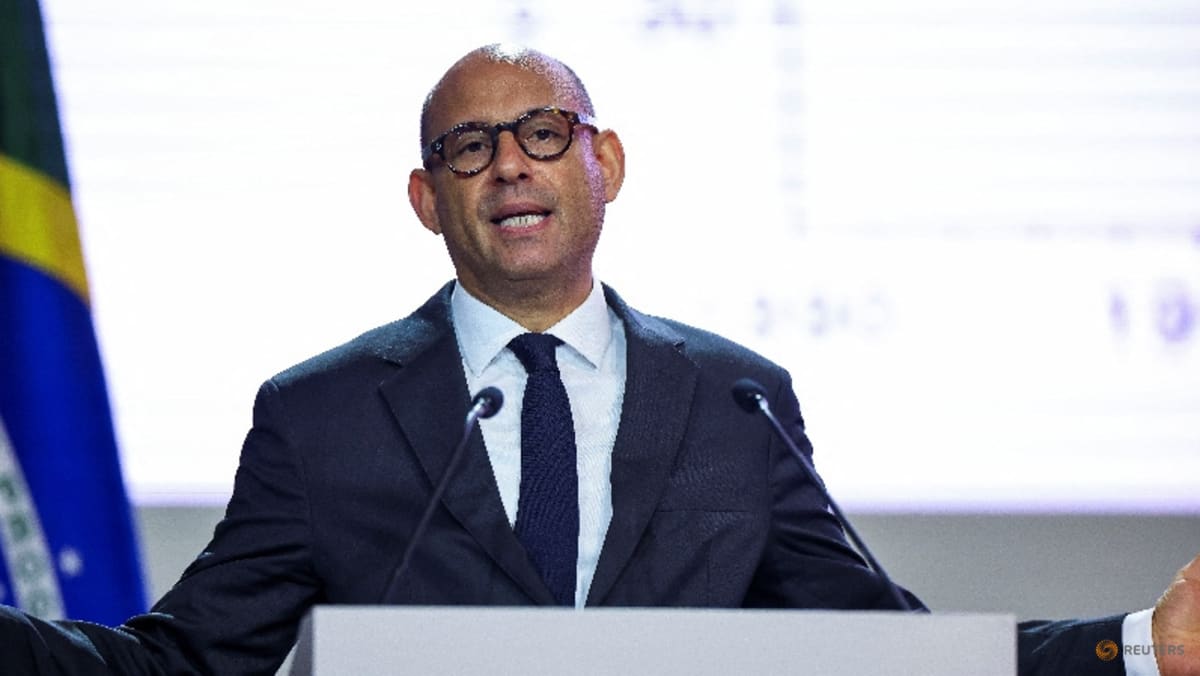

1 / 4
The story, neutrally told
Centre · 2United Nations climate chief Simon Stiell was due to warn on Monday 5 October that extreme heat is putting pregnant mothers and their newborns at increasing risk. Gulf NewsN “United Nations climate chief Simon Stiell will warn on Monday” Read at Gulf News ↗ CNAN “United Nations climate chief Simon Stiell will warn on Monday (Oct 5)” Read at CNA ↗ Mixed · 2He was to speak at the "pre-COP" summit in Nadi, Fiji, and cite a new survey showing more than two thirds of health professionals across five continents had seen complications caused by intense heat in the past five years. Gulf NewsN “Stiell will cite a new survey” Read at Gulf News ↗ The Straits TimesRC “more than two thirds of health professionals across five continents had seen complications caused by intense heat in the past five years” Read at The Straits Times ↗ Mixed · 2In remarks released in advance, he is expected to say that climate-driven extreme heat during pregnancy is increasingly linked to premature birth, stillbirth, low birth weight and maternal complications, and that pregnancy and birth are now "a new faultline in the global climate crisis, and one which is potentially fatal". The Straits TimesRC ““The picture is clear and very disturbing: as extreme heat worsens, pregnancy and birth are now a new faultline in the global climate crisis, and one which is potentially fatal,” Stiell will say.” Read at The Straits Times ↗ CNAN “Climate-driven extreme heat during pregnancy is increasingly linked to premature birth, stillbirth, low birth weight, and maternal complications.” Read at CNA ↗
Centre · 1Stiell is also expected to say the faultline must not become another deep chasm of suffering, inequality and injustice, and that pregnancy should be a time of hope but is becoming a time of anxiety for millions. CNAN “This fault line must not become another deep chasm of climate-driven suffering, inequality and injustice.”“But for millions, it is becoming a time of anxiety, as climate impacts fill everyday life with risk.” Read at CNA ↗ Centre · 1The survey covered 1,000 midwives and doctors in the United Kingdom, Australia, India, Brazil and Zimbabwe and was commissioned by the charitable foundation Wellcome. CNAN “The survey of 1000 midwives and doctors in the United Kingdom, Australia, India, Brazil and Zimbabwe was commissioned by charitable foundation Wellcome.” Read at CNA ↗ Mixed · 2It found nearly all of them had cared for mothers or babies suffering the effects of extreme heat, and about a third said they had seen low birth weight or restricted growth, feeding difficulties, and dehydration or heat-related illness that they believed resulted from extreme heat. CNAN “The survey found nearly all midwives and doctors had cared for mothers or babies suffering the effects of extreme heat.” Read at CNA ↗ The Straits TimesRC “About a third of respondents said they had seen cases of low birth weight or restricted growth, feeding difficulties, and dehydration or heat-related illness” Read at The Straits Times ↗
Centre · 1Wellcome's chairwoman, Australian former Prime Minister Julia Gillard, said in a statement that mothers and babies are being put at increasing risk, calling extreme heat "an invisible killer" and urging leaders to act. CNAN “"Extreme heat is an invisible killer, but pregnant women must not be invisible. Leaders have the evidence and solutions they need -- now they must act," Gillard said.” Read at CNA ↗ Mixed · 2As context, AFP analysis of Copernicus data found around 33 countries, from western Europe to the Sahel and central America, recorded their hottest July on record this year, and scientists warn climate change is making extreme weather more intense. Gulf NewsN “Around 33 countries, spanning from western Europe to the Sahel and central America, recorded their hottest July since records began this year” Read at Gulf News ↗ The Straits TimesRC “Scientists warn that climate change is making extreme weather events more intense” Read at The Straits Times ↗ Mixed · 2The pre-COP31 summit in Fiji and Tuvalu is seen by Pacific leaders as a chance to draw attention to life on the climate frontline, ahead of the COP31 summit in Turkey next month. The Straits TimesRC “The pre-COP31 summit in Fiji and the remote coral atoll Tuvalu is seen by Pacific leaders as a chance to draw attention to life on the frontline of climate change.” Read at The Straits Times ↗ CNAN “to be held next month in Türkiye” Read at CNA ↗
Every sentence links to the reporting it rests on. The pill in front of each says where its sources sit: Left, Centre or Right when one side supplies at least half of them, Mixed when they are evenly split. The number is how many outlets it cites.
Left0 outlets
No left outlet in our sources has covered this story yet.
Centre2 outlets
- Framing
- Straight relay of the advance speech and survey findings, led by the warning about risk to mothers and newborns.
- Emphasis
- Stiell's quotes and the survey; CNA's standfirst leads on the medical conditions linked to heat.
- Leaves out or plays down
- No independent medical data beyond the survey; no responses from governments or health bodies.
- Charged language
- “new fault line”“invisible killer”
Right2 outlets
- Framing
- Carries the same AFP copy, with a lede on the survey of midwives and doctors and a standfirst on scientists' warnings about extreme weather.
- Emphasis
- Survey findings from clinicians and the general climate context.
- Leaves out or plays down
- Does not add independent reporting or dissenting views.
- Charged language
- “new faultline”“invisible killer”
- For example
-
“Scientists warn that climate change is making extreme weather events more intense and resulting in heat records tumbling more often.” — The Straits Times
What every side reports
- Stiell was due to speak on 5 October at the pre-COP summit in Nadi, Fiji.
- The Wellcome-commissioned survey covered 1,000 midwives and doctors in five countries.
- COP31 is due next month in Turkey.
-
A survey found more than two thirds of health professionals across five continents had seen heat-caused complications in pregnancy in the past five years.
Reported- Reports 3
- CNA, Gulf News, The Straits Times
-
Climate-driven extreme heat during pregnancy is increasingly linked to premature birth, stillbirth, low birth weight and maternal complications.
Reported- Reports 3
- CNA, Gulf News, The Straits Times
Simon Stiell person
Stiell is expected to say rising temperatures mean rising danger in pregnancy, calling it a potentially fatal new faultline in the climate crisis.
““Rising temperatures mean rising danger in pregnancy,” he is expected to say.” — The Straits Times
Left0 articles
No coverage yet.
Centre2 articles
-
Gulf NewsN · · via AFP
Extreme heat putting pregnant women, newborns at risk: UN climate chief
Neutral AFP copy relaying Stiell's expected remarks and the Wellcome survey.
-
CNAN ·
Extreme heat putting pregnant women, newborns at risk: UN climate chief
Neutral Same wire text with a standfirst foregrounding the health conditions linked to heat.
Right2 articles
-
The Straits TimesRC · · via AFP
Extreme heat putting pregnant women, newborns at risk: UN climate chief
Neutral AFP copy with a standfirst on scientists' warnings and a lede on the clinician survey.
-
- 5 Oct 00:37 First Gulf NewsN Extreme heat putting pregnant women, newborns at risk: UN climate chief via AFP
- 5 Oct 00:58 +20m CNAN Extreme heat putting pregnant women, newborns at risk: UN climate chief
- 5 Oct 01:20 +42m The Straits TimesRC Extreme heat putting pregnant women, newborns at risk: UN climate chief via AFP
- 5 Oct 01:52 +1h 14m Arab NewsRC Extreme heat putting pregnant women, newborns at risk: UN climate chief via AFP
Times are when each article was published, or when we first saw it if the outlet gave no time.