UN General Assembly elects 15 Human Rights Council members in uncontested vote
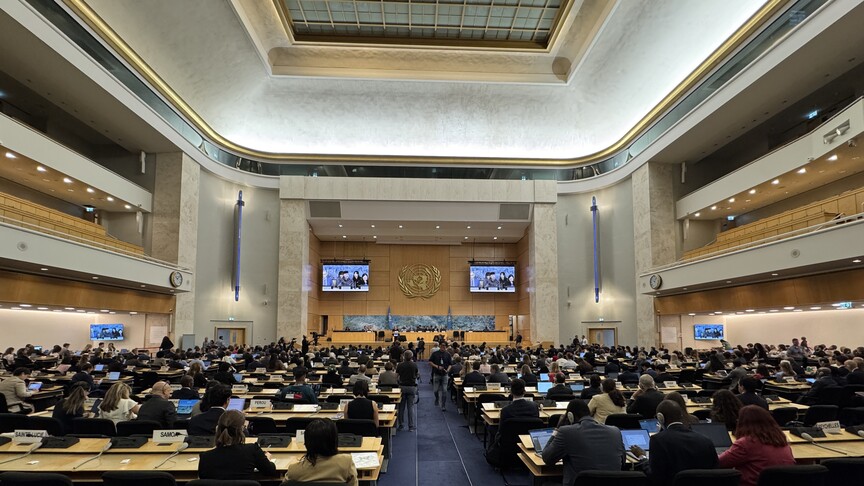
The UN General Assembly elected 15 members to the 47-nation Human Rights Council on Tuesday, with every regional group fielding exactly as many candidates as seats. Human Rights Watch criticised the lack of competition, while Nigeria's government welcomed its win.

1 / 2
The story, neutrally told
Mixed · 2The 193-member UN General Assembly voted on Tuesday to elect 15 members of the 47-nation Human Rights Council. Al JazeeraLC “The 193-member General Assembly held the vote on Tuesday.” Read at Al Jazeera ↗ Anadolu AgencyN “Nigeria was among 15 countries elected to the 47-member council for the 2027–2029 term during Tuesday’s vote in New York.” Read at Anadolu Agency ↗ Left · 1For the second year in a row, each regional group put forward exactly as many candidates as there were seats, so the races were uncontested. Al JazeeraLC “for the second year in a row, all regional groups put forward the exact number of candidates for available seats for the three-year term, resulting in uncontested races.” Read at Al Jazeera ↗ Left · 1The newly elected members are Zambia, Ghana, Nigeria and Burundi (Africa); Kuwait, Nepal, Jordan and Japan (Asia-Pacific); Brazil, the Dominican Republic and Uruguay (Latin America and Caribbean); Ireland and Germany (Western group); and Moldova and Ukraine (Central and Eastern Europe). Al JazeeraLC “In Tuesday’s vote, the Africa group’s Zambia, Ghana, Nigeria and Burundi were elected.”“Ireland and Germany from the mainly Western group, and Moldova and Ukraine from the Central and East European group, will also join the Human Rights Council.” Read at Al Jazeera ↗
Centre · 1Anadolu reported that among the African states Zambia received 177 of 181 votes, Ghana 173, Nigeria 172 and Burundi 160; Nigeria's three-year term runs from 1 January 2027 to 31 December 2029. Anadolu AgencyN “The country received 172 out of 181 votes”“Zambia received 177 votes, Ghana 173 and Burundi 160, according to the results.”“Nigeria’s term will begin Jan. 1 and run through Dec. 31, 2029.” Read at Anadolu Agency ↗ Left · 1Human Rights Watch's UN director, Louis Charbonneau, said the vote "makes a mockery of the word ‘election’" and urged member states to insist on competitive slates so they can reject candidates with poor rights records. Al Jazeera reported that rights groups said the vote let countries with poor records win seats. Al JazeeraLC ““This uncompetitive vote makes a mockery of the word ‘election’,” said Louis Charbonneau, UN director at Human Rights Watch.”“He called on UN member nations to “insist on competitive slates so they can reject candidates with poor human rights records”.” Read at Al Jazeera ↗ Left · 1UN spokesman Stephane Dujarric said the matter was for the 193 member states, but that those elected to the body have "an added responsibility to protect human rights". Al JazeeraLC “member states who are elected to this organisation’s highest human rights body have an added responsibility to protect human rights,”” Read at Al Jazeera ↗
Centre · 1Nigeria's Foreign Ministry thanked states for their support and said the election "reflects international confidence in its commitment to advancing human rights", according to spokesperson Oluwafemi Adeniyi. Anadolu AgencyN ““Nigeria’s election reflects international confidence in its commitment to advancing human rights and improving human rights conditions across the world,” Foreign Affairs spokesperson Oluwafemi Adeniyi said in part.” Read at Anadolu Agency ↗ Left · 1The Geneva-based council reviews every country's rights record periodically, appoints independent investigators and sends fact-finding missions. It was created in 2006 to replace a commission discredited by members with poor records, but has faced similar criticism since; US President Donald Trump has withdrawn the US from it, citing anti-Israel bias. Al JazeeraLC “The council was created in 2006 to replace a human rights commission discredited because some members had poor rights records.”“Soon after starting his second term, US President Donald Trump announced the withdrawal of Washington from the Human Rights Council, accusing it of anti-Israel bias.” Read at Al Jazeera ↗
Every sentence links to the reporting it rests on. The pill in front of each says where its sources sit: Left, Centre or Right when one side supplies at least half of them, Mixed when they are evenly split. The number is how many outlets it cites.
Left1 outlet
- Framing
- Al Jazeera leads with rights groups' criticism that the uncontested vote undermines accountability and lets states with poor records win seats.
- Emphasis
- Human Rights Watch's criticism, the council's credibility history, the US withdrawal and the UN's response.
- Leaves out or plays down
- Gives no vote tallies and no statements from the elected governments.
- Charged language
- “makes a mockery of the word ‘election’”“handed to them on a silver platter”
- For example
-
“Rights groups say uncontested vote undermines accountability as countries with poor human rights records win seats.” — Al Jazeera
““No one should have a seat on this crucial body handed to them on a silver platter”, Charbonneau said.” — Al Jazeera
Centre1 outlet
- Framing
- Anadolu reports the result from Nigeria's perspective, relaying the government's statement and vote counts.
- Emphasis
- Nigeria's vote total and rank, the Foreign Ministry's welcome, and the term dates.
- Leaves out or plays down
- Does not mention that the race was uncontested or the criticism from rights groups.
- For example
-
“Nigeria has been elected to the United Nations Human Rights Council for a three-year term beginning in January, the government said Wednesday.” — Anadolu Agency
“The Ministry of Foreign Affairs thanked UN member states for supporting Nigeria’s candidacy” — Anadolu Agency
Right0 outlets
No right outlet in our sources has covered this story yet.
What every side reports
- The General Assembly elected 15 members to the 47-member Human Rights Council on Tuesday.
- Nigeria, Zambia, Ghana and Burundi were the African states elected.
- Seats are allocated among regional groups and terms last three years.
Where accounts differ
-
Whether the election reflects legitimacy or a lack of accountability
- Left
- Human Rights Watch says the uncontested vote is a mockery and lets states with poor records win seats.
- Centre
- Nigeria's government says its election reflects international confidence in its human rights commitment; Anadolu does not mention the criticism.
United Nations Human Rights Council organisation
The council's seats are allocated by regional group; the UN spokesman said the uncontested vote was for member states to judge but that those elected carry added responsibility.
“it was a matter for the 193 member nations.” — Al Jazeera
Nigeria place
Nigeria's Foreign Ministry presents its election as international confidence in its human rights commitment.
““Nigeria’s election reflects international confidence in its commitment to advancing human rights and improving human rights conditions across the world,”” — Anadolu Agency
Left1 article
-
UN Human Rights Council elects 15 members in uncontested vote
Critical Frames the election as a non-competitive process criticised by rights groups, with the UN's response for balance.
Centre1 article
-
Nigeria elected to UN Human Rights Council seat
Neutral Straightforward national-result report relaying the Nigerian government's positive statement and vote figures.
Right0 articles
No coverage yet.
- 14 Oct 03:55 First Al JazeeraLC UN Human Rights Council elects 15 members in uncontested vote
- 14 Oct 17:17 +13h 23m Anadolu AgencyN Nigeria elected to UN Human Rights Council seat
Times are when each article was published, or when we first saw it if the outlet gave no time.
Ask about this story
Loading…