UN Security Council extends Darfur arms embargo to December 11 as US seeks nationwide ban
The UN Security Council unanimously extended the Darfur arms embargo by two months, to December 11, without adopting a US proposal to widen it to all of Sudan. Talks on the proposal continue.
1 / 2
The story, neutrally told
Mixed · 2The UN Security Council voted unanimously on Thursday 8 October to extend the arms embargo on Sudan's Darfur region until December 11. The NationalN “unanimously voted on Thursday to extend an arms embargo on” Read at The National ↗ Arab NewsRC “adopted a resolution extending the arms embargo on Sudan’s Darfur region by two months” Read at Arab News ↗ Right · 1The extension did not widen the embargo to the whole country, as the United States had sought. Arab NewsRC “without broadening it to the rest of the war-torn country as sought by the United States” Read at Arab News ↗ Mixed · 2AFP described it as a "technical extension" adopted in the absence of consensus, with negotiations continuing behind the scenes; The National said it buys time for talks on the US proposal. Arab NewsRC “unanimously adopted a so-called technical extension of just two months” Read at Arab News ↗ The NationalN “buying time for negotiations over a US proposal to widen the restrictions to the entire country” Read at The National ↗
Centre · 1Washington wants a nationwide embargo, while China, Russia and other council members want sanctions kept to Darfur. The National also names the Democratic Republic of the Congo, Liberia, Somalia and Pakistan among those resisting. The NationalN “China, Russia and other council members want to keep the sanctions confined to Darfur”“as well as the Democratic Republic of the Congo, Liberia, Somalia and Pakistan” Read at The National ↗ Centre · 1Massad Boulos, US senior adviser for Arab and African affairs, proposed expanding the embargo in August, working with UN ambassador Mike Waltz. In a Foreign Policy opinion piece in September they said it would apply to "all the networks keeping this war alive on both sides, with no carve-outs", targeting arms traffickers, financiers, mercenary recruiters and drone suppliers. The NationalN “proposed expanding the embargo in August”“apply to all the networks keeping this war alive on both sides, with no carve-outs” Read at The National ↗ Centre · 1The National said the embargo has failed to stop weapons reaching Darfur but lets UN experts investigate shipments and identify those responsible for breaches, which can pave the way for further sanctions. The NationalN “it allows UN experts to investigate arms shipments and identify those responsible for breaches” Read at The National ↗
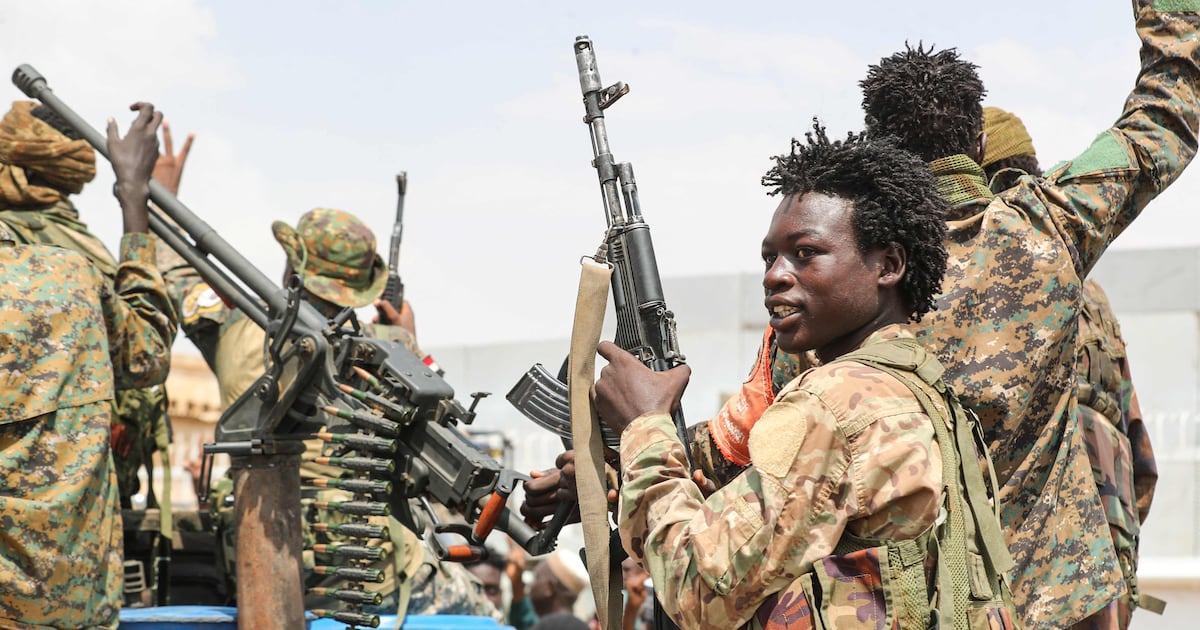
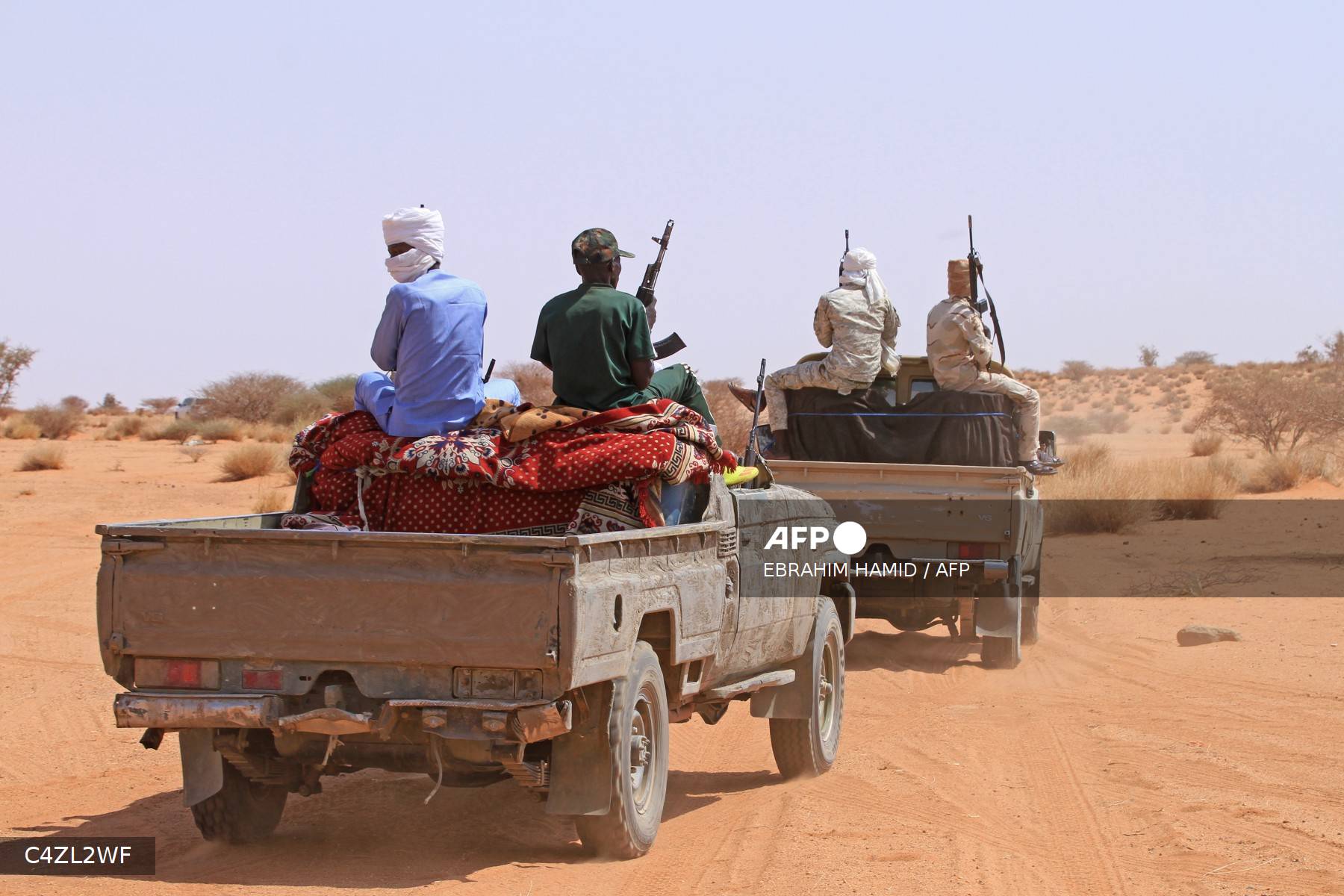
Mixed · 2The war between the Sudanese Armed Forces and the paramilitary Rapid Support Forces is in its fourth year and has killed tens of thousands and displaced millions, with armed drones increasingly used, according to AFP. Arab NewsRC “has killed tens of thousands and displaced millions” Read at Arab News ↗ The NationalN “civil war, now in its fourth year” Read at The National ↗ Right · 1The army holds central and eastern Sudan, while the RSF controls Darfur in the west and parts of the south; Darfur has seen displacement camps invaded and repeated ethnic massacres. Arab NewsRC “The army holds sway in Sudan’s central and eastern regions” Read at Arab News ↗ Centre · 1The National reported that tension between Washington and Khartoum rose after the US reportedly withheld a visa from army chief Gen Abdel Fattah Al Burhan before his UN General Assembly address. Reuters reported this appeared linked to his resistance to a US-backed ceasefire plan, which Sudan says it did not reject but commented on. State Department spokesman Tommy Pigott said neither side was a legitimate constitutional government. The NationalN “withheld a visa”“Sudan has claimed it did not reject the US ceasefire proposal but instead submitted comments on it.” Read at The National ↗
Every sentence links to the reporting it rests on. The pill in front of each says where its sources sit: Left, Centre or Right when one side supplies at least half of them, Mixed when they are evenly split. The number is how many outlets it cites.
Left0 outlets
No left outlet in our sources has covered this story yet.
Centre1 outlet
- Framing
- The National frames it as a diplomatic contest between Washington and China/Russia, with US-Sudan tensions as background.
- Emphasis
- US proposal, named opponents, Boulos and Waltz op-ed, visa dispute.
- Leaves out or plays down
- Little on humanitarian toll or who controls which territory.
- For example
-
“The short extension highlighted disagreements over how to stop weapons from reaching those fighting in Sudan’s civil war” — The National
Right1 outlet
- Framing
- Arab News, running AFP copy, leads on the US failing to get its expansion approved.
- Emphasis
- Brevity of the extension, war's civilian toll, territorial control.
- Leaves out or plays down
- Does not mention other opposing states or US-Sudan visa tensions.
- For example
-
“Washington failed to get the expansion approved amid opposition from veto-holding Russia and China” — Arab News
What every side reports
- The Council voted unanimously to extend the Darfur arms embargo.
- The extension is short, about two months.
- The US wants a nationwide embargo; Russia and China oppose it.
- The Sudan war is in its fourth year.
Where accounts differ
-
How to characterise the outcome
- Centre
- A short extension that buys time for negotiations on the US proposal.
- Right
- Washington failed to get its expansion approved.
Left0 articles
No coverage yet.
Centre1 article
-
UN Security Council extends arms embargo in Sudan's Darfur as US pushes for nationwide ban
Neutral Explains the extension as buying time for talks, with background on the US push and the dispute with Khartoum.
Right1 article
-
Arab NewsRC · · via AFP
UN extends Darfur arms embargo by two months
Neutral AFP wire copy presenting the extension as a US setback and stressing the war's toll.
- 8 Oct 17:27 First The NationalN UN Security Council extends arms embargo in Sudan's Darfur as US pushes for nationwide ban
- 8 Oct 19:56 +2h 29m Arab NewsRC UN extends Darfur arms embargo by two months via AFP
Times are when each article was published, or when we first saw it if the outlet gave no time.