Study: about a quarter of male US Army soldiers could screen as low in testosterone
A JAMA study of 479 male soldiers estimates 26% would have a low testosterone reading, or about 100,691 men, as the Pentagon rolls out screening. Outside experts say a single low reading does not mean a deficiency.

1 / 2
The story, neutrally told
Mixed · 2A study published in JAMA on 15 October 2026 estimates that about 26 per cent of male active-duty US Army soldiers would get a low testosterone result, equal to roughly 100,691 men. New ScientistN “the researchers estimate that 100,691 male soldiers in the US Army could have low testosterone readings” Read at New Scientist ↗ Ars TechnicaLC “the researchers estimate that about 26 percent of active-duty Army service members would get a test result suggesting low testosterone” Read at Ars Technica ↗ Mixed · 2The researchers, from the Pennington Biomedical Research Center in Louisiana and the US Army Research Institute of Environmental Medicine, used data from a military health survey at five installations. Morning fasting blood samples were collected between August 2024 and January 2026. Ars TechnicaLC “Researchers at the Pennington Biomedical Research Center in Louisiana and the US Army Research Institute of Environmental Medicine in Massachusetts conducted the study.” Read at Ars Technica ↗ New ScientistN “at five military centres across the US between 2024 and 2026” Read at New Scientist ↗ Mixed · 2Total testosterone was measured in 479 men, after excluding three who were receiving testosterone treatment. The weighted mean was 405 ng/dL, and the weighted mean age was about 30. Female personnel were not analysed because their levels were often below the limits of detection. Ars TechnicaLC “the weighted mean for morning total testosterone was 405 ng/dL” Read at Ars Technica ↗ New ScientistN “Female personnel weren't included in the analysis because their testosterone levels were often below the limits of detection.” Read at New Scientist ↗
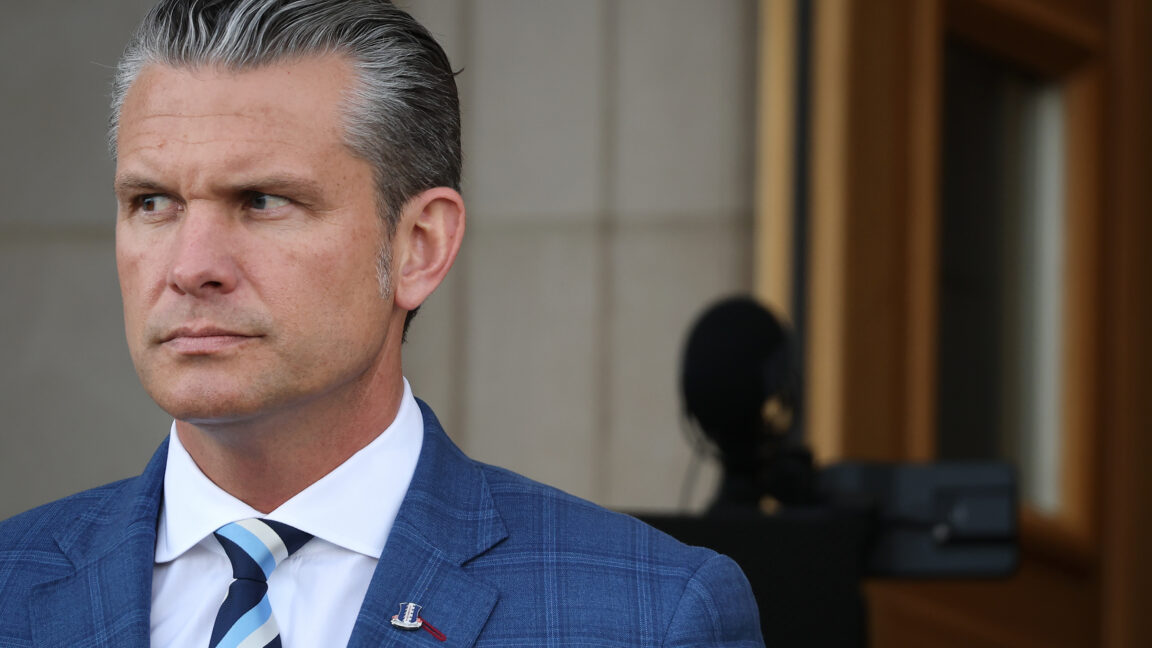
Mixed · 2The 26 per cent figure uses a cutoff of below 300 ng/dL, which the American Urological Association classes as low and which the Pentagon guidance also uses. With the lower Centers for Disease Control and Prevention reference cutoff of 264 ng/dL, the estimate falls to about 15 per cent. Ars TechnicaLC “The Centers for Disease Control and Prevention has a harmonized reference cut-off that’s a little lower, at 264 ng/dL. With that threshold, about 15 percent” Read at Ars Technica ↗ New ScientistN “26 per cent had testosterone levels below 300 nanograms per decilitre, classified as low by the American Urological Association” Read at New Scientist ↗ Mixed · 2Low readings were more common with age: 33 per cent of men aged 30 and older were low, against 19.5 per cent of those under 30. Ars Technica adds that the odds also rose with body mass index. Ars TechnicaLC “Of men under age 30, 19.5 percent had a low measurement, while 33 percent of men aged 30 and older had low levels.” Read at Ars Technica ↗ New ScientistN “33 per cent of those aged 30 and older being classified in this group” Read at New Scientist ↗ Mixed · 2Defense Secretary Pete Hegseth announced the programme in July. All service members aged 30 and older must have annual screening and be offered voluntary testosterone replacement therapy if low. Younger personnel can opt in. Hegseth described the aim as "restoring and optimising your natural capabilities" and said there are no ramifications for declining therapy. The Pentagon issued clinical guidance in September. New ScientistN “all US service members aged 30 and older must undergo annual testosterone screening and be offered voluntary replacement therapy if they have low levels”“There are no ramifications for choosing not to have the therapy, he said” Read at New Scientist ↗ Ars TechnicaLC “the Pentagon has moved forward with the plans, releasing clinical guidance in September” Read at Ars Technica ↗
Centre · 1Outside experts question the approach. Darren Katz of the University of Melbourne, who was not involved, says a single test is unreliable because levels vary with time of day, food, sleep, obesity, illness and stress. The American Urological Association advises diagnosis only when symptoms are also present. Katz says there is insufficient evidence that treatment improves military readiness, and he favours targeted, symptom-based testing. New ScientistN “a single testosterone test isn't a reliable measure of deficiency, says Katz”“there is currently insufficient evidence that [it] will improve military readiness, operational performance or fighting capacity” Read at New Scientist ↗ Left · 1Ars Technica reports that the Endocrine Society and the American Urological Association have recommended against blanket screening. It says clinically significant male hypogonadism affects at most 1 per cent of men, and warns of cascades of follow-up testing, overtreatment and harms including infertility. The study authors note that published estimates of clinical hypogonadism are far lower than the share with a low reading. Ars TechnicaLC “Medical experts, including the Endocrine Society and the American Urological Association (AUA), have recommended against blanket screenings for these reasons.”“affecting 1 percent of men at most”“Published estimates of clinical hypogonadism are substantially lower than the prevalence of low testosterone observed here” Read at Ars Technica ↗ Left · 1Actual testing numbers may be lower than the study implies, because the screening starts with questions about symptoms and risk factors. Ars Technica says those symptoms, such as "low motivation" and "disturbed sleep", are vague, and risk factors such as obesity and type 2 diabetes are common. Men with risk factors can be tested without symptoms, so many more soldiers will likely be tested than before. It is unclear how many under-30s will opt in. Ars TechnicaLC “The first step in the screening is to ask members about possible symptoms and risk factors. From there, some men might not proceed to having a testosterone test.”“Those with such risk factors can go on to be tested even in the absence of symptoms” Read at Ars Technica ↗
Centre · 1Side effects of testosterone therapy named by New Scientist include acne, testicle shrinkage, reduced sperm production and fertility, and in older men a higher risk of fractures and pulmonary embolism. Timothy Piatkowski of the University of Queensland warns that testosterone is increasingly used as a proxy for masculinity, so high levels could be conflated with being a good soldier. New ScientistN “Some of the side effects of testosterone replacement therapy include acne, testicle shrinkage and reduced sperm production and fertility.”“Testosterone is already increasingly being used as an oversimplified proxy for masculinity and virility” Read at New Scientist ↗
Every sentence links to the reporting it rests on. The pill in front of each says where its sources sit: Left, Centre or Right when one side supplies at least half of them, Mixed when they are evenly split. The number is how many outlets it cites.
Left1 outlet
- Framing
- Treats the study as evidence against a flawed policy, with a critical headline about Hegseth's screening.
- Emphasis
- Medical bodies' opposition, rarity of true hypogonadism, risk of cascading unnecessary evaluations and overtreatment, and the CDC 15% alternative.
- Leaves out or plays down
- Does not include Hegseth's stated rationale or any quoted defence of the programme.
- Charged language
- “dubious”“clinically dubious”“ensnared”
- For example
-
“Hegseth’s dubious low-T screening may flag up to 25 percent of the Army” — Ars Technica
“offers a glimpse of how many Army members could become ensnared in the clinically dubious screenings” — Ars Technica
Centre1 outlet
- Framing
- Presents the study result as a headline finding, then outside expert comment on its implications for the policy.
- Emphasis
- Katz's caveats on single tests, side effects of therapy and Piatkowski's concern about masculinity; includes Hegseth's quoted rationale.
- Leaves out or plays down
- Omits the CDC cutoff alternative, the 1% hypogonadism figure and details of the Pentagon's symptom-first screening process.
- For example
-
“A quarter of male soldiers in the US could have low testosterone” — New Scientist
““about restoring and optimising your natural capabilities, protecting your longevity, ensuring you have the biological foundation required to sustain the fight”” — New Scientist
Right0 outlets
No right outlet in our sources has covered this story yet.
What every side reports
- The study found 26% of 479 male soldiers below 300 ng/dL.
- 33% of men aged 30 and over had low levels.
- Screening is mandatory from age 30 and announced by Hegseth in July.
- Outside experts say a single low reading does not establish deficiency.
Where accounts differ
-
Value of blanket screening
- Left
- Ars Technica calls the screening "dubious" and "clinically dubious", saying major medical bodies recommend against it and true prevalence is likely a tiny fraction of 26%.
- Centre
- New Scientist relays Katz's view that evidence for improved readiness is insufficient and a targeted approach is preferable, while giving Hegseth's rationale of protecting longevity and sustaining the fight.
Pete Hegseth person
Hegseth presents testosterone screening and optional therapy as restoring natural capabilities and protecting longevity, with no penalty for declining.
“There are no ramifications for choosing not to have the therapy, he said” — New Scientist
US Army organisation
The Army is the setting for the policy and the study, whose authors include its Research Institute of Environmental Medicine. The Pentagon's guidance uses a 300 ng/dL threshold and a symptom and risk-factor first step.
“The Pentagon’s clinical guidance uses a threshold of less than 300 ng/dL for low testosterone” — Ars Technica
Left1 article
-
Hegseth’s dubious low-T screening may flag up to 25 percent of the Army
Critical Frames the study as showing why the mandatory screening is clinically questionable and could lead to overtreatment.
Centre1 article
-
A quarter of male soldiers in the US could have low testosterone
Neutral Explanatory science report on the study, with independent experts raising cautions about the screening.
Right0 articles
No coverage yet.
- 15 Oct 16:00 First New ScientistN A quarter of male soldiers in the US could have low testosterone
- 15 Oct 22:09 +6h 10m Ars TechnicaLC Hegseth’s dubious low-T screening may flag up to 25 percent of the Army
Times are when each article was published, or when we first saw it if the outlet gave no time.
Ask about this story
Loading…