US Army unveils "How the Army Fights" guidance prioritising drones, long-range strikes
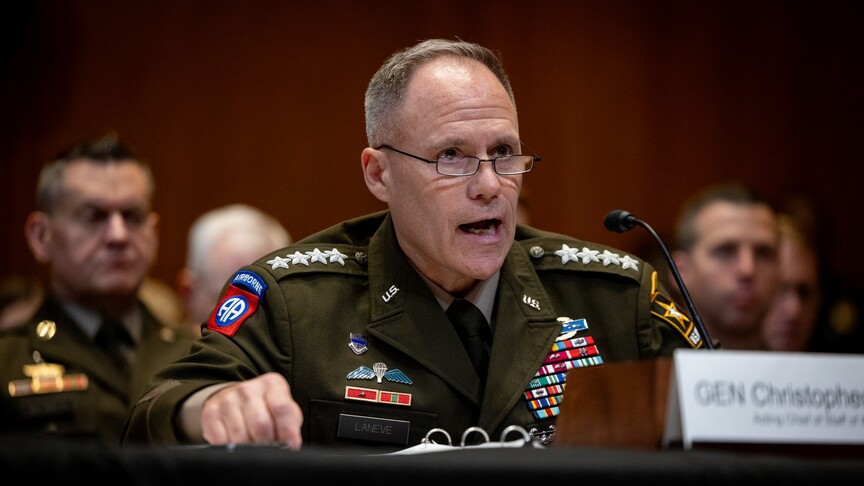
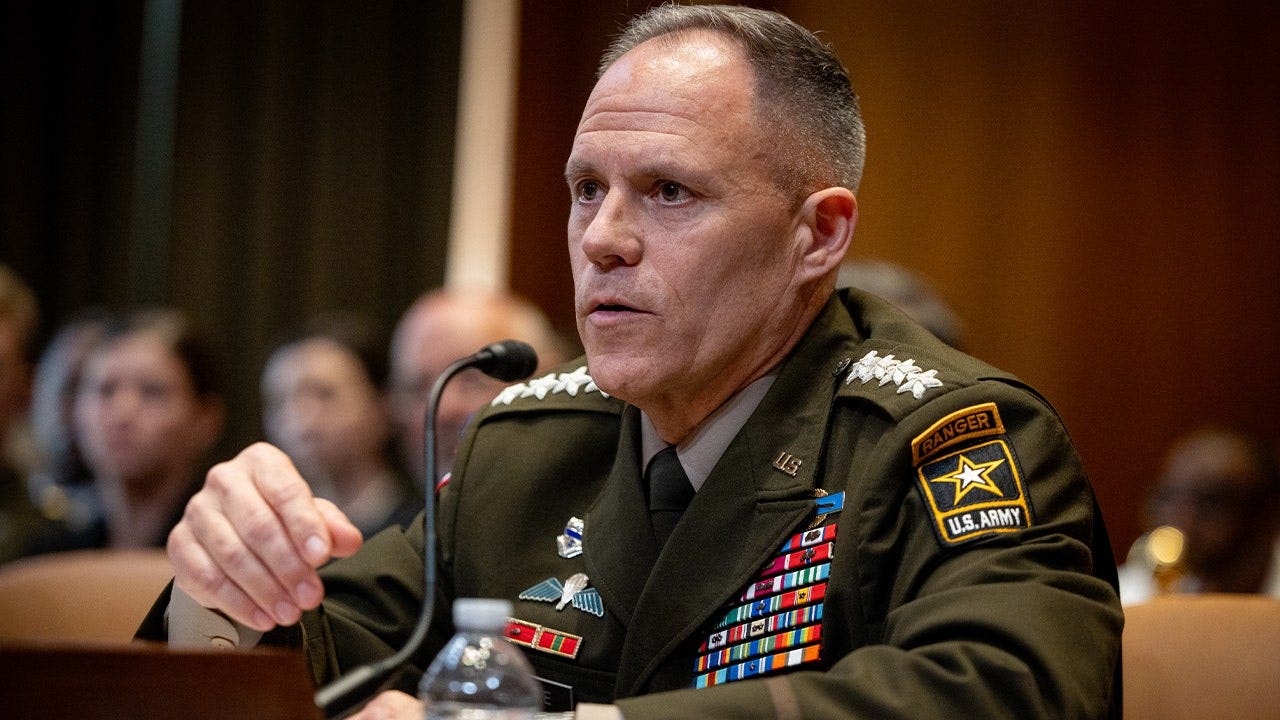
The US Army published new warfighting guidance, "How the Army Fights", which Gen. Christopher LaNeve presented at the AUSA conference. It stresses drones, long-range fires, and operating under contested conditions, including possible threats at home.
1 / 2
The story, neutrally told
Centre · 1The US Army has published new operational warfighting guidance called "How the Army Fights", designed to align its doctrine, training, force structure and technology investments with evolving battlefield threats. Anadolu AgencyN “The US Army is introducing new operational warfighting guidance designed to align its doctrine, training, force structure, and technology investments with evolving battlefield threats” Read at Anadolu Agency ↗ Centre · 1Gen. Christopher LaNeve, the Army's vice chief of staff and acting chief of staff, outlined it at the Association of the United States Army's Eisenhower Luncheon on Tuesday; the document had been published the previous week. Anadolu AgencyN “outlined the army’s new guidance, How the Army Fights, which was published last week.” Read at Anadolu Agency ↗ Centre · 1Anadolu Agency reports that the document sets a common framework for the Army's role in joint operations, drawing on lessons from Russia's war in Ukraine and fighting in the Middle East. Anadolu AgencyN “drawing lessons from conflicts including Russia’s war in Ukraine and fighting in the Middle East.” Read at Anadolu Agency ↗
Centre · 1LaNeve said the guidance is not a departure from Multi-Domain Operations but is meant to help every leader understand their role in it, and named four elements: convergence, strike, close battle and endurance. Anadolu AgencyN “How the Army Fights is not a departure from Multi-Domain Operations.”“convergence, strike, close battle, and endurance.” Read at Anadolu Agency ↗ Centre · 1LaNeve cited widespread unmanned aerial systems, persistent surveillance, increasingly precise long-range fires, and cyber and space capabilities as reasons the Army must change how it fights. Anadolu AgencyN “widespread unmanned aerial systems, persistent surveillance, increasingly precise long-range fires, and the growing importance of cyber and space capabilities” Read at Anadolu Agency ↗ Centre · 1The Army plans to expand autonomous and unmanned systems across its formations, including new military occupational specialties for unmanned aerial systems and robotics, and LaNeve announced that Futures and Concepts Command was redesignated the US Army Futures and Autonomous Systems Command (FASCOM). Anadolu AgencyN “including the introduction of military occupational specialties focused on unmanned aerial systems and robotics.”“redesignated the US Army Futures and Autonomous Systems Command, or FASCOM” Read at Anadolu Agency ↗
Centre · 1LaNeve also called on defence industry partners to help field effective technologies at scale, saying the Army "is not turning its back on modernization" but is "sprinting towards" it. Anadolu AgencyN “"The army is not turning its back on modernization. We are sprinting towards (it),"” Read at Anadolu Agency ↗ Right · 1In an interview and roundtable with Fox News Digital at the AUSA conference, LaNeve said that against a pacing threat "power projection will be contested", and that the Army is moving past assumptions formed during the Global War on Terror, when secure bases and supply lines at home could be taken for granted. Fox NewsR “"If we're going against a pacing threat, power projection will be contested,"”“"During the Global War on Terror, we took a lot of things for granted, because we could,"” Read at Fox News ↗ Right · 1Fox News reports that the framework emphasises deploying, communicating and sustaining forces when bases, supply lines and communications are under attack, and LaNeve described command and control able to "operate disconnected and then reconnect" while continuing to manoeuvre. Fox NewsR “the ability to operate disconnected and then reconnect when you have that capability, but to continue to be able to maneuver”“even when military bases, supply lines and communications networks are under attack” Read at Fox News ↗
Right · 1Fox News linked the concern to China, citing the Pentagon's latest report that Beijing has positioned cyber capabilities inside US critical infrastructure networks, and noted confirmed drone incursions over Joint Base Langley-Eustis and Picatinny Arsenal that have not been publicly attributed to China. Fox NewsR “Beijing has positioned cyber capabilities inside U.S. critical infrastructure networks”“Though those incidents have not been publicly attributed to China.” Read at Fox News ↗ Right · 1LaNeve pointed to Joint Interagency Task Force 401, which works with federal and local law enforcement on counter-drone defences around bases and critical infrastructure, and acting Army Secretary Adam Telle said soldiers on the southern border are testing counter-drone technology against real threats. Fox NewsR “Joint Interagency Task Force 401, which is working with federal and local law enforcement”“soldiers are using the mission to test new counter-drone technology against real-world threats” Read at Fox News ↗ Right · 1Officials also announced that biological incidents will be added to routine combat training. Fox NewsR “biological incidents will be incorporated into routine combat training” Read at Fox News ↗
Right · 1Air Force Secretary Troy Meink told a separate panel that surveillance advances could within five years mean an enemy knows where forces are anywhere on the planet, and War Secretary Pete Hegseth criticised the Pentagon's pace on technology under the Biden administration, saying "On drones, they took a nap." Fox NewsR “the enemy is going to have some sense to where you are no matter where you are on the planet”“"On drones, they took a nap," Hegseth said.” Read at Fox News ↗ Right · 1The Army's leadership is acting after the departures of former Army Secretary Dan Driscoll and Chief of Staff Gen. Randy George; LaNeve remains the Senate-confirmed vice chief of staff. LaNeve stressed that soldiers remain "our number one platform" and must be able to fight without technology. Fox NewsR “following the departures of former Army Secretary Dan Driscoll and Chief of Staff Gen. Randy George.”“"Soldiers are our number one platform. It is the Army's platform,"” Read at Fox News ↗
Every sentence links to the reporting it rests on. The pill in front of each says where its sources sit: Left, Centre or Right when one side supplies at least half of them, Mixed when they are evenly split. The number is how many outlets it cites.
Left0 outlets
No left outlet in our sources has covered this story yet.
Centre1 outlet
- Framing
- Anadolu Agency gives a straightforward account of LaNeve's AUSA speech, focused on the content of the guidance and organisational changes.
- Emphasis
- Four elements of the guidance, unmanned systems integration, new occupational specialties, the FASCOM redesignation, and the call to industry.
- Leaves out or plays down
- Does not cover homeland-defence concerns, China, or the acting leadership situation reported by Fox News.
- For example
-
“outlined four interconnected elements at the heart of the new guidance: convergence, strike, close battle, and endurance.” — Anadolu Agency
Right1 outlet
- Framing
- Fox News leads with a warning that a future war could reach US soil, using the guidance as the backdrop.
- Emphasis
- Threats to US bases and infrastructure from drones and cyberattacks, China, counter-drone work at the border, and Hegseth's criticism of the Biden administration.
- Leaves out or plays down
- Gives little on the guidance's four elements, the FASCOM redesignation or new occupational specialties.
- Charged language
- “America's next war could reach US soil”“they took a nap”
What every side reports
- The Army has issued new guidance titled "How the Army Fights".
- Gen. Christopher LaNeve, vice chief and acting chief of staff, is the main public voice presenting it.
- The guidance responds to drones, persistent surveillance, long-range fires and cyber threats.
Christopher LaNeve person
Presents the guidance as an evolution of Multi-Domain Operations, a "stake in the ground" setting priorities for training, fighting and technology, with soldiers remaining the key platform.
“How the Army Fights is not a departure from Multi-Domain Operations.” — Anadolu Agency
“"It was important to get this document out to provide a direction for our Army, a stake in the ground in where we're moving,"” — Fox News
US Army organisation
Says it is adapting doctrine, training, force structure and technology to drones, long-range fires and contested power projection, and is expanding autonomous systems and counter-drone defences.
“The army plans to expand the integration of autonomous and unmanned systems across its formations” — Anadolu Agency
“The Army is also rethinking how it protects military installations at home.” — Fox News
Left0 articles
No coverage yet.
Centre1 article
-
US Army unveils new warfighting guidance to align with evolving battlefield threats
Neutral Speech report setting out the guidance's elements, unmanned-systems plans and command renaming.
Right1 article
-
America's next war could reach US soil, top Army general warns
Alarmist Frames the guidance around the prospect of attack on US soil and China-related threats, with a political jab from Hegseth.
- 13 Oct 19:58 First Anadolu AgencyN US Army unveils new warfighting guidance to align with evolving battlefield threats
- 15 Oct 17:59 +46h 2m Fox NewsR America's next war could reach US soil, top Army general warns
Times are when each article was published, or when we first saw it if the outlet gave no time.
Ask about this story
Loading…