US government, Google, Meta join Biohub in $1.8 billion AI biology data effort
Biohub, the nonprofit backed by Mark Zuckerberg and Priscilla Chan, said the US government, Meta, Google DeepMind and Isomorphic Labs are joining a $1.8 billion project to build open biological datasets for training AI models.
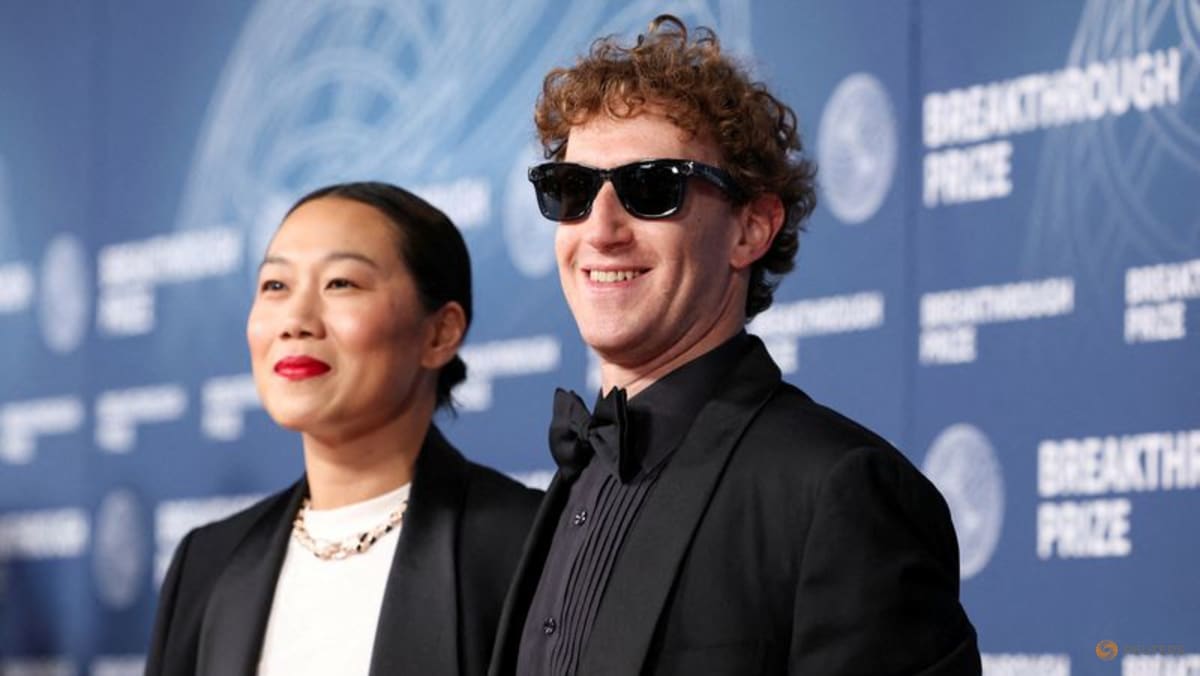

1 / 2
The story, neutrally told
Centre · 1Biohub said on Wednesday that the US government, Meta Platforms and Google parent Alphabet are joining it to build open datasets for training AI models for biological research, bringing total investment in the effort to $1.8 billion. CNAN “are joining nonprofit Biohub to build open datasets to train AI models for biological reasearch, bringing total investment in the effort to $1.8 billion, Biohub said on Wednesday.” Read at CNA ↗ Mixed · 2Meta, Google DeepMind and the drug discovery startup Isomorphic Labs are jointly investing $300 million. CNAN “Meta, Google DeepMind and drug discovery startup Isomorphic Labs are jointly investing $300 million.” Read at CNA ↗ The VergeLC “Google DeepMind, Meta, and AI drug discovery startup Isomorphic Labs are jointly investing $300 million into Biohub” Read at The Verge ↗ Mixed · 2The Department of Energy will invest more than $500 million over five years, while the National Institutes of Health will coordinate datasets and repositories built with more than $500 million in earlier federal funding, which Biohub will standardize for AI training. CNAN “The Department of Energy will invest more than $500 million over five years in laboratory measurement, modeling and computation.” Read at CNA ↗ The VergeLC “the National Institutes of Health will contribute datasets, repositories, and knowledge bases stemming from previous federal investment totalling over $500 million.” Read at The Verge ↗
Centre · 1The commitments follow $500 million that Biohub, the philanthropic venture of Meta CEO Mark Zuckerberg and Dr. Priscilla Chan, put into the project in April. CNAN “The commitments follow the $500 million that Biohub — a philanthropic venture of Meta CEO Mark Zuckerberg and his wife, Dr. Priscilla Chan — put into the project in April.” Read at CNA ↗ Centre · 1The money funds the Virtual Biology Initiative, which aims to measure how cells respond to changes across far more conditions than scientists have studied so far and to use that data to build predictive models that could shorten drug development timelines that currently take years. CNAN “The investments fund the Virtual Biology Initiative, which aims to measure how cells respond to changes across far more conditions than scientists have so far studied” Read at CNA ↗ Left · 1The Verge describes the goal as a 'virtual cell' researchers can use to run simulations, and quotes Biohub head of science Alex Rives saying an accurate predictive model of biology could let scientists 'perform experiments digitally'. The VergeLC “Biohub aims to combat diseases through the creation of a “virtual cell” that researchers can use to carry out simulations.”“An accurate predictive model of biology could dramatically accelerate scientific discovery by enabling scientists to perform experiments digitally” Read at The Verge ↗
Centre · 1Rives said the datasets will eventually become public, but commercial funders get embargo periods in which they can work on the data first; he said government-funded work running in parallel will carry no such restrictions. CNAN “With commercial funders we have embargo periods where there's a period of time where the groups can work on the data, and then it becomes available as a public scientific resource,”“Rives said the government-funded work running in parallel will carry no such restrictions” Read at CNA ↗ Centre · 1Rives said current cell datasets run to hundreds of millions of cells while an accurate model will need billions and eventually trillions, that a first dataset should be ready in about a year, and that he expects accurate predictive models within five years; Biohub plans to approach pharmaceutical companies and philanthropies next. CNAN “Current cell datasets run to hundreds of millions of cells, Rives said, while an accurate predictive model will require billions and eventually trillions.”“with a first dataset ready in about a year. He expects accurate predictive models within five years.” Read at CNA ↗ Centre · 1Other AI labs are pursuing similar work: CNA notes that Anthropic expanded its biology efforts with a wet lab and that the OpenAI Foundation started a grant program of more than $125 million for biological and medical datasets. CNAN “Anthropic doubled down on its biology efforts with a wet lab, while the OpenAI Foundation started a more than $125 million grant program” Read at CNA ↗
Every sentence links to the reporting it rests on. The pill in front of each says where its sources sit: Left, Centre or Right when one side supplies at least half of them, Mixed when they are evenly split. The number is how many outlets it cites.
Left1 outlet
- Framing
- Short tech-news item centred on Google and Zuckerberg and the 'virtual cell' idea, relaying Reuters and the press release.
- Emphasis
- The 'virtual cell' concept and the $300 million from Google DeepMind, Meta and Isomorphic Labs.
- Leaves out or plays down
- Leaves out the embargo arrangement for commercial funders, the April $500 million and the timeline.
- Charged language
- “virtual cell”
- For example
-
“Google invests millions in Mark Zuckerberg’s efforts to create a ‘virtual cell’” — The Verge
Centre1 outlet
- Framing
- Business-wire style report leading with the funding totals, with detail on how open data is balanced against commercial embargoes and on competing AI-lab initiatives.
- Emphasis
- Funding breakdown, embargo terms for commercial funders, timelines and the data scale required.
- Leaves out or plays down
- Does not use the 'virtual cell' framing prominently.
- For example
-
“companies that fund them get a head start, according to Biohub's head of science Alex Rives.” — CNA
Right0 outlets
No right outlet in our sources has covered this story yet.
What every side reports
- Meta, Google DeepMind and Isomorphic Labs are jointly investing $300 million.
- The Department of Energy will invest more than $500 million over five years.
- NIH will contribute datasets built with more than $500 million in earlier federal funding.
- The effort totals $1.8 billion.
Biohub organisation
Presents the effort as a community asset and open science, while allowing embargo periods for commercial funders.
“We have always held this as a community asset, not just for one group” — CNA
Left1 article
-
Google invests millions in Mark Zuckerberg’s efforts to create a ‘virtual cell’
Neutral Brief summary built around the 'virtual cell' ambition and Google's and Meta's investment.
Centre1 article
-
CNAN ·
US government, Google join Zuckerberg-backed Biohub in $1.8 billion push for AI biology data
Neutral Detailed funding and timeline report that includes the embargo caveat on 'open' data.
Right0 articles
No coverage yet.
- 7 Oct 14:03 First CNAN US government, Google join Zuckerberg-backed Biohub in $1.8 billion push for AI biology data
- 7 Oct 15:40 +1h 37m The VergeLC Google invests millions in Mark Zuckerberg’s efforts to create a ‘virtual cell’
Times are when each article was published, or when we first saw it if the outlet gave no time.