US hospitals close paediatric intensive care units, forcing sickest children to travel farther
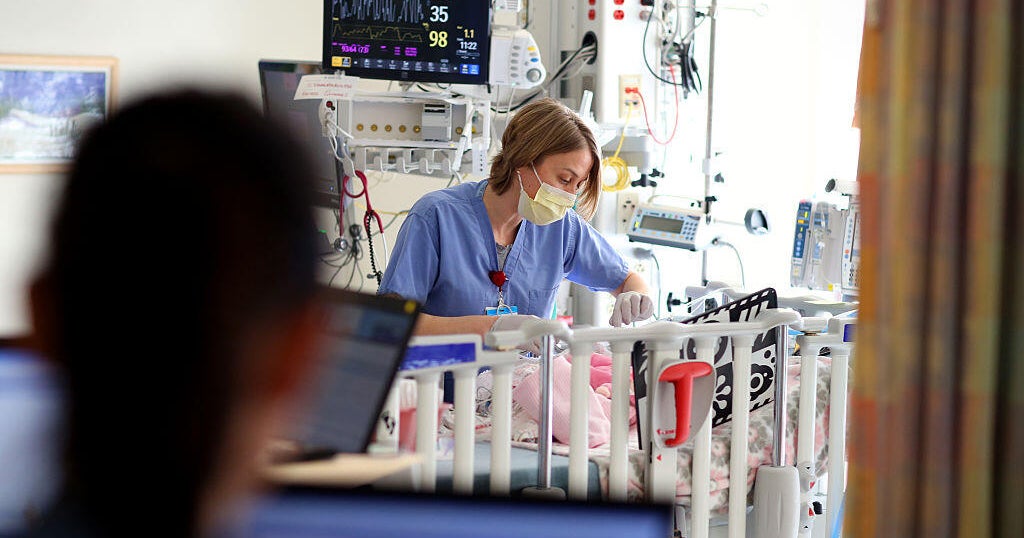
Hospitals across the US are closing paediatric intensive care units and inpatient children's wards, citing low patient numbers, staffing shortages and costs. Doctors warn critically ill children will face longer journeys, and that Medicaid cuts could widen the gaps.

1 / 2
The story, neutrally told
Mixed · 2Hospitals across the US are closing units that treat critically ill children. In the past year, paediatric intensive care units (PICUs) have closed in Montana, Oregon and Missouri, and overnight children's wings have shut in Illinois and California. CBS NewsLC “In the past year alone, hospitals have closed pediatric intensive care units for critically ill kids in Montana, Oregon, and Missouri.” Read at CBS News ↗ KFF Health NewsN “Overnight hospital wings for kids have also shuttered in Illinois and California.” Read at KFF Health News ↗ Mixed · 2Hospitals often convert the beds to services for newborns or adults to cut costs. As a result, paediatric intensive care is becoming centralised in medical hubs, and critically ill children must travel farther for care. CBS NewsLC “As hospitals look to cut costs, many are converting those beds into more services for newborns or adults.” Read at CBS News ↗ KFF Health NewsN “pediatric intensive care has become centralized in medical hubs, requiring critically ill children to travel farther for lifesaving care.” Read at KFF Health News ↗ Mixed · 2Hospitals cutting paediatric care cite low patient volumes, because it is relatively rare for a child to need intensive care. They also cite a shortage of paediatric subspecialists, who earn less than adult-focused doctors. Hospitals are often paid less to treat children than adults, and equipment tailored to children adds cost. CBS NewsLC “Hospitals cutting pediatric care tend to cite low patient volumes; it's relatively rare for a child to need intensive care.” Read at CBS News ↗ KFF Health NewsN “Meanwhile, hospitals are often paid less to treat children than adults, and buying gear tailored to kids adds extra costs.” Read at KFF Health News ↗
Mixed · 2A recent analysis found paediatric inpatient units fell by nearly 30% from 2008 to 2022, from 1,749 hospitals to 1,226, leaving three-quarters of hospitals without any paediatric inpatient services. The gap is most acute in rural areas, and cuts are happening at community hospitals owned by small nonprofits and by large private equity companies alike. KFF Health NewsN “found they decreased by nearly 30% from 2008 to 2022 — down from 1,749 hospitals to 1,226. That left three-quarters of the hospitals without any pediatric inpatient services.” Read at KFF Health News ↗ CBS NewsLC “The gap in care is acute in rural places.” Read at CBS News ↗ Mixed · 2In Missoula, Montana, Community Medical Center closed its PICU this month. CEO Greg Cook said most children will still be treated there, but the sickest, for example those needing a ventilator, will be stabilised and sent elsewhere. He said the hospital saw about two children a month needing intensive care and estimated the closure will affect roughly 25 patients a year. The next-closest PICU in the state is in Kalispell, about 150 miles north. CBS NewsLC “Cook estimated the unit's closure will impact roughly 25 patients a year.” Read at CBS News ↗ KFF Health NewsN “The next-closest option in the state is Kalispell — a pediatric intensive care unit about 150 miles north of Missoula.” Read at KFF Health News ↗ Centre · 1Cook said the decision was "about quality more than it is about the dollars". A hospital spokesperson, Megan Condra, later said it was driven by low patient volumes and long-standing staffing challenges, not by concerns about current quality of care. Cook said the hospital has been unable to recruit a resident paediatric critical care doctor since the last one retired eight years ago, relying on visiting specialists. KFF Health NewsN ““It’s about quality more than it is about the dollars.””“Our decision was not driven by concerns about the quality of care currently being provided,” she said.” Read at KFF Health News ↗
Centre · 1The hospital is owned by for-profit Lifepoint Health, whose revenue is more than $10 billion a year according to its website; Cook said asking Lifepoint to fund the programme would not have solved the main problem. In Portland, Oregon, St. Vincent Medical Center, part of the nonprofit Providence, closed its four-bed PICU last November. Its spokesperson Lisa Helderop said the unit was often empty, and that low patient numbers rather than money were the main reason, though Providence Oregon had a shortfall of more than $15 million as of 2024. KFF Health NewsN “Community Medical Center in Missoula is owned by for-profit Lifepoint Health, whose revenue is more than $10 billion a year, according to its website.”“The four-bed unit was often empty, said St. Vincent Medical Center spokesperson Lisa Helderop.” Read at KFF Health News ↗ Mixed · 2Elizabeth Mack, a paediatric critical care doctor and spokesperson for the American Academy of Pediatrics, called cutting children's services "a spreadsheet issue" and said the endeavour is expensive and not sustainable. She warned that people cannot be expected to be fine if the next children's hospital is a flight or an eight-hour drive away. CBS NewsLC “Mack, who also works as a hospital consultant on patient quality, said cutting kids' services for most hospitals is "a spreadsheet issue."” Read at CBS News ↗ KFF Health NewsN ““This is a very pricey endeavor, and it’s not sustainable,” Mack said.” Read at KFF Health News ↗ Mixed · 2Raj Basu of Lurie Children's Hospital of Chicago and the Society of Critical Care Medicine said hospitals taking on complex paediatric cases without the right doctors could put patients at risk. He noted that falling birth rates, earlier diagnosis and vaccines have lowered volumes at community hospitals, while the children who do need critical care have more complicated conditions. He said clinicians sense children are arriving sicker, but "I don't know that we have enough data yet to prove that." KFF Health NewsN ““From the front lines, there’s a creeping sense, a concern, that kids are showing up a little bit sicker,” Basu said. “I don’t know that we have enough data yet to prove that.”” Read at KFF Health News ↗ CBS NewsLC “The U.S. birth rate has declined.” Read at CBS News ↗
Mixed · 2Researchers and organisations warn the gaps will widen because of cuts in federal Medicaid spending. The article says the Trump administration has added administrative hurdles and narrowed eligibility, mostly affecting adults, but about half of US children are covered by Medicaid or the Children's Health Insurance Program, and paperwork can cost children coverage. Fewer enrollees would mean a financial hit for hospitals. KFF Health NewsN “Medical researchers and organizations warn such gaps will widen due to cuts in federal Medicaid spending.” Read at KFF Health News ↗ CBS NewsLC “about half of the nation's kids are covered by Medicaid or its related Children's Health Insurance Program.” Read at CBS News ↗ Mixed · 2Proposed responses include regional training and transfer protocols between specialty centres and community hospitals, more federal funding for services in low-access areas, and higher Medicaid reimbursement rates. Study lead author Kenneth Michelson said there is a case that the capacity is not needed, but it should be seen as a national necessity. He warned that regional centres could be overwhelmed by demand spikes, as in 2022 when community emergency departments had to call 10, 15 or 20 hospitals to place a patient, and noted that hospitals performing paediatric appendectomies fell by more than half from 2003 to 2022. CBS NewsLC “Other potential solutions are securing more federal funding to cover services in low-access places and raising Medicaid reimbursement rates” Read at CBS News ↗ KFF Health NewsN “the number of hospitals performing appendectomies on a child — a common pediatric surgery — decreased by more than half from 2003 to 2022.” Read at KFF Health News ↗ Centre · 1Lauren Wilson, a paediatrician at the Missoula hospital, said it keeps a newborn intensive care unit, inpatient paediatric services, emergency care, surgeons, therapists and some subspecialists, and that local doctors can consult specialists elsewhere to stabilise and transfer children. KFF Health NewsN “Lauren Wilson, a pediatrician at Community Medical Center, said the hospital maintains an intensive care unit for newborns” Read at KFF Health News ↗
Every sentence links to the reporting it rests on. The pill in front of each says where its sources sit: Left, Centre or Right when one side supplies at least half of them, Mixed when they are evenly split. The number is how many outlets it cites.
Left1 outlet
- Framing
- CBS News carries the same KFF Health News story, framed as a national access-to-care problem with a Montana family's experience and a warning about Medicaid cuts.
- Emphasis
- Travel distances, the Medicaid cuts and the Trump administration's changes, and doctors' warnings.
- Leaves out or plays down
- Does not differ in substance from the centre version; the text shows no additional reporting by CBS.
- Charged language
- “disappearing”
Centre1 outlet
- Framing
- KFF Health News, the original publisher (byline Katheryn Houghton), presents the closures as a trend with local examples from Montana and Oregon, balancing hospital explanations against doctors' concerns.
- Emphasis
- Hospitals' stated reasons (low volumes, staffing, pay), the Missoula and Portland cases, and expert caution that evidence of worse outcomes is not yet available.
- Leaves out or plays down
- No hospital-system or federal official is quoted on the Medicaid claims beyond the article's own description.
- Charged language
- “disappearing”
- For example
-
“Hospital Beds for the Nation’s Sickest Kids Are Disappearing” — KFF Health News
“I don’t know that we have enough data yet to prove that.” — KFF Health News
Right0 outlets
No right outlet in our sources has covered this story yet.
What every side reports
- PICUs closed in the past year in Montana, Oregon and Missouri.
- Paediatric inpatient units fell nearly 30% from 2008 to 2022, from 1,749 hospitals to 1,226.
- Missoula's Community Medical Center closed its PICU this month; Cook estimates about 25 patients a year are affected.
- Hospitals cite low patient volumes and staffing shortages as the main reasons.
Where accounts differ
-
Why the Missoula PICU closed
- Left
- Same account as the centre (same article).
- Centre
- Cook said it was 'about quality more than it is about the dollars'; a spokesperson later cited low volumes and staffing, not quality concerns.
Left1 article
-
Hospital beds for the nation's sickest kids are disappearing
Sympathetic Republished KFF Health News feature presenting the closures as a growing threat to critically ill children, with Medicaid cuts as a looming pressure.
Centre1 article
-
Hospital Beds for the Nation’s Sickest Kids Are Disappearing
Sympathetic Original reporting that sets hospitals' reasons beside clinicians' worries and avoids claiming outcomes have worsened.
Right0 articles
No coverage yet.
- 27 Oct 09:00 First CBS NewsLC Hospital beds for the nation's sickest kids are disappearing
- 28 Oct 09:00 +24h KFF Health NewsN Hospital Beds for the Nation’s Sickest Kids Are Disappearing
Times are when each article was published, or when we first saw it if the outlet gave no time.
Ask about this story
Loading…