US lawmaker urges Starbucks to close its first two Xinjiang stores
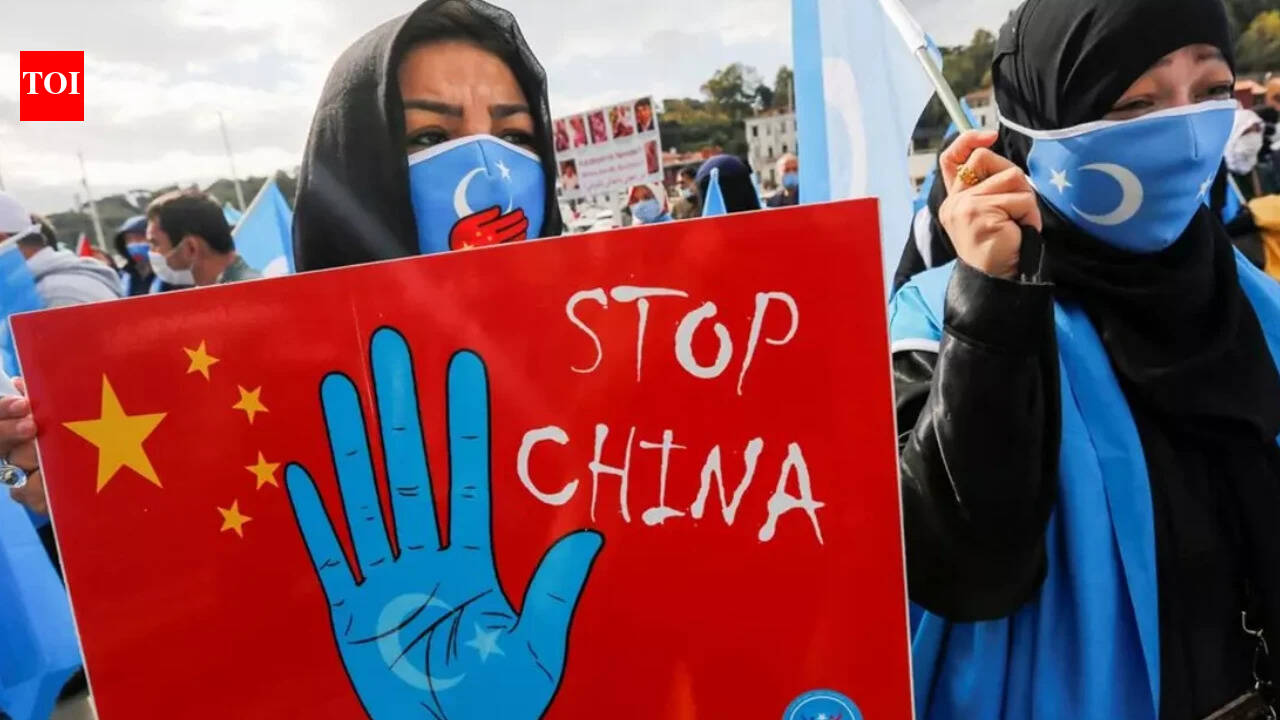
John Moolenaar, chair of the House Select Committee on China, called on Starbucks to close the two stores it opened this week in Urumqi, Xinjiang, citing Uyghur repression. Starbucks said it would keep investing in the region; China denies the abuse accusations.
1 / 1
The story, neutrally told
John Moolenaar, chairman of the US House of Representatives' Select Committee on China, called on Starbucks to "immediately reverse course and close its stores" in China's Xinjiang region, in a statement published on Thursday 1 October. Hindustan TimesN “called on Starbucks to "immediately reverse course and close its stores."” Read at Hindustan Times ↗ The Times of IndiaN “he said in a statement published on Thursday” Read at The Times of India ↗ Starbucks opened its first two stores in Xinjiang this week, in the regional capital Urumqi: one at the city centre's grand bazaar and one at its international airport. Hindustan TimesN “Starbucks opened its first two stores this week in Xinjiang's capital, Urumqi, including one at the city centre's grand bazaar and a second at its international airport.” Read at Hindustan Times ↗ The Times of IndiaN “The two outlets opened this week in Xinjiang's capital, Urumqi.” Read at The Times of India ↗ Moolenaar called the decision "shocking and morally bankrupt" for a company that "prides itself on social responsibility", and said there was no justifiable reason for an American company to operate where the Chinese Communist Party has, in his words, detained more than a million Uyghurs and is stripping them of their faith, language and culture. Hindustan TimesN “This is a shocking and morally bankrupt decision by a company that prides itself on social responsibility,” Read at Hindustan Times ↗ The Times of IndiaN “has detained more than a million Uyghurs and is stripping them of their faith, language, and culture.” Read at The Times of India ↗
China denies widespread accusations of abuses against Uyghurs, a mainly Muslim people, saying its policies in Xinjiang are aimed at combating terrorism, separatism and religious extremism. Hindustan TimesN “China denies widespread accusations about abuses of the Uyghurs, a mainly Muslim people, saying its policies there were aimed at combating terrorism, separatism and religious extremism.” Read at Hindustan Times ↗ The Times of IndiaN “Beijing says its policies in Xinjiang are intended to tackle terrorism, separatism and religious extremism.” Read at The Times of India ↗ Starbucks said in a post on its official WeChat account that the stores were not just new coffee outlets but a new experience blending local culture and customer needs, and its China chief executive, Liu Wenjuan, said the company would continue investing in Xinjiang. Hindustan TimesN “The company would continue investing in Xinjiang, its China Chief Executive Officer Liu Wenjuan, said in the WeChat post.” Read at Hindustan Times ↗ The Times of IndiaN “Liu Wenjuan, Starbucks' chief executive in China, said the company would continue investing in Xinjiang.” Read at The Times of India ↗ Neither Starbucks nor China's Foreign Ministry had responded to requests for comment at the time of publication; China is in the middle of a week-long national day holiday. Hindustan TimesN “Neither Starbucks nor China's Foreign Ministry immediately responded to requests for comment.” Read at Hindustan Times ↗ The Times of IndiaN “China is currently observing a week-long national holiday.” Read at The Times of India ↗
Pictures of the stores posted by Starbucks showed its logo in English and Chinese, with no obvious Uyghur-language signs, although Uyghur, written in an Arabic-based script, is meant to have official parity in Xinjiang. Hindustan TimesN “There were no obvious images of any Uyghur-language signs.” Read at Hindustan Times ↗ The Times of IndiaN “there were no obvious signs using the Uyghur language, which uses an Arabic-based script” Read at The Times of India ↗ The openings follow Starbucks' April 2026 completion of a China joint venture in which Boyu Capital became strategic investor with a 60% stake; the venture operates about 8,000 outlets in China. Hindustan TimesN “In April 2026 Starbucks finalised its China joint venture by bringing in a strategic investor, Boyu Capital, as its 60% stakeholder.” Read at Hindustan Times ↗ The Times of IndiaN “The joint venture operates around 8,000 Starbucks outlets across China.” Read at The Times of India ↗
Every sentence links to the reporting it rests on.
Left0 outlets
No left outlet in our sources has covered this story yet.
Centre2 outlets
- Framing
- Both Indian outlets report the lawmaker's call and Starbucks' stated plans in a straightforward way; the Hindustan Times piece is Reuters copy, and the Times of India piece frames it as Starbucks 'facing criticism' in the US.
- Emphasis
- Moolenaar's quotes, the store locations, China's denial, Starbucks' WeChat post and the lack of Uyghur-language signage.
- Leaves out or plays down
- Neither includes a Starbucks or Chinese government response, or independent detail on the detention claim beyond Moolenaar's figure.
- Charged language
- “morally bankrupt decision”
- For example
-
“Starbucks is facing criticism in the United States after opening its first two outlets in China's Xinjiang region” — The Times of India
“China denies widespread accusations about abuses of the Uyghurs, a mainly Muslim people” — Hindustan Times
Right0 outlets
No right outlet in our sources has covered this story yet.
What every side reports
- Starbucks opened two stores in Urumqi, Xinjiang, this week
- Moolenaar urged their closure in a statement on Thursday
- China denies the abuse accusations
- Starbucks and China's Foreign Ministry had not commented
- Starbucks said it would keep investing in Xinjiang
John Moolenaar person
Says Starbucks should close the stores immediately and that doing business in Xinjiang is shocking and morally bankrupt.
“called on Starbucks to "immediately reverse course and close its stores."” — Hindustan Times
Starbucks organisation
Presents the stores as a new experience blending local culture and customer needs, and says it will keep investing in Xinjiang; no response to the criticism had been given.
“Starbucks and China's Foreign Ministry had not responded to requests for comment at the time of publication.” — The Times of India
“a new experience that blended local culture and customer needs.” — Hindustan Times
Left0 articles
No coverage yet.
Centre2 articles
-
Hindustan TimesN · · via Reuters
US lawmaker calls on Starbucks to close new stores in China's Xinjiang in light of Uyghur repression
Neutral Reuters copy run by the Hindustan Times, leading with the lawmaker's call and China's denial.
-
US lawmaker urges Starbucks to close Xinjiang outlet in China over Uyghur oppression
Neutral Presents the story as Starbucks facing US criticism, with Starbucks' strategy and China's position alongside.
Right0 articles
No coverage yet.
- 2 Oct 08:04 First Hindustan TimesN US lawmaker calls on Starbucks to close new stores in China's Xinjiang in light of Uyghur repression via Reuters
- 2 Oct 08:37 +33m The Times of IndiaN US lawmaker urges Starbucks to close Xinjiang outlet in China over Uyghur oppression
Times are when each article was published, or when we first saw it if the outlet gave no time.