US spy satellite USA 32 breaks apart in Earth orbit; cause unknown
The US Space Force says the 1988 satellite USA 32 broke apart in low Earth orbit on 13 September, and the cause is not yet known. Coverage differs on whether the debris is a wider danger and on whether an attack can be ruled out.

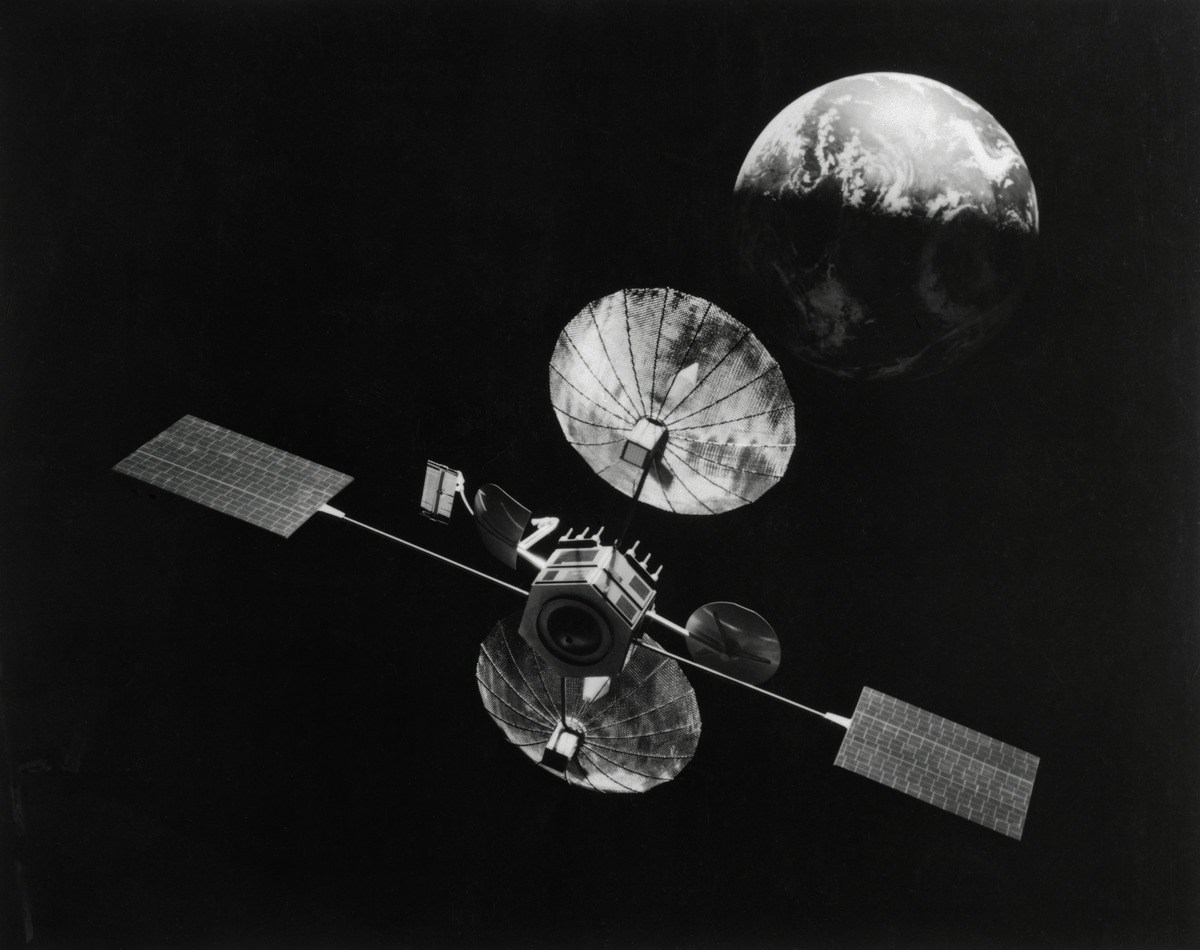
1 / 2
The story, neutrally told
Mixed · 2The US Space Force says the satellite USA 32 broke apart in low Earth orbit on 13 September. Daily MailR “broke apart while in low Earth orbit on September 13, creating a large debris cloud just over 480 miles above the planet, the US Space Force said.” Read at Daily Mail ↗ NewsweekN “split apart while traveling in a low-Earth orbit at around 9:13 p.m. UTC (4:13 p.m. EDT) on September 13” Read at Newsweek ↗ Centre · 1A spokesperson for US Space Forces–Space told Newsweek the time was about 9:13 p.m. UTC and that "the cause of the fragmentation is currently unknown as analysis is still ongoing." NewsweekN “"The cause of the fragmentation is currently unknown as analysis is still ongoing," the spokesperson added.” Read at Newsweek ↗ Right · 1The Daily Mail reports that the breakup created a large debris cloud just over 480 miles up. It says Space Force officials confirmed the breakup on 17 September without naming a probable cause or offering theories. Daily MailR “Space Force officials confirmed Farrah III's breakup on September 17, but did not name a probable cause and did not publish any theories of their own” Read at Daily Mail ↗
Mixed · 2USA 32 was launched in 1988 by the National Reconnaissance Office (NRO). It was a late Cold War-era spy satellite, also known by the classified name 'Farrah III', and it listened for Soviet radar and other electronic signals. Daily MailR “USA 32 had been in space since 1988 and was also known by its classified code name 'Farrah III' during the Cold War with the Soviet Union.” Read at Daily Mail ↗ NewsweekN “was launched in 1988 by the National Reconnaissance Office (NRO), a Pentagon agency, according to open-source trackers.” Read at Newsweek ↗ Right · 1According to the Daily Mail, the NRO declassified the mission details last year. The satellite was designed to last three years, its mission was reportedly over, and it had turned 38 on 5 September. Daily MailR “The satellite had just turned 38 years old on September 5, and was originally designed to operate for only three years” Read at Daily Mail ↗ Right · 1The Daily Mail says the Space Force did not rule out an anti-satellite weapon. It also says CNN reported no signs of a deliberate attack, and that there has been no announcement that such a weapon was used. Daily MailR “did not release any other details or rule out the possibility of an anti-satellite weapon.”“CNN has claimed that there were no signs that the spy satellite was deliberately targeted in an attack by an anti-satellite weapon.” Read at Daily Mail ↗
Right · 1Possible natural or technical causes mentioned include a collision with space debris or a meteor. Spaceweather.com, run by Dr Tony Phillips, also suggested a ruptured pressurised tank or battery cell. These are speculation, not findings. Daily MailR “One cause put forward by Dr Phillips's website was the possibility that a pressurized tank or battery cell may have ruptured” Read at Daily Mail ↗ Right · 1Spaceweather.com warned that "other satellites may be in danger". It said more than 200 active satellites, including the Iridium NEXT constellation, orbit within 50 km of USA 32's altitude. Daily MailR “'Within 50 km (31 miles) of its altitude are more than 200 active satellites, including the entire Iridium NEXT constellation.” Read at Daily Mail ↗ Centre · 1Newsweek reports that the US military said it was not aware of any immediate threats from the debris. Swiss firm s2a systems posted a clip on X that it said showed a "large number of fragments", which Newsweek could not verify. NewsweekN “The U.S. military said it wasn't aware of any immediate threats from the USA 32 satellite.”“Newsweek could not independently verify this footage.” Read at Newsweek ↗
Centre · 1Newsweek notes that satellites fragmenting is usual. It cites a June 2024 incident in which ISS astronauts sheltered for about an hour after a Russian satellite broke up, and an ESA warning that crowded orbits create a growing collision risk. NewsweekN “astronauts on the International Space Station (ISS) were forced to take shelter for roughly an hour after a Russian satellite fell apart.”“creating a growing collision risk," the agency added.” Read at Newsweek ↗ Right · 1The Daily Mail links the breakup to recent news about weapons in space. It says Air Force Secretary Troy Meink announced the US military had placed weapons in space, and it recalls Russia's 2021 anti-satellite test. Daily MailR “Air Force Secretary Troy Meink made the shock announcement that the US military had indeed placed weapons in space for the first time.” Read at Daily Mail ↗
Every sentence links to the reporting it rests on. The pill in front of each says where its sources sit: Left, Centre or Right when one side supplies at least half of them, Mixed when they are evenly split. The number is how many outlets it cites.
Left0 outlets
No left outlet in our sources has covered this story yet.
Centre1 outlet
- Framing
- Measured explainer built on a Space Force statement: the cause is unknown, there is no immediate threat, and this is a routine space-junk issue.
- Emphasis
- Official statement, UTC timing, background on orbital debris, ESA and NASA figures.
- Leaves out or plays down
- Does not mention the Daily Mail's attack question, altitude, Spaceweather.com's warnings or the weapons-in-space context.
- Charged language
- “Mystery Break Up”
- For example
-
“The U.S. military said it wasn't aware of any immediate threats from the USA 32 satellite.” — Newsweek
Right1 outlet
- Framing
- Alarm-led story: a 'mystery' explosion, an attack not ruled out, and a threat to phone, internet and GPS satellites.
- Emphasis
- Anti-satellite speculation, Spaceweather.com's warnings, links to US space weapons and Russia's 2021 test.
- Leaves out or plays down
- Does not carry the Space Force statement to Newsweek that it knows of no immediate threat. It also leaves out the s2a systems footage and the exact UTC time.
- Charged language
- “Mystery erupts”“exploded”“shock announcement”“The collision threat is real”
- For example
-
“A US spy satellite has mysteriously exploded in Earth orbit and no one knows why, sparking concerns over what satellites might be next.” — Daily Mail
What every side reports
- USA 32 was a 1988 NRO satellite from the Cold War era.
- It broke apart in low Earth orbit on 13 September.
- The Space Force says the cause is unknown and analysis is ongoing.
Where accounts differ
-
How much risk the breakup poses
- Centre
- Newsweek: the US military is not aware of any immediate threats, and satellite fragmentation is usual.
- Right
- Daily Mail: warns other satellites 'may be in danger' and that the 'collision threat is real'.
-
Whether an attack is possible
- Centre
- Newsweek does not raise an attack and reports the cause as unknown.
- Right
- Daily Mail: the Space Force did not rule out an anti-satellite weapon, though it also notes CNN's report of no signs of attack and no sign one was used.
US Space Force organisation
Says the cause of the fragmentation is unknown and analysis continues. It is aware of no immediate threat, and the Daily Mail says it did not rule out an anti-satellite weapon.
“"The cause of the fragmentation is currently unknown as analysis is still ongoing," the spokesperson added.” — Newsweek
“The military added that 'further analysis is ongoing'” — Daily Mail
National Reconnaissance Office organisation
Built and operated USA 32, and declassified its mission details last year, according to the Daily Mail. No NRO comment on the breakup is reported.
“had just revealed the full details of its mission last year” — Daily Mail
USA 32 product
The 1988 satellite, designed for a three-year life, was long past its mission when it broke apart.
“was originally designed to operate for only three years” — Daily Mail
UK and Ireland1 outlet
Daily Mail stresses mystery and risk to satellite services, including attack speculation.
“sparking concern that more satellites that provide phone and internet service may soon suffer the same fate.” — Daily Mail
Daily Mail
North America1 outlet
Newsweek relays the Space Force statement and debris background, with a calmer tone.
“It's usual for satellites to fragment and add to so-called "space junk"” — Newsweek
Newsweek
Left0 articles
No coverage yet.
Centre1 article
-
US Space Force Confirms Mystery Break Up of Cold War-Era 'Spy Satellite'
Neutral Reports the Space Force statement and puts the event in the context of routine orbital debris.
Right1 article
-
Mystery erupts as US spy satellite explodes… and Space Force won't rule out an attack
Alarmist Treats the breakup as a mystery that could threaten everyday satellite services and raises the anti-satellite question.
- 30 Sep 17:43 First Daily MailR Mystery erupts as US spy satellite explodes… and Space Force won't rule out an attack
- 3 Oct 18:14 +72h 30m NewsweekN US Space Force Confirms Mystery Break Up of Cold War-Era 'Spy Satellite'
Times are when each article was published, or when we first saw it if the outlet gave no time.
Ask about this story
Loading…