Supreme Court hears Guam group's challenge to Air Force munition detonations at Tarague Beach
The US Supreme Court heard arguments in Department of Air Force v. Guahan, over whether a Guam conservation group can challenge the Air Force's detonation of unexploded munitions at a beach before Guam's EPA decides on a permit renewal. A ruling is due by the end of June 2027.

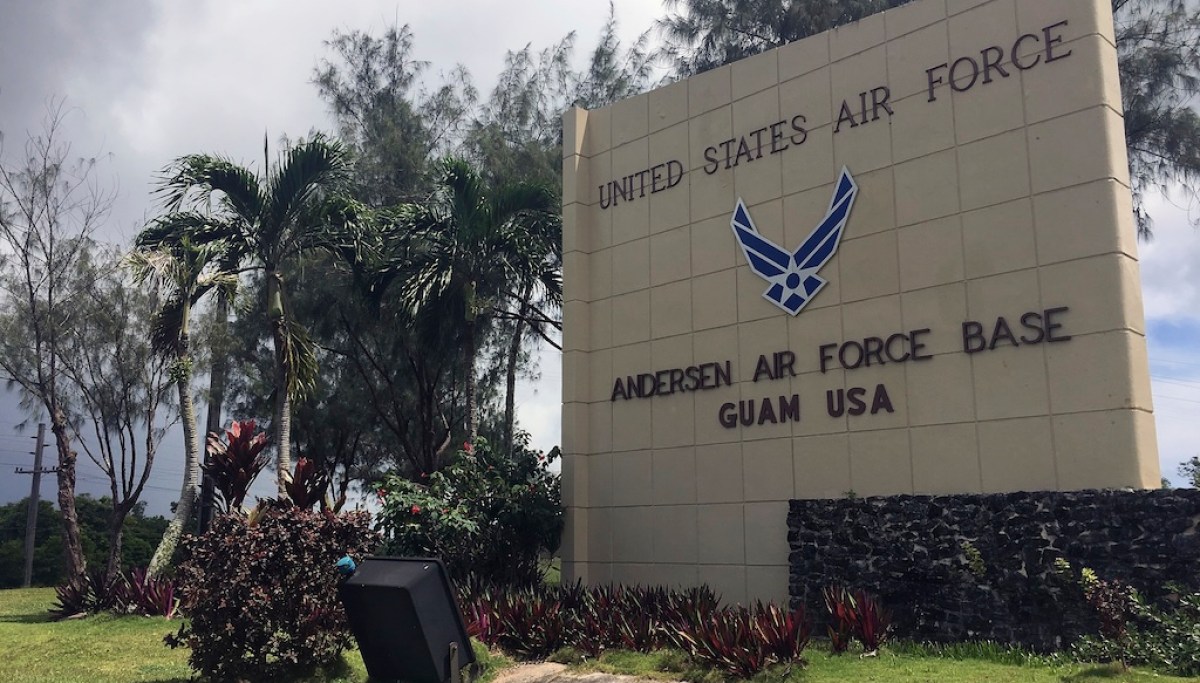
1 / 2
The story, neutrally told
Mixed · 2The US Supreme Court heard oral arguments on Wednesday 7 October 2026 in Department of Air Force v. Guahan, a case over the Air Force's detonation of unexploded munitions at a beach on Guam. Al JazeeraLC “The United States Supreme Court has begun hearing arguments in a case that could determine whether the US air force can continue to use a beach in Guam to detonate unexploded ordnance.” Read at Al Jazeera ↗ Washington ExaminerR “The high court heard oral arguments in Department of Air Force v. Guahan” Read at Washington Examiner ↗ Left · 1The challenge was brought by Prutehi Guahan, a Guam conservation group whose name means "Protect Guam" in Chamorro. It argues that the use of Tarague Beach may harm the ecosystem, damage a culturally and historically important site, and threaten drinking water. Al JazeeraLC “Prutehi Guahan, which means Protect Guam in the Chamorro language”“may harm the ecosystem, damage an important cultural and historical site, and threaten the island’s water resources” Read at Al Jazeera ↗ Mixed · 2The group says the range sits on ancestral land the military seized from local families after World War II and above an aquifer that supplies drinking water to over 80% of the island's population. Al JazeeraLC “above an aquifer that provides drinking water to over 80% of the island’s population” Read at Al Jazeera ↗ Washington ExaminerR “atop Guam’s main source of drinking water,”” Read at Washington Examiner ↗
Mixed · 2The Air Force has detonated munitions at the site since 1982 and applied in 2021 to renew its permit from Guam's Environmental Protection Agency. According to Al Jazeera, that agency has neither approved nor denied the application, and detonations have continued. Al JazeeraLC “The air force has used the beach for the detonations since 1982 and applied for a permit to continue in 2021.” Read at Al Jazeera ↗ Washington ExaminerR “it has been doing detonations at the site since 1982” Read at Washington Examiner ↗ Left · 1Prutehi Guahan argues that the National Environmental Policy Act of 1969 requires the Air Force to carry out an environmental review, consider alternatives and seek public input. Government lawyers argue that the review under the Resource Conservation and Recovery Act of 1976 displaces those requirements. Al JazeeraLC “Prutehi Guahan has also maintained that the air force must adhere to the National Environmental Policy Act of 1969”“arguing the process “displaces” any requirements under the National Environmental Policy Act.” Read at Al Jazeera ↗ Right · 1The government also argues that the permit renewal application is not a "final agency action" and so cannot yet be reviewed, which makes the challenge premature. It has defended the site, saying its "isolated location limits human exposure to material at the facility." Washington ExaminerR “does not constitute a “final agency action” and therefore cannot be subject to review at this stage”“isolated location limits human exposure to material at the facility.” Read at Washington Examiner ↗
Left · 1A district judge first sided with the Air Force and dismissed the case after the group sued in January 2022. The Ninth Circuit later ruled it could proceed, and the Air Force appealed to the Supreme Court. Al JazeeraLC “A US district judge initially sided with the air force and threw out the case after Prutehi Guahan filed its challenge in January 2022.”“The air force then appealed to the US Supreme Court.” Read at Al Jazeera ↗ Right · 1According to the Washington Examiner, the oral argument centred on whether the permit renewal application can be reviewed under the Administrative Procedure Act. It reported that the justices appeared sceptical of the activists' position, and that Justice Clarence Thomas asked their lawyer, Caroline Flynn, for examples of courts endorsing it. Washington ExaminerR “The justices appeared skeptical of the activists’ claims that the application was a renewable final agency action” Read at Washington Examiner ↗ Right · 1Department of Justice lawyer Sopan Joshi, for the Air Force, said the application process is "a moving target until a decision on the permit is issued." The Washington Examiner reported that the justices also pressed Joshi on when a decision by the Air Force could be challenged. Washington ExaminerR “triggers a back-and-forth process whose outcome is, by definition, a moving target until a decision on the permit is issued.””“Joshi also received a grilling by the justices over when a decision by the Air Force could be challenged.” Read at Washington Examiner ↗
Left · 1Al Jazeera notes that the case has drawn attention for what it says about the rights of residents of US territories, who cannot vote in presidential elections. It cites Right to Democracy co-founders Neil Weare and Adi Martinez Roman, who wrote on SCOTUSblog that Guam's people have little power over federal decisions affecting them. Al JazeeraLC “raising broader questions over the rights of residents of US territories, who cannot vote in presidential elections”“The people of Guam have little power or agency to influence federal decisions that impact their lives” Read at Al Jazeera ↗ Right · 1A ruling is expected by the end of June 2027 at the latest. Washington ExaminerR “The Supreme Court is set to issue a ruling in the case in 2027, with the end of June 2027 being the latest a decision could come down.” Read at Washington Examiner ↗
Every sentence links to the reporting it rests on. The pill in front of each says where its sources sit: Left, Centre or Right when one side supplies at least half of them, Mixed when they are evenly split. The number is how many outlets it cites.
Left1 outlet
- Framing
- Al Jazeera runs an explainer centred on the Guam group's environmental, cultural and water concerns, and on what the case means for the political rights of US territories' residents.
- Emphasis
- Ancestral land seized after World War II, the aquifer, past Superfund sites, and the lack of representation for territory residents.
- Leaves out or plays down
- It reports nothing of the justices' questioning or how the oral argument went.
- Charged language
- “ancestral land”“unbalanced political relationship”
- For example
-
“The case has gained attention for raising broader questions over the rights of residents of US territories” — Al Jazeera
“on ancestral land that the military seized from local families after World War II” — Al Jazeera
Centre0 outlets
No centre outlet in our sources has covered this story yet.
Right1 outlet
- Framing
- The Washington Examiner reports the hearing as a legal-procedure story, focused on whether the permit application is a reviewable final agency action and on the justices' scepticism of the activists.
- Emphasis
- The Administrative Procedure Act question, the justices' questioning of both lawyers, and the ruling timetable.
- Leaves out or plays down
- It gives little on Guam's history, the territorial representation question, or the cultural and archaeological detail in the filings.
- Charged language
- “grapples”“grilling”“environmental activists”
- For example
-
“The justices appeared skeptical of the activists’ claims that the application was a renewable final agency action” — Washington Examiner
“Joshi also received a grilling by the justices” — Washington Examiner
What every side reports
- The Supreme Court heard arguments on 7 October 2026 in a case over Air Force detonations of unexploded munitions on a Guam beach.
- The Air Force has used the site since 1982 and applied in 2021 to renew its permit.
- The challengers invoke the National Environmental Policy Act and cite cultural and drinking-water concerns.
- The Air Force argues the challenge is premature because the permit application is not a final decision.
Where accounts differ
-
Whether the challenge can proceed before Guam's EPA decides on the permit
- Left
- Prutehi Guahan argues the Air Force skipped required environmental review, and Al Jazeera presents the government's prematurity argument as one side of the case.
- Right
- The Washington Examiner reports the justices appeared sceptical of the activists' claim that the application is a reviewable final agency action.
-
Whether the Resource Conservation and Recovery Act process replaces National Environmental Policy Act review
- Left
- Prutehi Guahan says the Air Force must also follow NEPA, including public input.
- Right
- Government lawyers say the RCRA process displaces NEPA requirements, according to Al Jazeera's account of their position.
Supreme Court of the United States organisation
At the oral argument, the justices focused on whether the permit application is a reviewable final agency action. The Washington Examiner says they appeared sceptical of the activists' claim. A ruling is expected by the end of June 2027.
“centered around whether the Air Force’s application for renewal to Guam’s Environmental Protection Agency for an environmental permit can be reviewed under the Administrative Procedure Act” — Washington Examiner
Guam place
Guam is described as a US territory since 1898 with about 170,000 people and major military bases. Its residents have limited representation in Congress, and the beach lies in an area the challengers describe as culturally significant.
“The island has an estimated population of about 170,000.” — Al Jazeera
Middle East1 outlet
Al Jazeera stresses the local and colonial-legacy dimension: the rights of territory residents, seized land and environmental damage.
“a history of US government decisions about Guam made without input from residents” — Al Jazeera
Al Jazeera
North America1 outlet
The Washington Examiner covers the case as a Supreme Court procedural dispute within a series of environmental cases this term.
“The high court opened its new term earlier this week with oral arguments in a different environmental case” — Washington Examiner
Washington Examiner
Left1 article
-
US Supreme Court hears challenge to air force UXO detonations in Guam
Sympathetic Explainer that gives the challengers' environmental, cultural and political-representation arguments the most space, alongside the government's position.
Centre0 articles
No coverage yet.
Right1 article
-
Supreme Court grapples with environmental challenge to Air Force’s Guam munition detonations
Neutral Courtroom report on the legal question of final agency action and the justices' sceptical questioning of the activists.
- 7 Oct 19:16 First Al JazeeraLC US Supreme Court hears challenge to air force UXO detonations in Guam
- 7 Oct 21:51 +2h 35m Washington ExaminerR Supreme Court grapples with environmental challenge to Air Force’s Guam munition detonations
Times are when each article was published, or when we first saw it if the outlet gave no time.