US to deploy NMESIS anti-ship missile system on Japan's Yonaguni Island for Keen Sword drills
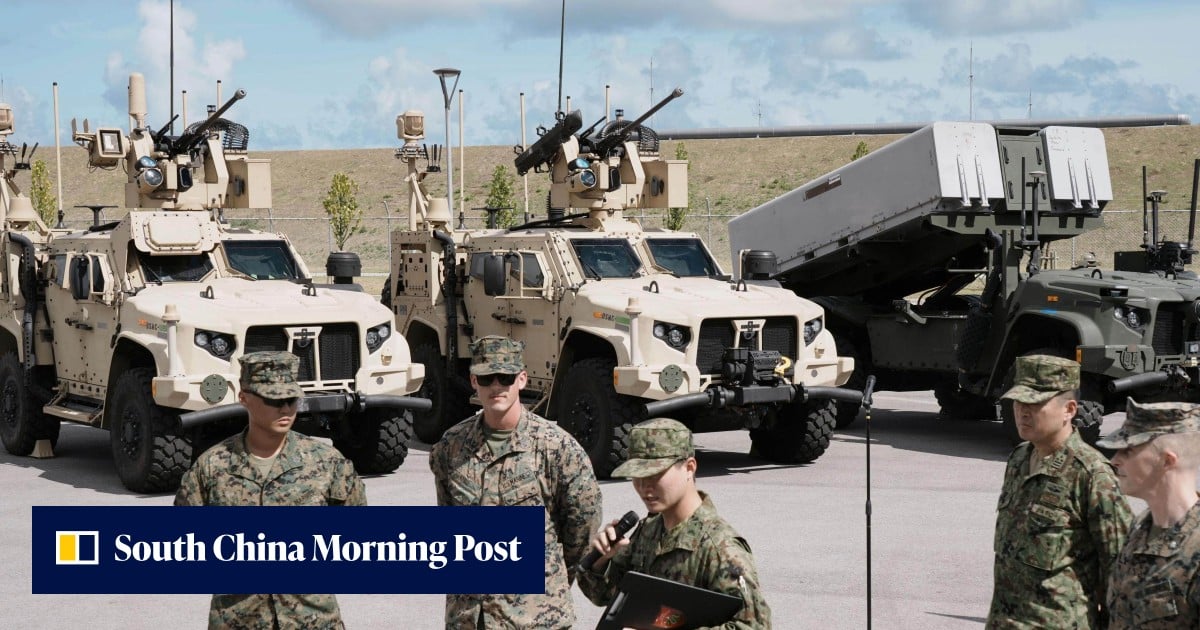
The US military will deploy its NMESIS ground-based anti-ship missile system to Yonaguni, Japan's island closest to Taiwan, during the Keen Sword exercise on 19–29 October. The SCMP reports it as a first-time move amid Beijing–Tokyo tension; a Washington Examiner columnist presents it as a welcome boost to deterrence.
1 / 2
The story, neutrally told
Centre · 1The US will deploy the Navy-Marine Expeditionary Ship Interdiction System (NMESIS), a ground-based uncrewed anti-ship missile platform, to Yonaguni Island in Japan's Okinawa prefecture during the biennial Keen Sword exercise, according to the regional bureau of the Japanese defence ministry. South China Morning PostN “will be deployed on Yonaguni Island in Japan’s Okinawa prefecture during biennial joint exercises this month, according to the regional bureau of the Japanese defence ministry” Read at South China Morning Post ↗ Mixed · 2Keen Sword runs from 19 to 29 October, and it will be the first NMESIS deployment on Yonaguni, Japan's westernmost island, about 110km from Taiwan's east coast. South China Morning PostN “NMESIS will also return to Ishigaki as part of the Keen Sword exercise, which runs from October 19 to 29.” Read at South China Morning Post ↗ Washington ExaminerR “NMESIS will arrive on Yonaguni for the Oct. 19-29 U.S.-Japan “Keen Sword” military exercise” Read at Washington Examiner ↗ Centre · 1The South China Morning Post says the move brings the system closer to Taiwan than last September's Resolute Dragon drills, when NMESIS was stationed on Ishigaki Island, roughly 240km from Taiwan; it will also return to Ishigaki for Keen Sword. South China Morning PostN “The deployment during the Keen Sword joint exercise moves the system closer to Taiwan than during the Resolute Dragon joint drills in September last year.” Read at South China Morning Post ↗
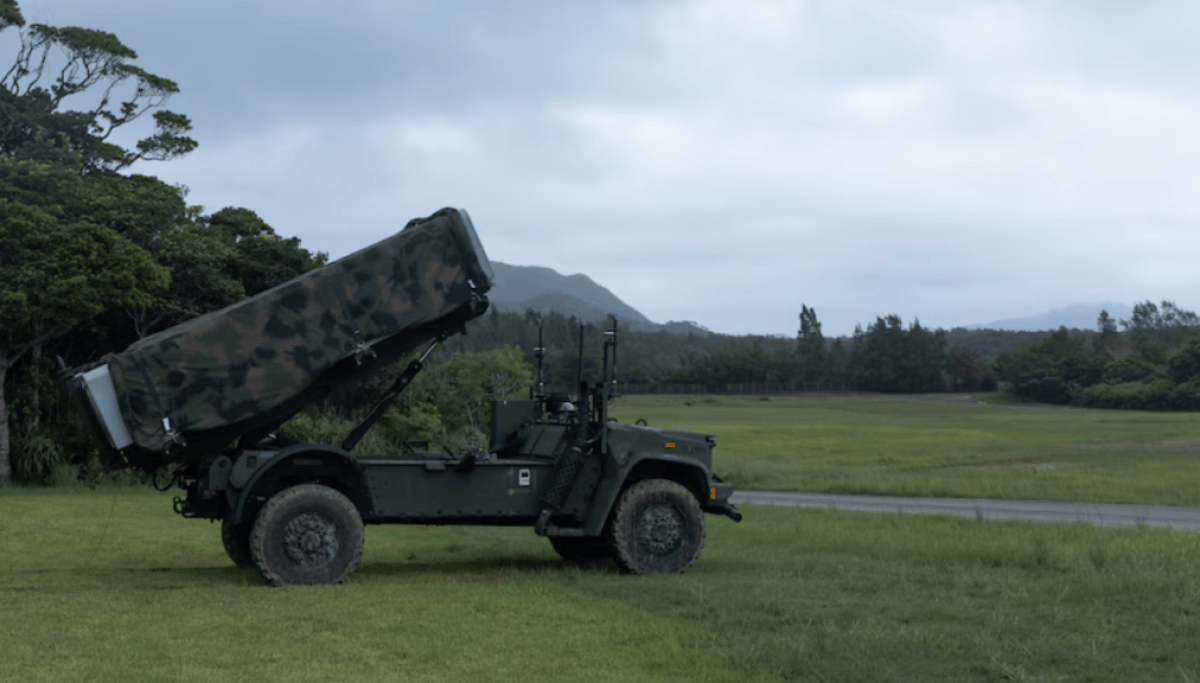
Centre · 1The Okinawa Defence Bureau said the deployment supports training at the Yonaguni garrison, including a joint coordination centre, island-defence tabletop drills and coordination with Japanese and US equipment at other garrisons; it said details could change. South China Morning PostN “the NMESIS deployment will support training at the Yonaguni garrison”“specific training details remained subject to change” Read at South China Morning Post ↗ Centre · 1US forces will also make their first deployment of the Marine Air Defence Integrated System (MADIS), a short-range air-defence weapon, to Yonaguni, and Tokyo is separately moving to station air-defence missile units there. South China Morning PostN “will also see US forces make their first deployment of the Marine Air Defence Integrated System, or MADIS, to Yonaguni”“Tokyo is also moving to station air-defence missile units on Yonaguni.” Read at South China Morning Post ↗ Mixed · 2NMESIS is used by the US Marine Corps for sea denial and has a range of more than 185km, according to the SCMP; the Washington Examiner says it fires the Kongsberg-built Naval Strike Missile, with a range of at least 100 nautical miles, and is mounted on unmanned Joint Light Tactical Vehicles. South China Morning PostN “with a range of more than 185km” Read at South China Morning Post ↗ Washington ExaminerR “NMESIS is mounted on unmanned Joint Light Tactical Vehicles designed for rough terrain.” Read at Washington Examiner ↗
Mixed · 2The SCMP notes that in a conflict the system could threaten ships operating east of Taiwan, where Beijing has stepped up coastguard patrols and naval activity; the Washington Examiner's columnist Tom Rogan argues that from Yonaguni its range covers waters off Taipei and north-eastern Taiwan. South China Morning PostN “could threaten enemy vessels trying to operate east of Taiwan” Read at South China Morning Post ↗ Washington ExaminerR “NMESIS’s range covers waters off the Taiwanese capital of Taipei and throughout northeastern Taiwan.” Read at Washington Examiner ↗ Centre · 1The deployment comes as Beijing–Tokyo relations are at their lowest in decades after Prime Minister Sanae Takaichi said in November that a Chinese attack on or blockade of Taiwan could be a "survival-threatening situation" for Japan; on Monday Chinese Foreign Minister Wang Yi urged Tokyo to correct its leaders' "erroneous words and deeds". South China Morning PostN “Ties between Beijing and Tokyo remain at their lowest point in decades following Japanese Prime Minister Sanae Takaichi’s controversial remarks about Taiwan in November.”“correct the erroneous words and deeds of its leaders on the Taiwan question as soon as possible” Read at South China Morning Post ↗ Mixed · 2Chinese foreign ministry spokesman Guo Jiakun said in April that Japan was building a "forward fortress of military confrontation"; the Washington Examiner cites Global Times quoting a retired PLA officer who said the deployment could raise the risk of miscalculation but that Yonaguni's small size would make NMESIS units easy to target. South China Morning PostN “This is essentially an attempt to build a forward fortress of military confrontation which threatens regional peace and stability” Read at South China Morning Post ↗ Washington ExaminerR “increase the risk of miscalculation by reinforcing perceptions that Japan and the U.S. could intervene militarily in the Taiwan question” Read at Washington Examiner ↗
Right · 1Rogan disputes the targeting point, arguing the units could fire from open ground and relocate into the island's forested southern hills, and says NMESIS is "not a war winner" but adds friction to Xi Jinping's calculations. Washington ExaminerR “NMESIS units could fire in open areas and then quickly relocate into concealed positions in the forest to avoid retaliatory fire.”“To be clear, NMESIS is not a war winner.” Read at Washington Examiner ↗ Centre · 1NMESIS was previously deployed at the Philippines' Batanes Islands during this year's Balikatan exercise, and a Pentagon update to Congress on 22 September said the US continues to strengthen "deterrence by denial along the First Island Chain". South China Morning PostN “US forces also deployed NMESIS during their joint annual Balikatan exercise with the Philippines earlier this year.”“we continue our efforts to strengthen deterrence by denial along the First Island Chain” Read at South China Morning Post ↗ Right · 1The Washington Examiner adds that Australian, British, Canadian and French forces will take part in Keen Sword, with Germany sending only medical and logistics personnel, and that the Marine Corps this month signed a $404 million deal with Kongsberg to produce and sustain Naval Strike Missiles through 2034. Washington ExaminerR “Australian, British, Canadian, and French forces will also take part.”“The Marine Corps this month signed a $404 million deal with Kongsberg to produce and sustain NSMs through 2034.” Read at Washington Examiner ↗
Every sentence links to the reporting it rests on. The pill in front of each says where its sources sit: Left, Centre or Right when one side supplies at least half of them, Mixed when they are evenly split. The number is how many outlets it cites.
Left0 outlets
No left outlet in our sources has covered this story yet.
Centre1 outlet
- Framing
- News report led by the 'first time' and 'unprecedented' nature of the deployment, set against Beijing–Tokyo tensions and wider US deployments along the First Island Chain.
- Emphasis
- Japanese defence bureau details, distances to Taiwan, Chinese government reactions, and earlier NMESIS deployments in Okinawa and the Philippines.
- Leaves out or plays down
- Offers little assessment of the system's military value or survivability, and no US or Japanese official comment beyond the bureau release and Marine statement.
- Charged language
- “unprecedented move”“forward fortress of military confrontation”
- For example
-
“an unprecedented move that comes as tensions in the region between Beijing and Tokyo continue to simmer” — South China Morning Post
Right1 outlet
- Framing
- Opinion column welcoming the deployment as a needed deterrent against China and a signal of support for Takaichi and US alliances.
- Emphasis
- Range maps, battlefield survivability, Xi Jinping's risk calculus, allied participation and procurement, with a jab at Trump-class battleships.
- Leaves out or plays down
- Does not mention the Okinawa Defence Bureau's description of the training purpose, or Beijing's official foreign ministry criticism, relying on Global Times and a retired officer.
- Charged language
- “incandescent fury”“hellscape”“Chinese Communist Party is very unhappy”“missile mess”
- For example
-
“the Trump administration is delivering a needed boost to deterrence against China” — Washington Examiner
What every side reports
- NMESIS is due on Yonaguni Island for the Keen Sword exercise, 19–29 October.
- Yonaguni is Japan's westernmost island, close to Taiwan.
- Beijing objects to Japan's and the US's military moves near Taiwan, and ties between China and Japan under Prime Minister Takaichi are strained.
Where accounts differ
-
Whether NMESIS on Yonaguni would be easy for China to target
- Centre
- The SCMP reports Chinese analysts' warnings about NMESIS as a sea-denial tool and does not assess its vulnerability.
- Right
- Rogan argues that mobile launchers and forested hills would let units relocate and survive, countering a retired PLA officer's view that the island's small size makes them easy targets.
-
Whether the deployment is a provocation or a deterrent
- Centre
- Presents it as unprecedented and as occurring amid simmering Beijing–Tokyo tensions, citing Beijing's criticism of Japan's missile deployments.
- Right
- Presents it as a needed boost to deterrence and a signal of support for Takaichi, meant not 'to provoke war'.
NMESIS product
The US Marines say NMESIS and MADIS are a significant step in Marine Corps modernisation; the Examiner column sees NMESIS as an added deterrent, though not a war winner.
“The NMESIS and MADIS represent a significant step forward in the Marine Corps’ modernisation efforts” — South China Morning Post
“it does advance allied means of defending Taiwan” — Washington Examiner
Taiwan place
Beijing regards Taiwan as part of China, to be reunited by force if necessary; it has criticised Japan's missile deployments near China.
“Beijing sees Taiwan as part of China to be reunited by force if necessary.” — South China Morning Post
Yonaguni Island place
Described as Japan's westernmost island, about 110km from Taiwan, where Japan is also moving to station air-defence missile units.
“Japan’s westernmost island lying just about 110km (62 miles) from the eastern coast of Taiwan” — South China Morning Post
East and Southeast Asia1 outlet
The SCMP treats the deployment as a regional escalation in Beijing–Tokyo relations, citing Japanese and Chinese official statements.
“Ties between Beijing and Tokyo remain at their lowest point in decades” — South China Morning Post
South China Morning Post
North America1 outlet
The Washington Examiner column frames it as a US strategic win that bolsters allies and deterrence.
“That these nations are nevertheless willing to support U.S. and Pacific security interests testifies to the value of American alliances.” — Washington Examiner
Washington Examiner
Left0 articles
No coverage yet.
Centre1 article
-
US to deploy NMESIS anti-ship system on Japanese island closest to Taiwan for first time
Neutral Straight news report stressing the first-time deployment and regional tensions, with Chinese government criticism included.
Right1 article
-
Washington ExaminerR · · Opinion
The US makes a Taiwan NMESIS missile mess for China
Celebratory Opinion piece praising the deployment as deterrence against China, with a hawkish view of Beijing and Xi.
- 3 Oct 14:45 First South China Morning PostN US to deploy NMESIS anti-ship system on Japanese island closest to Taiwan for first time
- 6 Oct 18:34 +75h 49m Washington ExaminerR The US makes a Taiwan NMESIS missile mess for China Opinion
Times are when each article was published, or when we first saw it if the outlet gave no time.