Yellowstone geology team collects over 23,000 pieces of trash from thermal features
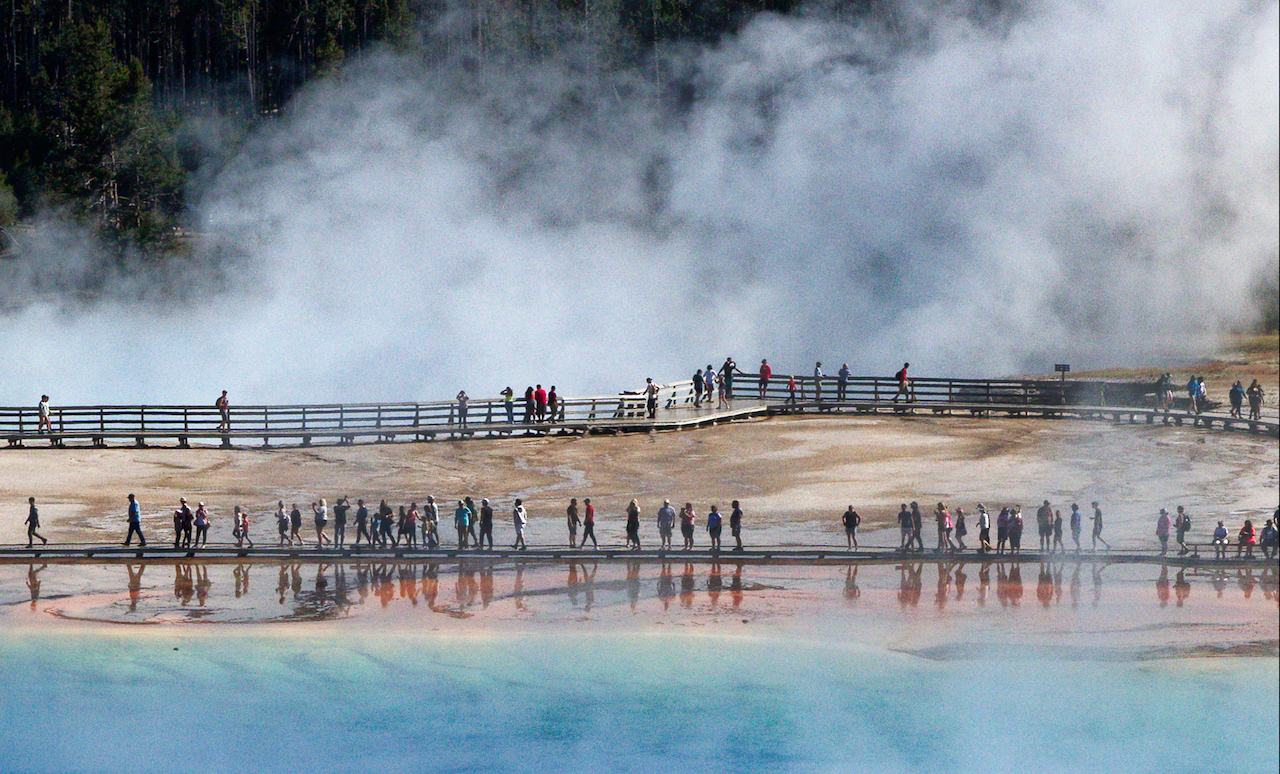
Yellowstone's geology program had collected more than 23,000 pieces of trash from geysers, hot springs and boardwalks by early October, a record year. Park staff say most of it is likely accidental, but any foreign material can harm the thermal features.

1 / 2
The story, neutrally told
Right · 2Yellowstone National Park's geology team had collected more than 23,000 pieces of trash from geysers, hot springs, boardwalks and surrounding areas as of early October, according to National Geographic as relayed by Fox News. Fox NewsR “A team at Yellowstone National Park has collected over 23,000 pieces of trash as of early October” Read at Fox News ↗ New York PostR “from geysers, hot springs, boardwalks and surrounding areas” Read at New York Post ↗ Right · 2The haul included roughly 10,700 rocks and sticks, more than 360 hats, camera lens caps, hair ties, pacifiers, five AirPods, three Delta flight pins, a single Uno card, dental retainers, rubber ducks, international coins, golf tees and an inhaler. Fox NewsR “the Yellowstone Geology Program retrieved roughly 10,700 rocks and sticks, more than 360 hats” Read at Fox News ↗ New York PostR “Other quirky finds included five AirPods, three Delta flight pins and a singular Uno card” Read at New York Post ↗ Right · 2The reports describe this as a record-setting year for trash collection, which the park's geology team manages. Yellowstone welcomed over 4.7 million visitors in 2025, according to the National Park Service, and debris builds up especially in high-traffic areas such as Old Faithful and the Midway Geyser Basin. Fox NewsR “It has been a record-setting year for trash collection, which is managed by the park’s geology team.” Read at Fox News ↗ New York PostR “In 2025, Yellowstone welcomed over 4.7 million visitors, according to the National Park Service.” Read at New York Post ↗
Right · 2Margery Price, a physical science technician with the park's geology program, told National Geographic that most of the items are believed to be accidental; some, such as food wrappers and maps, may have been blown in by the park's strong winds. Fox NewsR “"We believe that most of those are accidental," Margery Price, a physical science technician with the Yellowstone National Park Geology Program, told National Geographic.” Read at Fox News ↗ New York PostR “is possibly deposited unintentionally, swept away by the park’s strong winds” Read at New York Post ↗ Right · 2According to the Yellowstone Volcano Observatory, any foreign material can harm a hydrothermal feature by clogging its water supply, polluting the water or blocking its runoff channel, and even natural items like rocks and sticks must be removed because they can cause clogging. Chemicals from microplastics can also enter the water and affect the microbes that give the pools their colours. Fox NewsR “Any type of foreign material can harm a hydrothermal feature, either by clogging the water supply, polluting the water or blocking its runoff channel” Read at Fox News ↗ New York PostR “Chemicals from microplastics can enter the water and affect the microbes that live in the pools” Read at New York Post ↗ Right · 2As historical precedent, Morning Glory Pool changed colour in the 20th century after visitors threw trash and other items into it; staff called it the "garbage can" from the 1950s. The debris cooled the water and let orange and yellow bacteria grow, and rangers partially drained the pool in the 1970s to remove debris, though its original blue did not fully return. Fox NewsR “The debris tossed into the pool cooled the water temperature and allowed orange and yellow-colored bacteria to grow” Read at Fox News ↗ New York PostR “park rangers partially drained Morning Glory in the 1970s to extract debris” Read at New York Post ↗
Right · 1Fox News Digital said it had reached out to Yellowstone National Park for comment; no park response is included in the coverage. Fox NewsR “Fox News Digital reached out to Yellowstone National Park for comment.” Read at Fox News ↗
Every sentence links to the reporting it rests on. The pill in front of each says where its sources sit: Left, Centre or Right when one side supplies at least half of them, Mixed when they are evenly split. The number is how many outlets it cites.
Left0 outlets
No left outlet in our sources has covered this story yet.
Centre0 outlets
No centre outlet in our sources has covered this story yet.
Right2 outlets
- Framing
- Both outlets run the same Fox News Digital text under the headline 'Reckless visitors are destroying Yellowstone's iconic thermal pools with trash', framing the story as visitor carelessness harming a natural landmark, with a light tone on odd finds.
- Emphasis
- The list of unusual items, the record year, and the damage trash does to thermal features, with the Morning Glory Pool as a cautionary example.
- Leaves out or plays down
- The headline's 'reckless' and 'destroying' go further than the body, which quotes a park technician saying most items are likely accidental; no park comment on the totals is included, and no left or centre outlets covered it.
- Charged language
- “Reckless visitors are destroying”“quirky finds”“That's a lot of garbage”
- For example
-
“That's a lot of garbage: Yellowstone National Park's geology team collected over 23,000 pieces of trash” — Fox News
“Other quirky finds included five AirPods, three Delta flight pins and a singular Uno card” — New York Post
What every side reports
- Over 23,000 pieces of trash were collected by early October by Yellowstone's geology program
- Items included AirPods, rubber ducks, dental retainers, hats, and about 10,700 rocks and sticks
- Yellowstone had over 4.7 million visitors in 2025
- Morning Glory Pool was altered by decades of visitor-thrown debris
Where accounts differ
-
Whether visitors are 'reckless' or the trash is mostly accidental
- Right
- Headlines say reckless visitors are destroying the pools, while the body quotes park technician Margery Price that most items are believed accidental.
Yellowstone National Park place
Park geology staff describe a record year of trash collection and say most items are likely accidental, while noting any foreign material can harm thermal features. The park had not commented on the Fox News request.
“"We believe that most of those are accidental," Margery Price” — Fox News
“Fox News Digital reached out to Yellowstone National Park for comment.” — Fox News
Left0 articles
No coverage yet.
Centre0 articles
No coverage yet.
Right2 articles
-
Reckless visitors are destroying Yellowstone's iconic thermal pools with trash
Mixed Fox News lifestyle piece pairing a blame-laden headline with a light list of odd finds and a park expert's view that most litter is accidental.
-
Reckless visitors are destroying Yellowstone’s iconic thermal pools with trash
Mixed New York Post republishes the Fox News Digital text (bylined Fox News) with the same headline and content, reformatted into short paragraphs.
- 25 Oct 17:08 First Fox NewsR Reckless visitors are destroying Yellowstone's iconic thermal pools with trash
- 26 Oct 02:28 +9h 20m New York PostR Reckless visitors are destroying Yellowstone’s iconic thermal pools with trash
Times are when each article was published, or when we first saw it if the outlet gave no time.
Ask about this story
Loading…