Warm seas drive record octopus surge in British waters, lifting exports and hurting shellfish
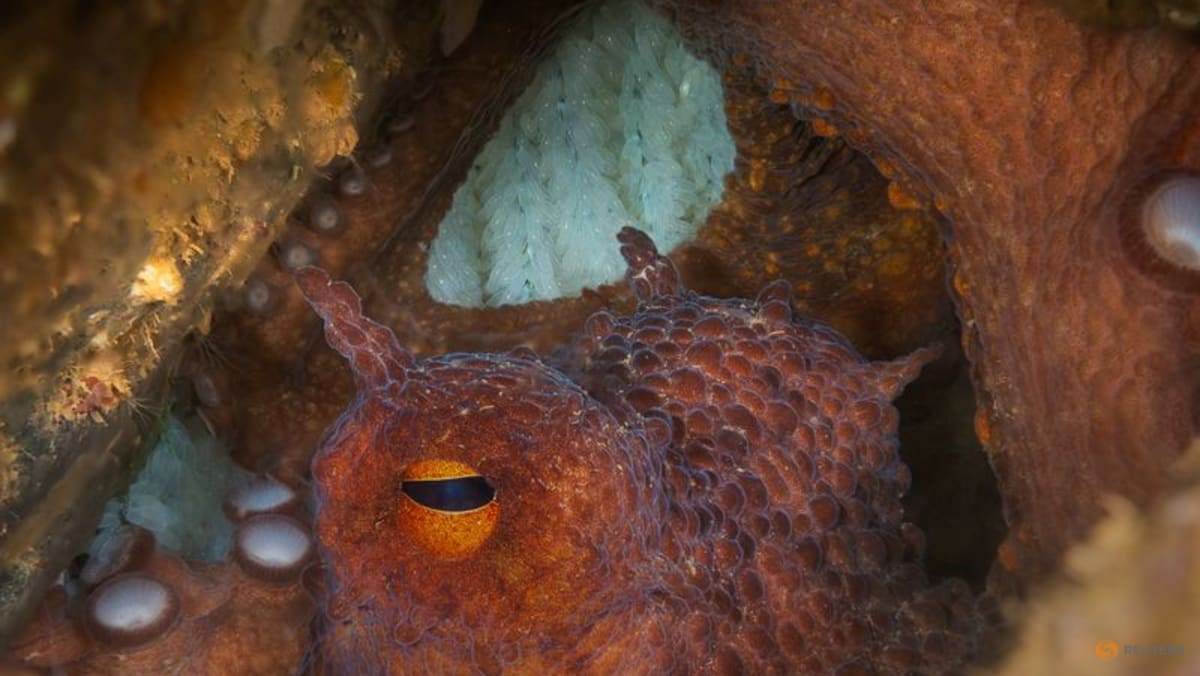
Octopus landings in Britain have risen nearly 1,500% since 2021, which has created a new export fishery and hurt crab, lobster and scallop catches. Defra hosted a conference of fishermen, regulators and scientists this week to inform how the fishery is managed.

1 / 2
The story, neutrally told
Mixed · 2Octopus landings at British ports have risen by nearly 1,500 per cent since 2021, from a yearly average of about 220 tonnes to more than 3,700 tonnes. CNAN “British octopus landings jumped nearly 1,500 per cent from 2021, rising to more than 3,700 metric tons from an annual average of about 220 tons.” Read at CNA ↗ GB NewsR “octopus landings at British ports have rocketed by nearly 1,500 per cent since 2021, soaring from a yearly average of roughly 220 tonnes to more than 3,700 tonnes” Read at GB News ↗ Centre · 1Reports link the surge to unusually warm seas. Researchers say warm water, together with currents and winds that may have carried larvae north from France and the Channel Islands, are among the most likely causes. CNAN “They say warmer waters, together with ocean currents and winds that may have carried octopus larvae north from France and the Channel Islands, are among the most likely contributors to the surge.” Read at CNA ↗ Centre · 1Scientists describe the current bloom as the largest seen off southwest Britain in at least 75 years. Research published this year found that every major bloom in the region over the past 125 years coincided with unusually warm seas, and common octopus have been breeding widely in British waters during this event. CNAN “Scientists studying the phenomenon say the current bloom is the largest seen off southwest Britain in at least 75 years.”“Research published this year found that every major octopus bloom recorded in the region over the past 125 years had coincided with unusually warm sea conditions.” Read at CNA ↗
Right · 1GB News describes such blooms as happening only a handful of times each century, with this the first since the late 1940s. GB NewsR “Octopus blooms happen only a handful of times each century, and the current phenomenon is the first to strike since the late 1940s.” Read at GB News ↗ Centre · 1The boom has created a new export market. According to industry body Seafish, the value of British octopus exports rose to £12.8 million ($17 million) last year from £164,000 a year earlier, driven largely by buyers in France and Spain. CNAN “The value of British octopus exports rose to £12.8 million ($17 million) last year from £164,000 a year earlier, with demand driven largely by buyers in France and Spain, according to industry body Seafish.” Read at CNA ↗ Centre · 1Octopus also prey on shellfish. Researchers found that more than half of UK fishermen reported negative effects on crab, lobster and scallop stocks, with catches in some fisheries down 30 to 50 per cent and losses to affected fisheries above £10 million in 2025. CNAN “researchers found that more than half of UK fishermen had reported negative impacts from octopus predation on crab, lobster and scallop stocks, with catches in some fisheries falling by 30 per cent to 50 per cent and losses to affected fisheries exceeding £10 million in 2025.” Read at CNA ↗
Right · 1GB News adds that whelks, clams and mussels are also natural prey. It reports delegates warning that shellfish stocks had been "decimated by octopus consumption", with octopus particularly good at getting into crab breeding pots. GB NewsR “Crabs, lobsters, whelks, clams and mussels are all natural prey for the tentacled predators.”“Delegates at Thursday's conference warned that shellfish stocks had been "decimated by octopus consumption,"” Read at GB News ↗ Mixed · 2The Department for Environment, Food and Rural Affairs (Defra) hosted a conference of fishermen, regulators and scientists on Thursday 15 October. GB News says the fishing industry proposed it and Defra assembled the expertise; it also calls the event an "emergency conference", a term CNA does not use. GB NewsR “The conference had been proposed by the fishing industry itself, with Defra responding by assembling a broad coalition of expertise” Read at GB News ↗ CNAN “Fishermen, regulators and scientists met this week at a government-hosted conference” Read at CNA ↗ Mixed · 2The government said the conference would help inform future decisions on managing the emerging fishery, a challenge Spain and Australia have also faced. GB News reports that experts from those two countries and from Brittany, where a similar bloom has disrupted fishing communities, shared lessons, and that Defra and the Marine Management Organisation (MMO) have committed to publishing a full summary. CNAN “The government said on Friday the conference would help inform future decisions on managing the emerging fishery, a challenge Spain and Australia have also faced in recent years.” Read at CNA ↗ GB NewsR “Defra and the MMO have committed to publishing a full summary of Thursday's discussions” Read at GB News ↗
Mixed · 2Mike Cohen, chief executive of the National Federation of Fishermen's Organisations, said the arrival of the "fast-growing, short lived and highly predatory species" upends established expectations about coastal ecosystems. He called octopus "both a threat and an opportunity for fishermen, and a massive challenge for fisheries management". CNAN “"They are both a threat and an opportunity for fishermen, and a massive challenge for fisheries management."” Read at CNA ↗ GB NewsR “upends a lot of our established knowledge and expectations about our coastal ecosystems,” Read at GB News ↗ Mixed · 2Anjali Goswami, Defra's chief scientific adviser, called the rise "a stark reminder of how quickly our marine ecosystem can change". Isobel Johnston, the MMO's head of sustainable fisheries, said fishermen must remain "at the heart of this developing fishery". CNAN “said the rise in octopuses in British waters was "a stark reminder of how quickly our marine ecosystem can change."” Read at CNA ↗ GB NewsR “Isobel Johnston, head of sustainable fisheries at the Marine Management Organisation, stressed that fishermen must remain "at the heart of this developing fishery."” Read at GB News ↗ Right · 1GB News also reports that, as more vessels crowd the same grounds to catch octopus, tensions between crews have grown and raised safety concerns. GB NewsR “As more vessels converge on the same fishing grounds to exploit the octopus boom, tensions between crews have escalated, raising serious safety worries.” Read at GB News ↗
Every sentence links to the reporting it rests on. The pill in front of each says where its sources sit: Left, Centre or Right when one side supplies at least half of them, Mixed when they are evenly split. The number is how many outlets it cites.
Left0 outlets
No left outlet in our sources has covered this story yet.
Centre1 outlet
- Framing
- Business-style wire report weighing the opportunity (exports) against the threat (shellfish losses), with climate as the cause.
- Emphasis
- Export value from Seafish, quantified losses (30-50% catch falls, over £10 million), the scientific link to warm seas and the 125-year record.
- Leaves out or plays down
- Does not mention crew tensions and safety worries, Brittany's experience, or the planned publication of a conference summary.
- Charged language
- “devouring one of their usual staples”
Right1 outlet
- Framing
- Alarm-led story about an "explosion" of octopus and a "devastating impact" on fishermen, presenting the government conference as a response to the crisis.
- Emphasis
- Damage to a wider range of shellfish, crew tensions and safety, the conference as an industry-initiated event, and the rarity of the bloom.
- Leaves out or plays down
- Does not mention the export value, the quantified catch and revenue losses, or the link to warm seas and climate, which are the CNA report's main angle.
- Charged language
- “staggering”“explosion”“devastating impact”“emergency conference”“decimated by octopus consumption”“wreaked havoc”
What every side reports
- Octopus landings rose nearly 1,500% from 2021, from about 220 tonnes a year to more than 3,700 tonnes.
- Defra hosted a conference of fishermen, regulators and scientists this week.
- Mike Cohen of the NFFO called octopus both a threat and an opportunity.
- Anjali Goswami called the rise a stark reminder of how quickly marine ecosystems can change.
- Spain and Australia's experience managing octopus fisheries is relevant to British policy.
Where accounts differ
-
Whether the Defra conference was an emergency response
- Centre
- Describes it as a government-hosted conference that will inform future management decisions.
- Right
- Calls it an "emergency conference" prompted by the surge, while also noting the fishing industry proposed it.
Department for Environment, Food and Rural Affairs organisation
Defra hosted the conference and says it will inform decisions on managing the new fishery. Its chief scientific adviser calls the rise a stark reminder of how fast marine ecosystems can change.
“The government said on Friday the conference would help inform future decisions on managing the emerging fishery” — CNA
“All of these contributions will feed into Defra and the MMO's policy response.” — GB News
British fishing industry topic
Industry representatives see both a threat to established shellfish fisheries and an opportunity in a new catch, and say fisheries management faces a major challenge.
“While some fishermen have found a valuable new catch almost overnight, others say the predators are damaging shellfish stocks that underpin long-established fisheries.” — CNA
“The conference had been proposed by the fishing industry itself” — GB News
Climate change topic
CNA links the bloom to unusually warm seas, citing research that every major bloom in 125 years coincided with warm conditions. GB News does not discuss climate.
“A surge in octopus numbers in British waters due to unusually warm seas” — CNA
East and Southeast Asia1 outlet
CNA's report weighs export gains against shellfish losses and puts the climate link first.
“For fishermen, Britain's climate-driven octopus boom is an opportunity, and a threat” — CNA
CNA
UK and Ireland1 outlet
GB News stresses the domestic alarm over fishermen's livelihoods and the government's response.
“British waters hit by staggering 1,500% octopus boom as fishermen warn of devastating impact” — GB News
GB News
Left0 articles
No coverage yet.
Centre1 article
-
CNAN ·
For fishermen, Britain's climate-driven octopus boom is an opportunity, and a threat
Neutral Balanced wire-style report presenting the boom as both an export opportunity and a threat to shellfish, with data and a climate explanation.
Right1 article
-
GB NewsR ·
British waters hit by staggering 1,500% octopus boom as fishermen warn of devastating impact
Alarmist Leads with a "staggering" boom and fishermen's warnings of devastation, then covers the conference and officials' comments.
- 16 Oct 15:02 First CNAN For fishermen, Britain's climate-driven octopus boom is an opportunity, and a threat
- 17 Oct 11:20 +20h 18m GB NewsR British waters hit by staggering 1,500% octopus boom as fishermen warn of devastating impact
Times are when each article was published, or when we first saw it if the outlet gave no time.
Ask about this story
Loading…