WFP: record numbers in government-held Yemen cannot meet food needs as fighting escalates
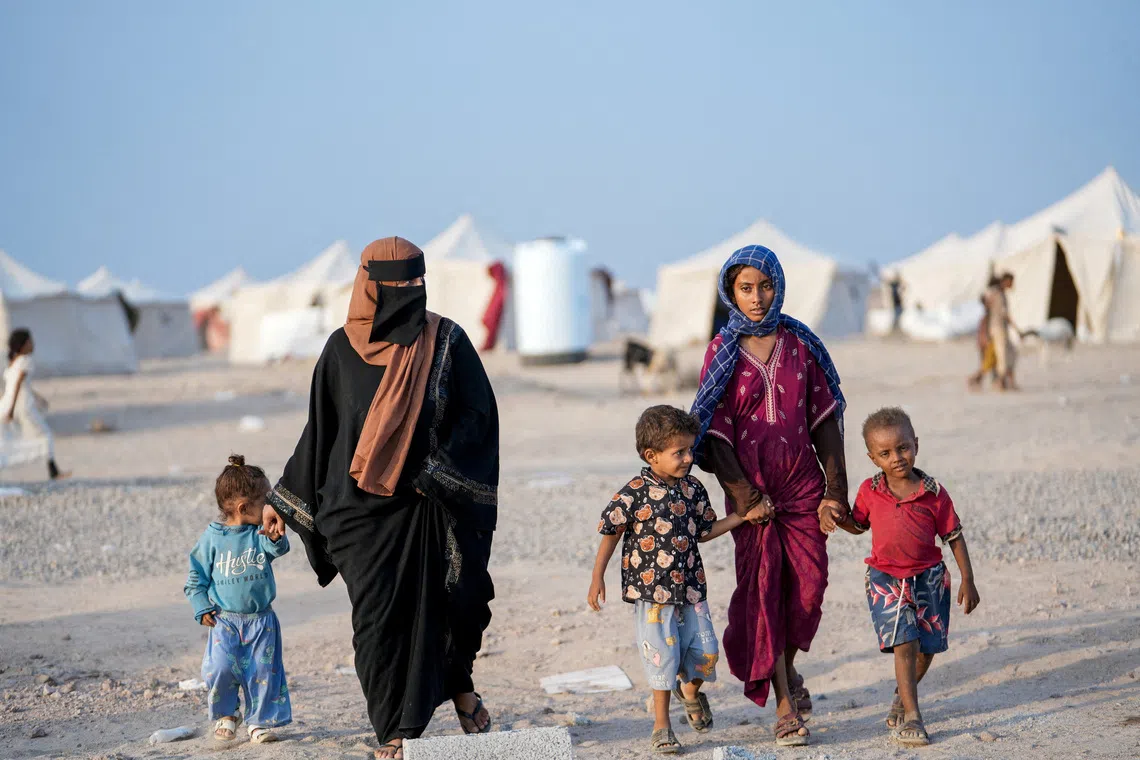
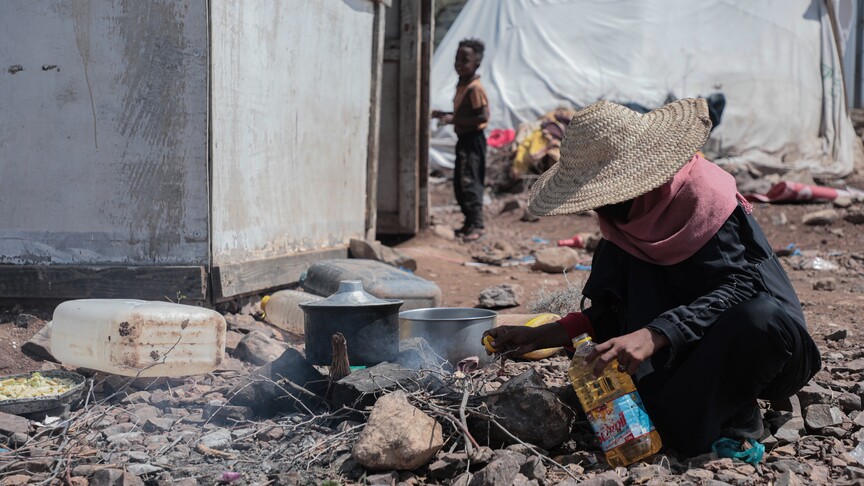
The World Food Programme said on 2 October that hunger in Yemen is accelerating, with a record number of people in accessible government-held areas unable to meet food needs as fighting between Saudi Arabia and the Houthis escalates.
1 / 2
The story, neutrally told
The World Food Programme (WFP) said on Friday 2 October that hunger in Yemen is accelerating, with a record number of people unable to meet their food needs as conflict intensifies. The Straits TimesRC “Hunger in Yemen is accelerating, with a record number of people unable to meet their food needs as conflict intensifies in the country, the World Food Programme said on Friday.” Read at The Straits Times ↗ Matthew Hollingworth, the WFP's Assistant Executive Director for Programme Operations, said that within a few weeks a record number of people in government-controlled areas the WFP can access were no longer able to meet their food needs, with three out of four households skipping meals. The Straits TimesRC “with three out of four of households skipping meals, according to Matthew Hollingworth, the WFP’s Assistant Executive Director for Programme Operations.” Read at The Straits Times ↗ WFP monitoring found 74% of households in accessible government-controlled areas unable to meet basic food needs, the highest level this year, which the agency said indicates food security is "significantly deteriorating". Anadolu AgencyN “Recent WFP monitoring found 74% of households were unable to meet basic food needs, the highest level seen this year” Read at Anadolu Agency ↗
Hollingworth told reporters in Geneva by video link from Rome that the effect of the latest flare-up "threatens to be absolutely devastating"; government-held areas have around 10 million people. The Straits TimesRC ““The effect of this latest flare-up of insecurity on the food security situation threatens to be absolutely devastating,” Hollingworth told reporters in Geneva”“The total population of government-held areas is estimated at around 10 million people.” Read at The Straits Times ↗ Reuters describes the situation as the most serious escalation between Saudi Arabia and the Iran-aligned Houthi group since a UN-brokered truce largely halted cross-border attacks in 2022, with possible implications for Red Sea shipping lanes and the Bab el-Mandeb Strait. The Straits TimesRC “Yemen is experiencing the most serious escalation between Saudi Arabia and the Iran-aligned Houthi group since a UN-brokered truce largely halted cross-border attacks in 2022.” Read at The Straits Times ↗ The International Organization for Migration says more than 149,000 people have been displaced by the renewed fighting, which the WFP says also disrupts markets and humanitarian access. Anadolu AgencyN “More than 149,000 people have been displaced by renewed fighting, according to the International Organization for Migration.” Read at Anadolu Agency ↗
Wheat flour prices have risen 10% in two weeks in parts of Taiz, traders estimate wheat stocks cover only two months of demand, and vegetable oil supply disruptions add pressure; the WFP notes Yemen imports around 90% of its food. Anadolu AgencyN “Wheat flour prices have risen by 10% in just two weeks in parts of Taiz, while traders estimate wheat stocks are sufficient to cover only two months of demand.”“Yemen imports around 90% of its food” Read at Anadolu Agency ↗ Across Yemen, 18.3 million people face acute food insecurity and 2.2 million children under 5 are acutely malnourished, including 500,000 with severe acute malnutrition. Anadolu AgencyN “Across Yemen, 18.3 million people face acute food insecurity, while 2.2 million children under 5 are acutely malnourished, including 500,000 suffering from severe acute malnutrition.” Read at Anadolu Agency ↗ Conflict has cut off parts of Taiz and Hodeidah, preventing the WFP and partners from reaching about 350,000 people; the agency has assisted more than 70,000 people in Taiz and Lahj displacement hotspots and is preparing to scale up to as many as 1.5 million. Anadolu AgencyN “preventing it and its partners from reaching approximately 350,000 people”“is preparing to scale emergency assistance to as many as 1.5 million people” Read at Anadolu Agency ↗
The WFP needs $109 million for its emergency response and $158 million to sustain regular operations for 2.4 million people through next March, and warns that further instability along the west coast and the Bab al-Mandab corridor could push prices higher across the region. Anadolu AgencyN “The WFP said it needs $109 million for its emergency response in Yemen to assist up to 1.5 million people”“could push food prices even higher and deepen food insecurity in both Yemen and across the wider region” Read at Anadolu Agency ↗
Every sentence links to the reporting it rests on.
Left0 outlets
No left outlet in our sources has covered this story yet.
Centre1 outlet
- Framing
- Anadolu leads with the WFP operational update: data-heavy, focused on displacement, prices, access gaps and funding needs.
- Emphasis
- Humanitarian figures, price rises, stock levels, funding shortfalls.
- Leaves out or plays down
- Does not name the Saudi–Houthi escalation or the 2022 truce context.
- For example
-
“Renewed fighting displaced over 149,000 people, with UN agency warning that rapidly depleting relief stocks risk widening aid gaps” — Anadolu Agency
Right1 outlet
- Framing
- The Straits Times runs Reuters copy leading with the WFP warning, placing it in the Saudi–Houthi geopolitical context and Red Sea shipping risks.
- Emphasis
- Hollingworth's quote and regional strategic implications.
- Leaves out or plays down
- Lacks the detailed price, displacement, funding and malnutrition figures.
- Charged language
- “absolutely devastating”
- For example
-
“could reshape control in Yemen, with implications for Red Sea shipping lanes and the Bab el-Mandeb Strait.” — The Straits Times
What every side reports
- The WFP says hunger in government-held Yemen is at record or highest-this-year levels amid renewed fighting.
- About three in four households in accessible government-held areas cannot meet food needs.
- The Bab el-Mandeb/Bab al-Mandab area is a concern for supply and shipping.
World Food Programme organisation
Says hunger is accelerating, food security is significantly deteriorating, and it needs $109 million for emergency response and $158 million for regular operations.
“The WFP said it needs $109 million for its emergency response in Yemen to assist up to 1.5 million people” — Anadolu Agency
“Hunger in Yemen is accelerating” — The Straits Times
Left0 articles
No coverage yet.
Centre1 article
-
Nearly 3 in 4 households unable to meet basic food needs in parts of Yemen: UN food agency
Neutral Detailed account of the WFP operational update with figures on need, access and funding.
Right1 article
-
The Straits TimesRC · · via Reuters
Record numbers going hungry in Yemen amid escalating conflict, WFP says
Alarmist Reuters wire copy stressing record hunger and the geopolitical stakes, with a WFP official's warning of devastation.
- 2 Oct 11:28 First The Straits TimesRC Record numbers going hungry in Yemen amid escalating conflict, WFP says via Reuters
- 2 Oct 11:42 +15m Anadolu AgencyN Nearly 3 in 4 households unable to meet basic food needs in parts of Yemen: UN food agency
Times are when each article was published, or when we first saw it if the outlet gave no time.