Senate candidates split over data centers as voter pressure grows ahead of November midterms
Two outlets survey how candidates in competitive 2026 races, especially for the Senate, position themselves on data centers, from moratorium backers to those leaving decisions to localities.
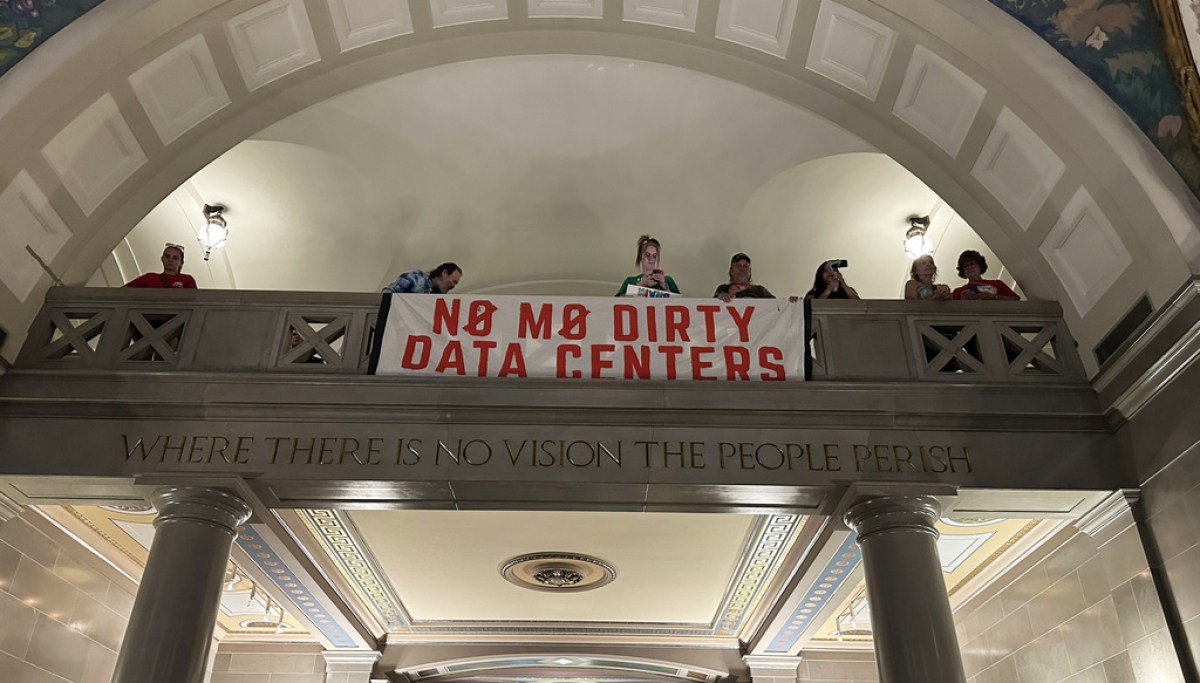

1 / 2
The story, neutrally told
Right · 1Senate candidates are facing growing pressure from voters over the rapid expansion of data centers, according to the Washington Examiner. Washington ExaminerR “Senate candidates are facing growing pressure from voters to address the rapid expansion of data centers.” Read at Washington Examiner ↗ Right · 1The Examiner sorts candidates into three broad camps: those backing a moratorium on construction, as favoured by Sen. Bernie Sanders (I-VT) and other congressional Democrats; those seeking restrictions such as requiring that data centers not add to others' utility bills; and those who say decisions should be left to local officials. Washington ExaminerR “Some candidates have responded by backing a moratorium on data center construction, as favored by Sen. Bernie Sanders (I-VT) and other congressional Democrats.” Read at Washington Examiner ↗ Left · 1Wired, writing on 11 October, says public opinion has turned rapidly against data centers since the start of the year, that the opposition is bipartisan, and that many Republicans are making a rare break from President Donald Trump. WiredLC “The opposition is bipartisan, with many Republicans making a rare break from President Donald Trump.” Read at Wired ↗
Right · 1In Georgia, Democratic Sen. Jon Ossoff has not proposed a moratorium but has said data centers should cover their energy costs; in April his office began investigating whether data centers raised power bills, and he was one of four Democrats to vote for the Ratepayer Protection Act. Republican Rep. Mike Collins opposes a federal moratorium and says it 'should be a local decision'. Washington ExaminerR “In April, the senator sent a letter to the Federal Energy Regulatory Commission announcing that his office would investigate whether data centers increased power bills in the state.”““at the end of the day this should be a local decision.”” Read at Washington Examiner ↗ Right · 1In North Carolina, Democratic former Gov. Roy Cooper says communities should have the final say, including on moratoriums, and wants data centers to pay the full cost of the power they use. Republican Michael Whatley, a longtime energy lobbyist, does not support a moratorium or a 'blanket no', backs expansion to win the AI race against China, and says data centers should pay their own way. Each campaign attacks the other: Cooper's spokesperson says Whatley secretly consulted for a data center company, while Whatley's spokesman says Cooper stuck families with a 30 percent rate hike. Washington ExaminerR “Former Gov. Roy Cooper, the Democratic nominee, has said that communities should have the final say on data center projects, including imposing moratoriums.”“he has said that there should not be a “blanket no” to data center development.”“secretly consulted for a data center company while campaigning for Senate and personally profited as its stocks have spiked.” Read at Washington Examiner ↗ Right · 1In Alaska, Democrat Mary Peltola has not proposed a ban and says she takes her cue from affected communities, while Republican Sen. Dan Sullivan opposes bans and has petitioned to bring data centers onto military installations. In Iowa, Democrat Josh Turek opposes a blanket moratorium but wants federal regulation, while Republican Rep. Ashley Hinson opposes a ban and favours local decisions with guardrails. In Maine, Democrat Troy Jackson supports temporary bans on construction and says he would have signed the statewide ban Gov. Janet Mills vetoed. Washington ExaminerR ““I really take my cue from the people of that region where the proposed development is happening.””“Republican Sen. Dan Sullivan has petitioned to bring data centers onto Alaska’s military installations.”“Troy Jackson has supported temporary bans on data center construction.” Read at Washington Examiner ↗
Right · 1On federal policy, the Examiner reports that the House passed the Ratepayer Protection Act, which would require states to consider standards making new data centers cover the costs of new generation, transmission and infrastructure; Senate Democrats blocked it last month, arguing it did not go far enough because compliance is voluntary. Washington ExaminerR “However, Senate Democrats blocked the bill from passing last month, arguing it did not go far enough because compliance is voluntary.” Read at Washington Examiner ↗ Left · 1Wired singles out Ohio as the Senate race to watch. It reports the National Republican Senatorial Committee warned in August that Democrat Sherrod Brown's attacks on Sen. Jon Husted over data centers could tip the race, and that Brown calls Husted 'the face of data centers in Ohio'. Senate Democrats torpedoed a Husted-sponsored bill modelled on the White House's ratepayer protection pledge, which Minority Leader Chuck Schumer called 'toothless'. Wired adds that data centers have also entered toss-up Senate races in Michigan, Iowa and Texas. WiredLC “Brown has called Husted “the face of data centers in Ohio,” running ads that blame Husted for welcoming data centers to the state and driving energy bills up.”“Data centers have also seeped into many other toss-up Senate races, including in Michigan, Iowa, and Texas.” Read at Wired ↗ Left · 1Wired also covers House and governor races: it cites candidates labelled with nicknames such as 'Data Center Derek' and 'DC Derrick', says at least 20 gubernatorial candidates have promised some form of moratorium according to Multistate, notes New York Gov. Kathy Hochul signed the only true hyperscale moratorium in July, and says Texas Gov. Greg Abbott moved from welcoming data centers to a de facto moratorium on permits. It adds that voters in eight states face more than 30 local ballot measures, over half of them in Ohio. WiredLC “At least 20 candidates in the 36 gubernatorial races have promised to enact some kind of data center moratorium if elected, according to research from Multistate.”“Voters in eight states are looking at more than 30 local ballot measures around data centers.” Read at Wired ↗
Left · 1Wired judges that, although pocketbook issues are likely to be uppermost for voters, data centers are potent enough to swing tight races and the balance of power in Congress; the election is on 3 November. WiredLC “data centers are a potent-enough issue that they could swing tight races—and ultimately tip the balance of power in Congress.” Read at Wired ↗
Every sentence links to the reporting it rests on. The pill in front of each says where its sources sit: Left, Centre or Right when one side supplies at least half of them, Mixed when they are evenly split. The number is how many outlets it cites.
Left1 outlet
- Framing
- Wired treats data centers as a fast-rising bipartisan political issue and a newsletter-style guide to the races that will decide it, led by Ohio.
- Emphasis
- Attack ads, nicknames, Ohio, governor moratoriums and local ballot measures; Republican vulnerability.
- Leaves out or plays down
- Does not set out individual Senate candidates' stances in detail beyond Ohio.
- Charged language
- “torpedoing”“toothless”“derogatory”
Centre0 outlets
No centre outlet in our sources has covered this story yet.
Right1 outlet
- Framing
- The Washington Examiner offers a state-by-state reference list of each major-party candidate's stance in 13 competitive Senate races, framed around moratorium versus restrictions versus local control.
- Emphasis
- Candidate quotes and campaign spokespeople, the Ratepayer Protection Act, and Sanders and Democrats favouring a moratorium.
- Leaves out or plays down
- Does not discuss Ohio's Brown–Husted race in the portion covered or the broader House and governor picture.
- Charged language
- “sweetheart deals”
- For example
-
“Here are the stances laid out by all the major party Senate candidates for the 13 states deemed to have competitive races.” — Washington Examiner
What every side reports
- Data centers have become a campaign issue in 2026 races, with growing voter concern about energy bills.
- Senate Democrats blocked a Republican-backed ratepayer protection bill, saying it did not go far enough.
- Candidates in both parties are positioning on data centers, from moratorium supporters to those favouring local control.
Where accounts differ
-
Who bears political risk on data centers
- Left
- Wired stresses bipartisan opposition and Republicans such as Husted being attacked as pro-data center.
- Right
- The Examiner stresses that most Republican candidates reject moratoriums and favour local control or AI competition with China, while Democrats like Jackson back bans.
Bernie Sanders person
Sen. Bernie Sanders (I-VT) is named as a favoured proponent, with other congressional Democrats, of a moratorium on data center construction.
“as favored by Sen. Bernie Sanders (I-VT) and other congressional Democrats” — Washington Examiner
Data centers topic
Data centers are presented as a rapidly expanding industry that voters increasingly resist over power bills, water and local infrastructure, while some candidates stress their role in competing with China on AI.
“We are in a race in AI against China.” — Washington Examiner
“The public has rapidly turned on them since the beginning of the year.” — Wired
2026 US midterm elections event
Wired says the midterms, with election day on November 3, may be decided in tight races partly by data center politics.
“Here are some of the races WIRED is keeping an eye on as we approach November 3.” — Wired
Left1 article
-
WiredLC ·
These Midterm Races Will Decide Data Centers’ Political Fate
Mixed Newsletter-style overview presenting data centers as a bipartisan political liability and key swing issue, with some pointed wording about Senate Democrats and Republicans.
Centre0 articles
No coverage yet.
Right1 article
-
List: Where all the candidates in competitive Senate races stand on data centers
Neutral Reference-style list of candidates' stated positions on moratoriums and other restrictions, quoting campaigns directly.
- 8 Oct 10:00 First Washington ExaminerR List: Where all the candidates in competitive Senate races stand on data centers
- 11 Oct 11:00 +73h WiredLC These Midterm Races Will Decide Data Centers’ Political Fate
Times are when each article was published, or when we first saw it if the outlet gave no time.