World Bank forecasts 10.3% Gulf growth in 2027 if oil flows recover
The World Bank projects the Gulf Cooperation Council economy will contract 4.3% in 2026 and rebound 10.3% in 2027, if Iran-conflict disruptions to oil and shipping ease from early 2027. It warns the recovery is not guaranteed.
1 / 2
The story, neutrally told
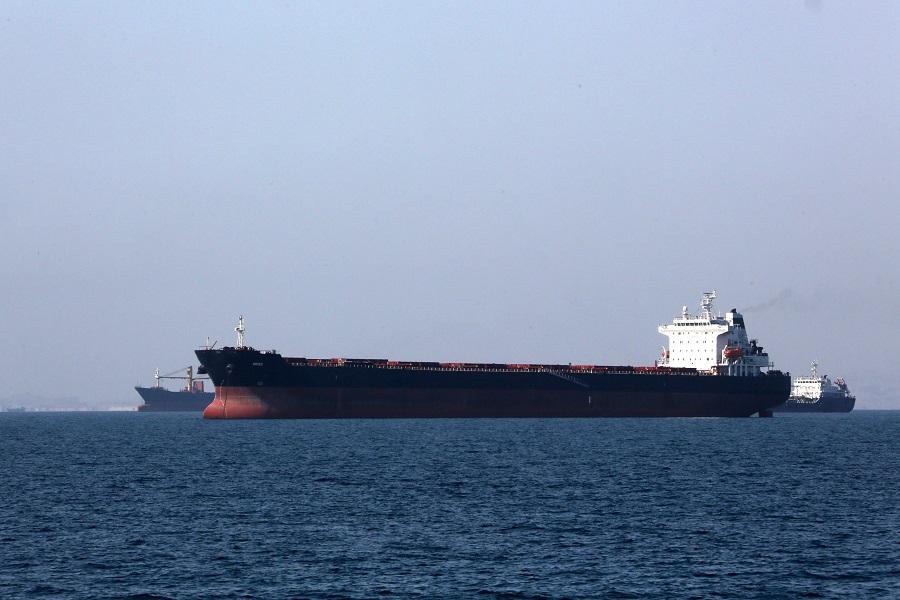
Mixed · 2The World Bank forecasts that Gulf Cooperation Council (GCC) economies will contract 4.3% in 2026 and then grow 10.3% in 2027, assuming oil production and shipping return to normal from early 2027. Arab NewsRC “with the World Bank forecasting 10.3 percent growth if the Iran conflict does not escalate this year” Read at Arab News ↗ Gulf NewsN “The World Bank expects the GCC economy as a whole to contract 4.3 per cent in 2026 before rebounding 10.3 per cent in 2027, assuming disruptions ease from early next year.” Read at Gulf News ↗ Centre · 1The forecast appears in the World Bank's report "From Divide to Opportunity: AI, Jobs, and Growth", published on October 6. Gulf NewsN “published in the World Bank’s latest From Divide to Opportunity: AI, Jobs, and Growth report on October 6” Read at Gulf News ↗ Mixed · 2The World Bank links the downturn to the conflict involving Iran, which began in February and has caused extensive disruption in the Strait of Hormuz. Gulf News reports that the closure cut oil export volumes and that higher prices did not make up for the lost volumes. Arab NewsRC “The impact of the conflict, which has led to extensive disruptions in the Strait of Hormuz” Read at Arab News ↗ Gulf NewsN “The closure of the Strait of Hormuz cut oil export volumes, while higher prices failed to compensate for the loss of volumes.” Read at Gulf News ↗
Centre · 1According to the report, Gulf oil production fell from about 26 million barrels per day before the conflict to around 16 million barrels per day in March. Tourism, aviation and logistics were also hit, and higher shipping costs pushed up food prices in parts of the region. Gulf NewsN “Gulf oil production fell from about 26 million barrels per day before the conflict to around 16 million barrels per day in March, according to the report.”“Tourism, aviation and logistics have been hit, while higher shipping costs have pushed up food prices across parts of the region.” Read at Gulf News ↗ Mixed · 2Country forecasts for 2026 and 2027 are: Qatar -20.9% then +26.7% (as liquefied natural gas production resumes); Kuwait -14.6% then +22% (as oil exports normalise); Saudi Arabia -2% then +7.9%; the UAE -1.6% then +9.5%; Bahrain -2.9% then +4.2%; and Oman +3.1% then +3.4%, the only Gulf economy forecast to grow in 2026. Gulf NewsN “Qatar's GDP is forecast to contract 20.9 per cent this year before rebounding 26.7 per cent in 2027, while Kuwait is expected to shrink 14.6 per cent before expanding 22 per cent next year.”“Oman is the exception, with the World Bank forecasting growth of 3.1 per cent in 2026 and 3.4 per cent in 2027.” Read at Gulf News ↗ Arab NewsRC “The World Bank projects Qatar’s gross domestic product growth to reach 26.7 percent in 2027 as liquefied natural gas production resumes” Read at Arab News ↗ Right · 1Saudi Arabia has been partly shielded from the export disruption by the East–West Pipeline, which carries crude to Yanbu on the Red Sea. Arab NewsRC “The Kingdom has been partly shielded from the impact of the oil export disruption, thanks to the East–West Pipeline, which carries crude to Yanbu on the Red Sea.” Read at Arab News ↗
Right · 1For the wider Middle East, North Africa, Afghanistan and Pakistan (MENAAP) region, the World Bank projects a 2.1% contraction in 2026 after 3.3% growth in 2025. If the conflict subsides by the end of 2026, it projects the region excluding Iran to rebound 7.8% in 2027, while stressing that recovery is not guaranteed. Arab NewsRC “Output in the Middle East, North Africa, Afghanistan and Pakistan is also projected to decline by 2.1 percent this year, following growth of 3.3 percent in 2025.”“However, a regional recovery is not guaranteed and will require sustained policy efforts,” said the World Bank.” Read at Arab News ↗ Centre · 1The World Bank said the GCC's 10.3% expansion largely reflects restored oil production and exports rather than a sudden improvement in underlying productivity. It cautioned that damaged infrastructure, postponed investment and depleted fiscal buffers could keep weighing on economies after the shock fades. Gulf NewsN “the projected 10.3 per cent expansion next year largely reflects the restoration of oil production and exports rather than a sudden improvement in underlying productivity, the World Bank said.”“Damaged infrastructure, postponed investment and depleted fiscal buffers could continue to weigh on economies after the immediate shock fades.” Read at Gulf News ↗ Centre · 1UAE Minister of Tourism and Economy Abdullah bin Touq Al Marri told CNN that a rebound of about 10% should be read as output pushed from one year into the next, calling it a "counterattack", and said the key question is whether the extra activity goes into advanced manufacturing, logistics and AI. Gulf NewsN “That's a counterattack. That's something which is, you know, you're taking off 2027 and 2026, and you're adding it on 2027”“it's going to go into advanced manufacturing, it's going to go into logistics, it's going to go into AI, it's going to go into robotics” Read at Gulf News ↗
Right · 1Thomas Kuruvilla of Arthur D. Little Middle East and India told Arab News that Saudi Arabia enters the rebound with a broader economic base than in earlier oil cycles, and that the question for 2027 is how far the oil recovery turns into private-sector activity, productivity and investment. Arab NewsRC “the Kingdom is entering the rebound next year with a broader economic base than in previous oil cycles.”“The important question for 2027 is how effectively the oil recovery translates into greater private-sector activity, productivity and investment.” Read at Arab News ↗ Centre · 1The report also covers artificial intelligence: the World Bank estimates AI could improve productivity in 13% to 20% of jobs across the region, with fewer than 10% of jobs facing near-term automation risk, and says the UAE and Saudi Arabia are the only regional countries ranked in the global top 25 for both AI model development and high-performance computing. Gulf NewsN “The World Bank estimates AI could improve productivity in between 13 per cent and 20 per cent of jobs across the region, while less than 10 per cent of jobs face near-term automation risk.”“The UAE and Saudi Arabia are the only countries in the region ranked among the global top 25 for both AI model development and high-performance computing” Read at Gulf News ↗
Every sentence links to the reporting it rests on. The pill in front of each says where its sources sit: Left, Centre or Right when one side supplies at least half of them, Mixed when they are evenly split. The number is how many outlets it cites.
Left0 outlets
No left outlet in our sources has covered this story yet.
Centre1 outlet
- Framing
- Gulf News leads with the UAE, framing the 9.5% forecast through the economy minister's "counterattack" remark. It adds detail on the UAE's fiscal position, the report's AI findings and the conflict's costs.
- Emphasis
- UAE growth, ministerial comment, AI opportunity, tourism recovery data and the scale of the 2026 contractions.
- Leaves out or plays down
- Does not carry Arab News's outside analyst commentary on Saudi Arabia or mention the East–West Pipeline.
- Charged language
- “counterattack”“Gulf shock”
Right1 outlet
- Framing
- Arab News leads with the regional rebound headline and conditions it on oil flows and the conflict not escalating. It then focuses on Saudi Arabia's recovery, with a consultant's view on diversification and Vision 2030.
- Emphasis
- Saudi outlook, the East–West Pipeline, tourism and investor confidence.
- Leaves out or plays down
- Does not give the 2026 contractions for Qatar, Kuwait or the UAE, or the oil output figures and AI findings reported by Gulf News.
- Charged language
- “rebound sharply”“US-led ward”
What every side reports
- The World Bank forecasts GCC economies to contract 4.3% in 2026 and grow 10.3% in 2027.
- The 2027 rebound assumes oil production and shipping normalise from early 2027.
- The World Bank forecasts Qatar +26.7%, Kuwait +22%, Saudi Arabia +7.9% and the UAE +9.5% in 2027.
- MENAAP output is projected to fall 2.1% in 2026 after 3.3% growth in 2025.
- The World Bank says the recovery is not guaranteed.
Where accounts differ
-
What the baseline assumes about the conflict in 2026
- Centre
- Gulf News says the baseline assumes disruptions continue through the end of 2026 and ease from early 2027.
- Right
- Arab News says the 10.3% depends on the Iran conflict not escalating this year and on the conflict subsiding by the end of 2026.
World Bank Group organisation
Projects a sharp GCC rebound driven by restored hydrocarbon output, but warns recovery is not guaranteed and that lasting damage could weigh on economies. It also highlights AI as a longer-term opportunity.
“a regional recovery is not guaranteed and will require sustained policy efforts” — Arab News
“The question is not whether AI will play a role in the region’s future, but whether countries can build the skills, infrastructure, and institutions needed to benefit from it,”” — Gulf News
United Arab Emirates place
The UAE economy minister says the large forecast reflects output shifted between years, and that the UAE is ready to direct the rebound into advanced manufacturing, logistics and AI.
“We want to make sure that we churn the engines, and leave the engines running at a high speed when it comes to 2027.” — Gulf News
Left0 articles
No coverage yet.
Centre1 article
-
UAE economy poised for ‘counterattack’ with 9.5% growth forecast in 2027
Mixed UAE-centred account that relays the minister's upbeat 'counterattack' framing alongside the World Bank's caveats and AI findings.
Right1 article
-
Gulf economies set for 10.3% rebound in 2027 if oil flows rebound: World Bank
Neutral Reports the World Bank's conditional 10.3% Gulf rebound, with a Saudi focus and an analyst's optimistic view of diversification.
- 6 Oct 11:56 First Arab NewsRC Gulf economies set for 10.3% rebound in 2027 if oil flows rebound: World Bank
- 8 Oct 12:29 +48h 32m Gulf NewsN UAE economy poised for ‘counterattack’ with 9.5% growth forecast in 2027
Times are when each article was published, or when we first saw it if the outlet gave no time.