Worst bluetongue season on record hits British farms
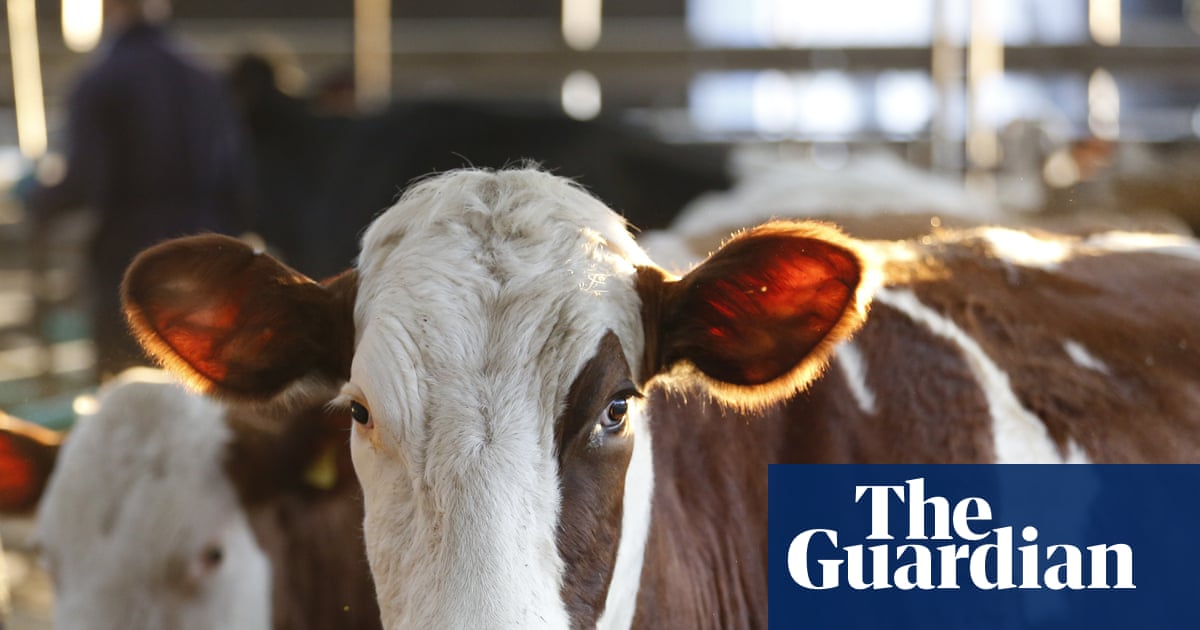
Defra has recorded 2,201 bluetongue cases in the 2026-27 season, already more than the past three seasons combined, with the virus reaching Scotland for the first time.

1 / 2
The story, neutrally told
Mixed · 2British farmers are experiencing the worst bluetongue season on record, with case numbers already above the combined total of the past three years. The GuardianLC “British farmers are experiencing the worst bluetongue season on record, with the number of cases surpassing the past three years combined.” Read at The Guardian ↗ GB NewsR “reported cases in the current season already exceeding the combined total from the previous three years” Read at GB News ↗ Mixed · 2Defra has recorded 2,201 cases since the 2026-27 season began on 1 July, 1,103 of them in September; the season runs to 30 June 2027. The GuardianLC “Defra has recorded 2,201 cases, 1,103 in September.” Read at The Guardian ↗ GB NewsR “Defra has recorded 2,201 cases since the 2026-27 bluetongue season began on July 1, including 1,103 in September alone.” Read at GB News ↗ Mixed · 2Defra counts a case as a premises with at least one infected animal, so the number of animals affected is likely higher than the case count. The GuardianLC “Defra defines a case as a premises where at least one animal with bluetongue is present” Read at The Guardian ↗ GB NewsR “The number of individual livestock affected is therefore likely to be far higher than the official case count.” Read at GB News ↗
Mixed · 2The virus crossed into Scotland for the first time this summer and has been found as far north as Aberdeenshire. The GuardianLC “This summer the disease has crossed into Scotland for the first time and has been found as far north as Aberdeenshire.” Read at The Guardian ↗ GB NewsR “This summer, the virus crossed into Scotland for the first time, and has been detected as far north as Aberdeenshire.” Read at GB News ↗ Mixed · 2Bluetongue affects sheep and cattle, causing fever, ulcers, a swollen head and lameness, and sometimes a blue, protruding tongue; severe cases can be fatal. It does not affect people or food safety. The GuardianLC “Bluetongue does not affect people or food safety” Read at The Guardian ↗ GB NewsR “Severe infections can be fatal.” Read at GB News ↗ Mixed · 2The disease is spread by biting midges and originated in Africa. It has spread through Europe over the past two decades, which the World Organisation for Animal Health links to climate breakdown. The current strain, serotype 3 (BTV-3), was first found in England in 2023. The GuardianLC “The particular strain of bluetongue currently affecting livestock, serotype 3 (BTV-3), was first found in England in 2023.” Read at The Guardian ↗ GB NewsR “The disease is spread by biting midges and originated in Africa, before spreading into Europe over the past two decades.” Read at GB News ↗
Mixed · 2Robyn Munt, vice-president of the National Farmers' Union, said farmers must keep up "constant vigilance" and keep checking animals for symptoms. She said getting vaccines had been "really challenging" because supply is a "demand-led process", and that drought costs already weighing on livestock businesses were adding labour pressure and stress. The GuardianLC “Robyn Munt, the vice-president of the National Farmers’ Union, said farmers were having to keep “constant vigilance”” Read at The Guardian ↗ GB NewsR “Ms Munt said obtaining supplies had been “really challenging”, as it was a “demand-led process”.” Read at GB News ↗ Mixed · 2Tom Cantillon, a senior analyst at the Energy and Climate Intelligence Unit, called the outbreak a "harbinger of things to come". He said temperatures remain high enough in many parts of the UK for the virus to develop in midges, and that milder winters and hotter summers let pests and pathogens establish themselves. He argued that vaccination is needed but "we cannot vaccinate against the kinds of climate that encourage these outbreaks", and called for cutting emissions to net zero. The GuardianLC ““harbinger of things to come”” Read at The Guardian ↗ GB NewsR “we cannot vaccinate against the kinds of climate that encourage these outbreaks.” Read at GB News ↗ Mixed · 2Both reports note that mosquitoes capable of transmitting Zika and dengue were found breeding in homes in east London earlier this summer, with experts warning of more "incursions of invasive mosquitoes". The GuardianLC “mosquitoes capable of transmitting Zika virus and dengue were found breeding in homes in east London” Read at The Guardian ↗ GB NewsR “mosquitoes capable of transmitting Zika and dengue were found breeding in homes in east London earlier this summer” Read at GB News ↗
Every sentence links to the reporting it rests on. The pill in front of each says where its sources sit: Left, Centre or Right when one side supplies at least half of them, Mixed when they are evenly split. The number is how many outlets it cites.
Left1 outlet
- Framing
- Leads with the climate crisis as the cause, in the standfirst and through the Energy and Climate Intelligence Unit analyst's comments.
- Emphasis
- Climate link, the warning about future pests and the call to cut emissions to net zero.
- Leaves out or plays down
- Does not mention culling.
- Charged language
- “Climate crisis blamed”“climate breakdown”
- For example
-
“Climate crisis blamed as virus that originated in Africa spreads to livestock as far north as Aberdeenshire” — The Guardian
Centre0 outlets
No centre outlet in our sources has covered this story yet.
Right1 outlet
- Framing
- Leads with the record case count and the pressure on farmers; reports the same climate material but does not put it in the headline.
- Emphasis
- Case numbers and farmer burden. It adds that farmers must treat animals or face a cull of flocks and herds.
- Leaves out or plays down
- Gives the climate attribution as background rather than the main frame; the cull line is not sourced to anyone.
- Charged language
- “worst-ever outbreak”“unwanted cull”
- For example
-
“plaguing farmers to either deal with treatment or face unwanted cull of flocks and herds” — GB News
What every side reports
- Defra has recorded 2,201 cases in the 2026-27 season, 1,103 of them in September.
- This is more than the past three seasons combined.
- The virus has reached Scotland for the first time, as far north as Aberdeenshire.
- Bluetongue is spread by midges and poses no risk to people or food safety.
- Farmers report difficulty obtaining vaccines, according to NFU vice-president Robyn Munt.
Bluetongue virus topic
Both outlets describe the virus as spreading north because of warmer conditions, with its midge hosts able to carry it through the season.
“hotter temperatures, caused by the climate crisis, contributing to a rise in cases being recorded farther north” — The Guardian
“With temperatures remaining high enough across parts of the UK for the virus to develop inside its midge hosts” — GB News
Left1 article
-
Worst ever outbreak of bluetongue hits British farms
Alarmist Presents the record outbreak as a consequence of climate change and a sign of worse to come.
Centre0 articles
No coverage yet.
Right1 article
-
GB NewsR ·
British farmers facing worst-ever outbreak of bluetongue on record
Mixed Presents the record outbreak as a burden on farmers, with near-identical climate quotes included, and adds a line on cull risk.
- 3 Oct 06:00 First The GuardianLC Worst ever outbreak of bluetongue hits British farms
- 3 Oct 22:34 +16h 33m GB NewsR British farmers facing worst-ever outbreak of bluetongue on record
Times are when each article was published, or when we first saw it if the outlet gave no time.