NYT editor concedes Josh Blackman's labeling critique; WSJ column praises response
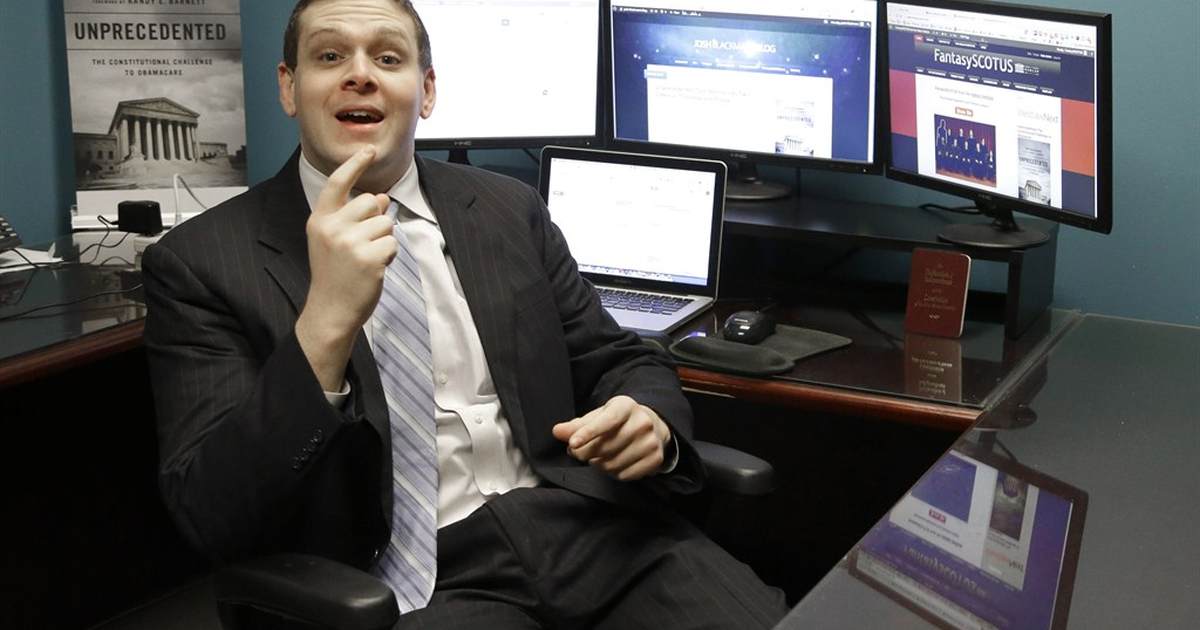
After conservative law professor Josh Blackman criticised how the New York Times labels conservatives, Times standards editor Patrick Healy interviewed Blackman and agreed there was "real truth" to the critique. The Wall Street Journal's Best of the Web column then praised the Times for it.
1 / 1
The story, neutrally told
Right · 1Josh Blackman, a conservative lawyer who teaches at South Texas College of Law Houston, was quoted twice in the New York Times within 24 hours, and both times the paper labeled him "conservative." Hot AirR “Josh Blackman is a conservative lawyer who teaches at South Texas College of Law Houston.”“Both times it labeled him "conservative."” Read at Hot Air ↗ Right · 1Blackman said that in a search of the Westlaw archives, the Times was far more likely to identify a law professor as conservative than as liberal, and that the gap is larger because liberals are quoted more often. Hot AirR “it was far more likely that you’re identifying a conservative than a liberal. And those numbers are stacked because liberals are quoted even more often.” Read at Hot Air ↗ Right · 1Blackman wrote a letter to the editor with that research; according to Hot Air the Times did not publish it, but Patrick Healy, the paper's managing editor for Standards and Trust, invited Blackman to an interview about it. Hot AirR “The Times didn't publish his letter but last week the paper's "managing editor for Standards and Trust," Patrick Healy, invited Blackman to do an interview to talk about it.” Read at Hot Air ↗
Right · 1In the interview, Healy said there was "real truth" to the critique and that the Times needs to do better, explaining that labels are meant to give readers context about who is speaking, while conceding that they can make it seem the paper treats liberals as normal and conservatives as unique. Hot AirR “Josh, I think there’s real truth to your critique and it’s something we need to do a better job on.”“It can come off like The Times treats liberals as normal and conservatives as unique and worthy of labeling.” Read at Hot Air ↗ Right · 1Blackman replied that whatever label one person gets, the other should get, and argued that unlabeled sources look neutral while labeled ones appear to have an agenda; Blackman also said some stories quote only liberals by relying on Harvard or Yale faculty. Hot AirR “whatever one gets the other should get.”“they call the professor at Harvard or Yale, and just by virtue of doing that, you’re calling only liberals” Read at Hot Air ↗ Right · 1James Freeman's Wall Street Journal "Best of the Web" column featured the interview, crediting the Times for "refreshing humility and openness to constructive criticism" and saying "Kudos to Patrick Healy." ReasonRC “With refreshing humility and openness to constructive criticism, a Times editor considers the manner in which the newspaper addresses a speaker's point of view.”“Kudos to Patrick Healy.” Read at Reason ↗
Right · 1Writing on Reason's Volokh Conspiracy blog, Blackman said the interview "continues to resonate" and hoped Times reporters can now set the tone for media balance; Blackman also reflected on cultivating relationships with reporters, which Blackman called transactional but often fruitful. ReasonRC “I am pleased that my interview with the New York Times continues to resonate.”“I hope the reporters at the Times can now set the tone for media balance, and it trickles down.” Read at Reason ↗ Right · 1Hot Air's John Sexton said Blackman was "exactly right" about mainstream papers, but was doubtful the change would last, writing that he was "not willing to hold my breath" while giving the Times some credit for acknowledging the problem. Hot AirR “He's exactly right, of course.”“I'm not willing to hold my breath, but I do give the Times some credit for at least acknowledging that there is a problem” Read at Hot Air ↗
Every sentence links to the reporting it rests on. The pill in front of each says where its sources sit: Left, Centre or Right when one side supplies at least half of them, Mixed when they are evenly split. The number is how many outlets it cites.
Left0 outlets
No left outlet in our sources has covered this story yet.
Centre0 outlets
No centre outlet in our sources has covered this story yet.
Right2 outlets
- Framing
- Both outlets treat the episode as a conservative critique of media bias that drew a rare admission from the Times; Reason (a post by Blackman) highlights the WSJ's praise, while Hot Air presents it as proof of a double standard, tempered by scepticism.
- Emphasis
- The Times editor's concession, the disparity in labeling conservatives versus liberals, and the WSJ's endorsement.
- Leaves out or plays down
- No Times response beyond Healy's interview remarks, no independent check of Blackman's Westlaw count, and no left or centre outlets weighed in.
- Charged language
- “double standard”“radical left and woke media”“heroes and villains”
- For example
-
“The Times and other mainstream papers routinely treat the Left as the "normal" view and the Right as something that needs to be identified and cordoned off for everyone's safety.” — Hot Air
“Let's hope that people across the media industry will take Josh Blackman's criticism to heart.” — Reason
What every side reports
- Josh Blackman was interviewed by Patrick Healy of the New York Times about how the paper labels conservatives.
- The Wall Street Journal's Best of the Web column praised the Times for its response.
Josh Blackman person
Says the Times labels conservatives far more than liberals, which frames liberal views as neutral; welcomes the Times' response and hopes it sets the tone for media balance.
“this sort of reinforces, I think, a perception that both the academy and frankly the media views a liberal position as a neutral position.” — Hot Air
“I hope the reporters at the Times can now set the tone for media balance, and it trickles down.” — Reason
Patrick Healy person
Agrees there is truth to the critique and that the Times should be more discerning, while explaining labels aim to give readers context.
“I think we need to be more discerning about it.” — Hot Air
Wall Street Journal organisation
Its Best of the Web column credits the Times for humility and openness to criticism and urges the wider media to heed Blackman.
“it seems only fair to credit the Gray Lady when she gets it right.” — Reason
New York Times organisation
Through Healy, concedes labeling can appear to treat liberals as normal and says it needs to do better; per Hot Air, it did not publish Blackman's letter.
“The Times didn't publish his letter” — Hot Air
Left0 articles
No coverage yet.
Centre0 articles
No coverage yet.
Right2 articles
-
ReasonRC · · Opinion
The Wall Street Journal Praises The Old Gray Lady
Celebratory Blackman's own blog post relays the WSJ's praise of the Times and his interview, and adds musings on reporter relationships.
-
Hot AirR · · Opinion
Conservative Lawyer Points to a Double Standard at the NYTimes
Critical Presents the interview as evidence of Times bias against conservatives, crediting the editor's admission while doubting lasting change.
- 27 Oct 00:55 First ReasonRC The Wall Street Journal Praises The Old Gray Lady Opinion
- 27 Oct 01:20 +25m Hot AirR Conservative Lawyer Points to a Double Standard at the NYTimes Opinion
Times are when each article was published, or when we first saw it if the outlet gave no time.
Ask about this story
Loading…