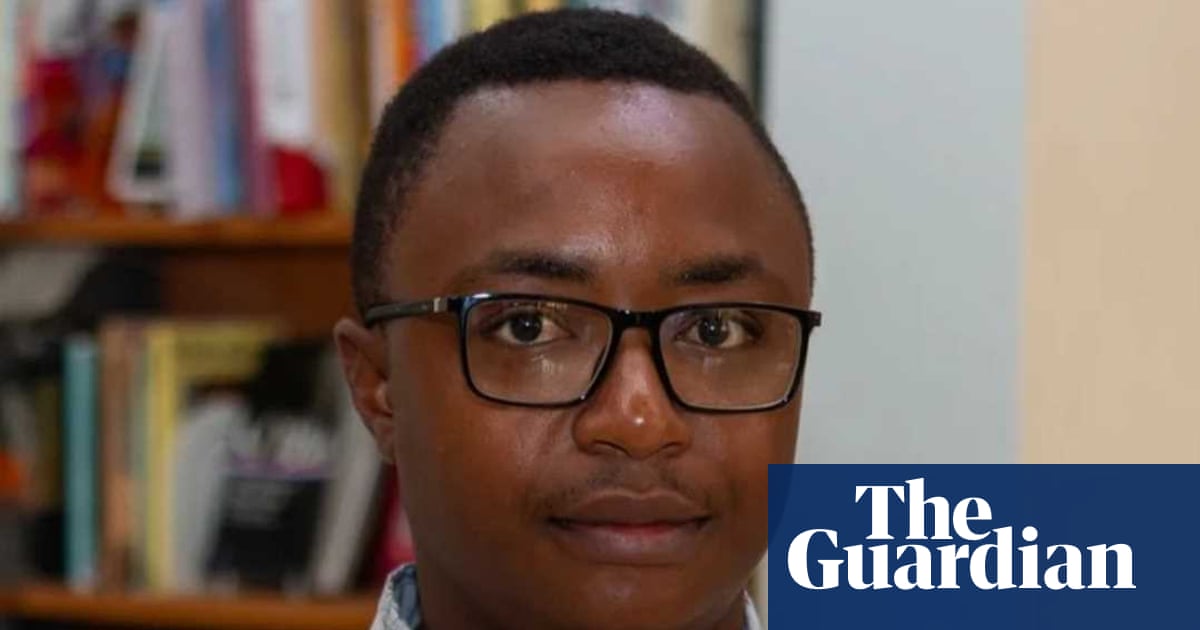
Zimbabwean author Kundizeza denies using AI to write Caine Prize-winning story
Simbarashe Kundizeza says he wrote "The Blue Fighter" himself after The Atlantic reported that AI-detection software Pangram flagged it as AI-generated. The Caine Prize is reviewing the allegation, and its chair has criticised the article.

1 / 2
The story, neutrally told
Mixed · 2Zimbabwean writer Simbarashe Kundizeza has denied using artificial intelligence to write his short story "The Blue Fighter", which won the 2026 Caine Prize for African Writing, worth £10,000 ($13,000). BBC NewsN “Zimbabwean writer Simbarashe Kundizeza has denied using artificial intelligence (AI) to write his short story, which won this year's Caine Prize for African Writing.” Read at BBC News ↗ The GuardianLC “The Zimbabwean writer Simbarashe Kundizeza has denied using AI to write a prize-winning short story” Read at The Guardian ↗ Left · 1The story was announced as the winner on 6 October; five days later The Atlantic published an article by the author and journalist Vauhini Vara headlined "Yet Another Literary prize winner Seems to Be AI". The GuardianLC “Kundizeza’s story The Blue Fighter was announced as the winner of the prestigious Caine prize for African writers on 6 October. Five days later, The Atlantic published an article” Read at The Guardian ↗ Mixed · 2Vara said the AI-detection software Pangram, which is itself AI-powered, judged the story to be almost entirely AI-generated; the exception was an epigraph attributed to an unpublished poem by the South African writer Vangile Gantsho. The GuardianLC “it had deemed the story to be almost completely artificially generated. The exception, she said, was an epigraph from what is described as an unpublished poem by the South African writer Vangile Gantsho.” Read at The Guardian ↗ BBC NewsN “Pangram had shown his work about a boy whose family falls on hard times was entirely AI generated.” Read at BBC News ↗
Centre · 1Vara also cited stylistic features she said are common in AI writing, such as "not x, but y" sentence constructions and a glut of metaphors, and said a 2021 story by Kundizeza, which Pangram rated as human-written, was tonally very different. BBC NewsN “one of the stylistic issues that stood out about The Blue Fighter was that it had used sentence constructions using "X but Y"”“I also found an earlier 2021 story by the same author. I ran that through Pangram. It also came out as 100% human.” Read at BBC News ↗ Mixed · 2In a statement on X, Kundizeza wrote: "For the avoidance of doubt, I wrote 'The Blue Fighter'. I did not use generative AI to write it. It is entirely my own work." He said a writer can work in different styles or improve substantially over five or more years, and that he has a "concrete, documented history" of the story's inspiration, which he set out chronologically. The GuardianLC “I did not use generative AI to write it. It is entirely my own work.”“To suggest that a writer cannot write in different styles or genres, or improve his writing substantially after five or more years fundamentally misunderstands the craft of writing.” Read at The Guardian ↗ BBC NewsN “Kundizeza said had "a concrete, documented history" about the story's inspiration and he set out the chronology of its development.” Read at BBC News ↗ Centre · 1The day after winning, Kundizeza told the BBC the story was inspired by a poem Gantsho read in Ghana last year about her father's obsession with building fish tanks, combined with fictionalised details of his own life around 2002, when Zimbabwe's economic troubles began. BBC NewsN “he was inspired after hearing a poem read by South African Vangile Gantsho at an event in Ghana last year about her father's obsession with building fish tanks.” Read at BBC News ↗
Mixed · 2The Caine Prize said it is reviewing the allegations with a "human-centred approach". Chair Ellah Wakatama said Kundizeza would send documentation of his drafts as part of an internal investigation, and that the prize was in conversation with the judges and with The Shallow Tales Review, which first published the story in 2025. The GuardianLC “We aim to do this by taking a human-centred approach, ensuring that writers are supported and cared for during the process.” Read at The Guardian ↗ BBC NewsN “Kundizeza would be sending in documentation about his various drafts and there were ongoing conversations with all the judges and The Shallow Tales Review” Read at BBC News ↗ Mixed · 2Wakatama told the BBC's Front Row she was not against AI per se but against detection software being used "as a final arbiter", said The Atlantic had called the winner a cheater without investigating properly, and said Pangram was "not yet tested" and she did not want black writers' work to be its "testing ground". She said Caine Prize entries, all previously published, are not checked for AI and writers vouch that their work is original. The GuardianLC “they have already proclaimed our winner to be a cheater without investigating it properly.” Read at The Guardian ↗ BBC NewsN “Pangram was "not yet tested"”“Caine Prize submissions, which are all previously published, were not checked for AI, but writers vouched that their work was original.” Read at BBC News ↗ Mixed · 2Vara said Pangram's internal research shows its assessments are rarely wrong and cited a Free University of Brussels paper that found no errors on English writing by non-native speakers, and a peer-reviewed study finding "strong accuracy". She conceded no detector is 100% accurate and that there is relatively little third-party research. The Brussels study says such tools should be an "initial flag for further investigation". Research has also found that detectors can wrongly flag human writing. BBC NewsN “The study notes that tools like Pangram should be considered "as an initial flag for further investigation".”“Research has found that AI detectors can wrongly flag human writing as AI generated.” Read at BBC News ↗ The GuardianLC “she acknowledged to the BBC that there was “relatively little third-party research” on the accuracy of AI detection software.” Read at The Guardian ↗
Centre · 1The article caused an uproar on social media. Nigerian publisher Wale Lawal called it "crazy, racist and wildly unethical", Zimbabwean writer Joe Ruzvidzo said he stood by Kundizeza, and publisher Modupe Daramola said AI allegations disproportionately target Black and African writers. BBC NewsN “Wale Lawal, the Nigerian founder of The Republic magazine, called out The Atlantic article for being "crazy, racist and wildly unethical"”“how these AI allegations are targeting Black and African writers” Read at BBC News ↗ Mixed · 2The case follows other disputes this year: Jamir Nazir won the Commonwealth Short Story Prize in July despite social media claims of AI markers, and Thélyson Orélien's novel was removed from the Goncourt longlist after an anonymous online allegation, which he denies. The GuardianLC “In July, the Trinidadian writer Jamir Nazir won the Commonwealth Foundation’s short story prize with The Serpent in the Grove” Read at The Guardian ↗ BBC NewsN “the withdrawal of Canadian-Haitian author Thélyson Orélien from France's top literary award, the Goncourt, over allegations he used AI for his first novel, which he denies.” Read at BBC News ↗
Every sentence links to the reporting it rests on. The pill in front of each says where its sources sit: Left, Centre or Right when one side supplies at least half of them, Mixed when they are evenly split. The number is how many outlets it cites.
Left1 outlet
- Framing
- Guardian reports the denial and The Atlantic's allegation in a measured, tech-and-culture frame, giving Vara's claims and the Caine Prize's response roughly equal weight.
- Emphasis
- Vara's evidence and quotes (including her view that the story is 'bad'), the context of other prize disputes, and the Caine Prize's review.
- Leaves out or plays down
- Omits the social-media backlash, the accusations of racial targeting, and Kundizeza's account of the story's inspiration.
- Charged language
- “maudlin and full of tired tropes”
- For example
-
“Vara said that she had run the story through the AI-detection software Pangram, which itself uses AI” — The Guardian
“When such claims are made, it is our responsibility to look into them.” — The Guardian
Centre1 outlet
- Framing
- BBC leads with the denial and the 'uproar', foregrounding Wakatama's criticism of The Atlantic and African writers' charges of bias, while including Vara's reasoning.
- Emphasis
- Reactions from African writers and publishers, doubts about Pangram's reliability, Kundizeza's account of the story's origins, and the Caine Prize's internal investigation.
- Leaves out or plays down
- Does not give the date the story won or the Caine Prize's formal statement about a 'human-centred approach'.
- Charged language
- “uproar”“literary stop-and-frisk”“something incredibly sinister”
Right0 outlets
No right outlet in our sources has covered this story yet.
What every side reports
- Kundizeza won the 2026 Caine Prize for African Writing with 'The Blue Fighter' and denies using AI.
- The Atlantic, in an article by Vauhini Vara, said Pangram flagged the story as AI-generated.
- The Caine Prize is reviewing the allegation, and chair Ellah Wakatama has criticised reliance on AI-detection software.
- Similar AI allegations have been made about the Commonwealth Short Story Prize and the Goncourt longlist this year.
Where accounts differ
-
Whether Pangram's verdict is reliable evidence
- Left
- The Guardian reports Vara's citing of Pangram research and a peer-reviewed study showing rare false positives, and Wakatama's view that the software is rough and ready.
- Centre
- The BBC adds that detectors can wrongly flag human writing, that Pangram is 'not yet tested' per Wakatama, and that critics note Pangram is itself AI-powered.
-
Whether racial bias is a factor in AI accusations
- Left
- The Guardian mentions Wakatama's concern for black writers but does not report the wider criticism of the article as racist.
- Centre
- The BBC reports African writers and publishers saying such accusations disproportionately target non-white writers, one calling the article 'racist'.
Simbarashe Steyn Kundizeza person
Says he wrote 'The Blue Fighter' himself without generative AI, cites documented drafts and inspiration, and says he will keep writing.
“I did not use generative AI to write it. It is entirely my own work.” — The Guardian
“Most importantly, I will continue to write.” — BBC News
Caine Prize for African Writing other
Reviewing the allegations through an internal, 'human-centred' process; its chair says detection software should not be the final arbiter and criticises The Atlantic for publishing before a full investigation.
“We aim to do this by taking a human-centred approach” — The Guardian
“she was shocked that the US magazine had not waited for a full investigation before publishing.” — BBC News
Artificial intelligence topic
AI-detection tools are treated as imperfect: Vara says Pangram is rarely wrong but not 100% accurate, while critics call it untested and itself AI-powered.
“"including one as good of Pangram" was "not going to be 100% accurate"” — BBC News
Left1 article
-
Zimbabwean author Simbarashe Kundizeza denies using AI to write prize-winning story
Neutral Straightforward report of the allegation, the denial and the prize's review, with Vara's claims and Wakatama's objections attributed.
Centre1 article
-
Zimbabwean author denies using AI to write award-winning story
Sympathetic Foregrounds the author's denial, the Caine Prize chair's objections and African writers' accusations of bias, while presenting Vara's evidence.
Right0 articles
No coverage yet.
- 14 Oct 00:31 First BBC NewsN Zimbabwean author denies using AI to write award-winning story
- 14 Oct 19:34 +19h 3m The GuardianLC Zimbabwean author Simbarashe Kundizeza denies using AI to write prize-winning story
Times are when each article was published, or when we first saw it if the outlet gave no time.
Ask about this story
Loading…